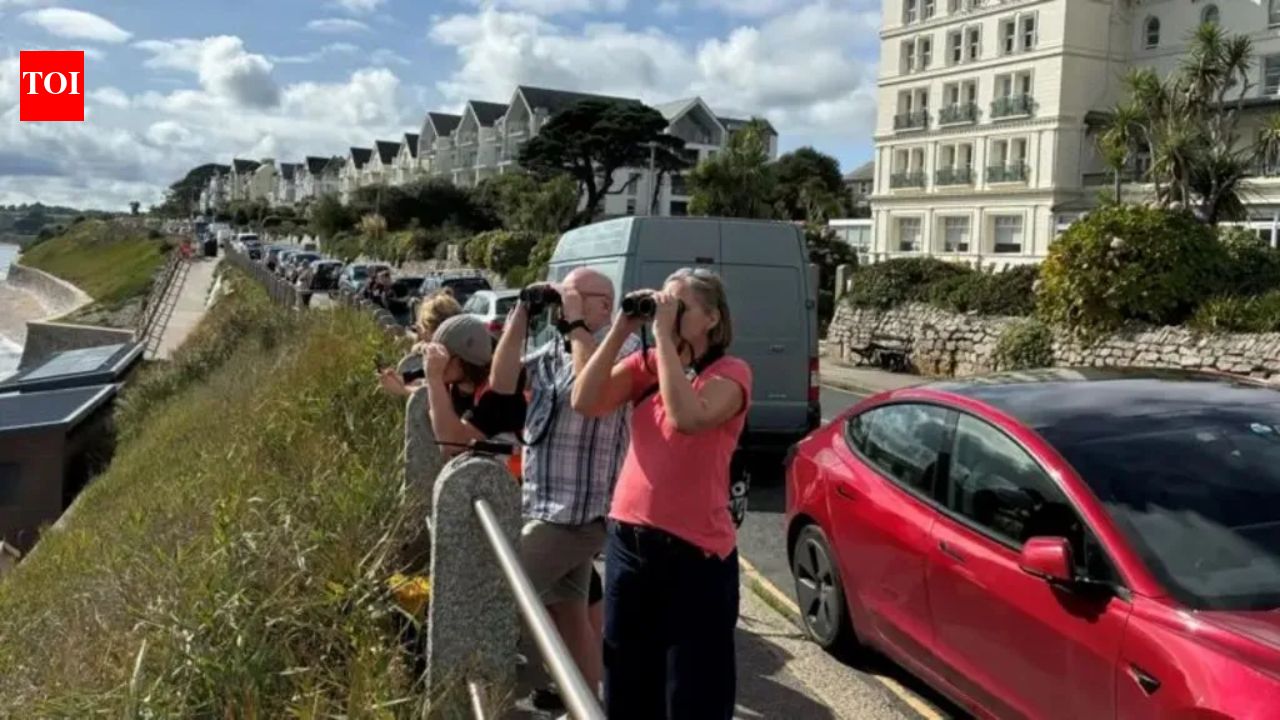
Hundreds of homes in Falmouth, Cornwall, were evacuated in September after a suspected 250-pound American bomb from the Second World War was found in the water near Falmouth Docks.
asserted
bomb → evacuate → Docks
A diver discovered the unexploded device on 21st September, and the exclusion zone was widened two days later.
asserted
zone → discover → September
More than 300 homes were cleared by 23rd September, and residents returned that afternoon after the bomb was safely removed from the docks.
asserted
bomb → clear → docks
Final disposal in deep water well out at sea was planned for several days later, once divers could return.
uncertain
divers → plan → sea
When a diver found a suspected 250-pound American Second World War bomb in the sea at Falmouth Docks
The BBC reported that emergency services were called to Falmouth Docks at a quarter past nine in the morning on Monday 21st September.
asserted
services → find → Monday
A suspected air-dropped bomb of about 250 pounds, or 115 kilograms, had been found in the water.
asserted
bomb → suspect → water
Tom Bolt of Falmouth Coastguard told the BBC that a diver came across the device and alerted the coastguard.
asserted
diver → tell → coastguard
The Ministry of Defence was called in, and experts assessed the situation and confirmed what it was.
asserted
it → call → situation
South West News Service reporter Filipa Gaspar wrote that police clarified the unexploded device found in the water near the docks was believed to be a 250-pound, or 113-kilogram, American air-dropped bomb from the Second World War.
asserted
device → write → War
She added that authorities had earlier reported its weight as 250 kilograms rather than pounds.
asserted
authorities → add → kilograms
Why more than 300 homes and about 2,000 people were cleared as officials expanded the exclusion zone
The BBC said a 300-metre exclusion zone was put in place on Tuesday and expanded to 755 metres on Wednesday.
asserted
zone → clear → Wednesday
Residents of more than 300 homes were asked to leave before nine o’clock in the morning, ahead of the bomb being moved.
asserted
bomb → ask → morning
The broadcaster said the evacuation involved about 2,000 people.
asserted
evacuation → say → people
South West News Service reported that the zone took effect at nine o’clock on Wednesday morning and covered multiple postcodes.
asserted
zone → report → postcodes
It said the estimate of 339 homes was about 1,000 fewer than the 1,300 first estimated, when the cordon was set at 1.4 kilometres.
asserted
cordon → say → kilometres
The cordon had been reduced at seven o’clock the previous evening.
asserted
cordon → reduce → o’clock
Emergency services, council staff and volunteers knocked on doors to help residents leave.
asserted
residents → knock → doors
Superintendent Ian Thompson, policing commander for West Cornwall, put the figure at some 336 households.
asserted
Thompson → put → households
Both outlets reported that the operation involved 81 police officers and staff, along with 113 volunteers and colleagues from partner agencies.
asserted
operation → report → agencies
Emergency services were alerted on Monday after the bomb was discovered at the scene (Image: BBC)
Why a 144-hour delay chemical fuse forced Royal Navy divers to leave this unusual bomb on the seabed
Lieutenant Commander Ben Brown, commanding officer of the Bravo Diving Squadron, told the BBC that the bomb was an American device with a 144-hour delay chemical fuse.
asserted
bomb → alert → fuse
He said contact with the device could have set that fuse off.
uncertain
contact → say → fuse
It lay on the seabed in about 20 metres of water, with a 500-metre exclusion zone around it.
asserted
It → lie → it
Brown said: “This device is unusual, and we must now wait for a further six days.”
asserted
we → say → days
After the wait, divers would attach a small charge to complete the disposal.
asserted
divers → attach → disposal
South West News Service reported that the bomb was first moved to a safer location within the docks before being removed for disposal.
asserted
bomb → report → disposal
Cornwall Council confirmed before four o’clock in the afternoon on Wednesday that the device had been safely removed from Falmouth Docks.
asserted
device → confirm → Docks
The cordon was lifted, and residents were allowed home.
asserted
residents → lift → ?
The council said the bomb would be disposed of in deep water well out at sea, with nothing to see or hear from the shore.
asserted
bomb → say → shore
The reports reviewed for this article did not confirm that the final disposal had been completed.
asserted
disposal → review → article
What police, councillors, and residents said as All Saints’ Church became a help centre for evacuees
The BBC reported that All Saints’ Church in Falmouth served as a help centre, where displaced residents were given tea, coffee and somewhere to sit.
asserted
residents → say → tea
Folk singer Will Keating, one of those asked to leave home, sang and played guitar to lift spirits.
asserted
Keating → ask → spirits
Jean Elsie, aged 92, said she had lived through the war in south London and did not mind much.
asserted
she → age → much
Maureen Gill, aged 89, had assumed the closed road was for roadworks until she heard the news on the radio.
asserted
she → age → radio
Thalia Marrington, the Cornwall councillor responsible for public safety, called the removal of the device “the news everyone wanted to hear”, according to South West News Service.
uncertain
everyone → call → Service
She thanked military specialists, emergency services, council teams and volunteers, as well as residents and businesses for their patience during a worrying and disruptive time.
asserted
She → thank → time
Superintendent Thompson confirmed that all cordons had been lifted and that the multi-agency operation had concluded.
asserted
operation → confirm → ?
He thanked the Falmouth community for its patience and praised the skill and bravery of the military bomb disposal experts.
asserted
He → thank → experts
How a historian explained the plausible reasons an American air-dropped bomb ended up in the harbour
It is not known for certain why the bomb ended up there.
asserted
bomb → explain → harbour
Catriona Pennell, a professor of modern history and memory studies at the University of Exeter, told the BBC that an American aircraft might have jettisoned it, either because of a technical fault or an abandoned mission.
uncertain
aircraft → tell → fault
Another possibility is that it rolled off a ship unloading at the docks.
asserted
it → roll → docks
…and 1 more, not listed.
 The Aporia