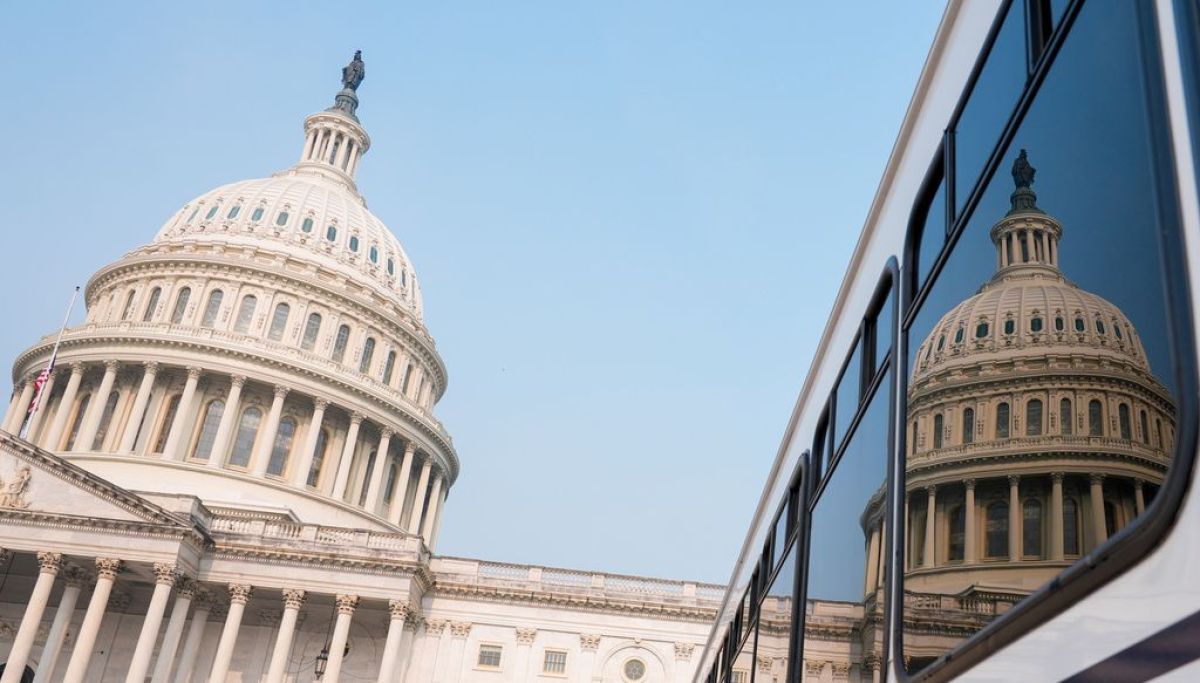
The $2 trillion time bomb: Congress can’t out-vote the clock

Read the original at Washington Examiner ↗
Washington Examiner · collected 2026-10-05 · by Leslie Belcher

Quick Summary

The article discusses the challenges Congress faces in addressing America's growing fiscal deficit and debt, projected by the Congressional Budget Office to rise from 101% of GDP this year to 120% by 2036. Former Senator Rob Portman suggests a bipartisan fiscal commission could help force difficult decisions, but past attempts like the "supercommittee" failed due to lack of political will. The article emphasizes that while Congress can delay action through continuing resolutions or other measures, it cannot avoid the long-term consequences of compound interest and impending crises such as Social Security's trust fund running out in 2032.
Written locally by qwen2.5:14b on 2026-10-05, using this article's own text rather than the other coverage of the same event (that is the story summary below).

AI analysis runs on qwen2.5:14b, locally

Story summary

In 1983, President Ronald Reagan and House Speaker Tip O’Neill reached a bipartisan agreement to address the Social Security financing crisis. However, today's fiscal challenges are more daunting, with the Congressional Budget Office (CBO) projecting that debt held by the public will rise from 101% of gross domestic product this year to 120% by 2036, and net interest costs growing from about $1 trillion in 2023 to $2.1 trillion a decade later. Former Senator Rob Portman, who also served as OMB director, suggested the need for another bipartisan fiscal commission to confront these issues head-on. Yet, such an approach faces skepticism given past failures, like the 2011 "supercommittee" stalemate. The current dilemma underscores Congress’s repeated tendency to resort to temporary fixes and continuing resolutions rather than tackling the underlying structural deficits.

Written for “US Debt Crisis” on 2026-10-05, grounded in this article and the 0 other(s) covering the same event.
Why this leaning score
The article's own words the score was based on. Each is quoted verbatim and was checked against the article text before being stored, so you can find it in the original.
Reading Leans right (beta estimate) Confidence high
Leaning: leans right for article 57423 (high confidence, 2 verified quotes) · logged 2026-10-05

Signals How these are calculated →

Claims extracted
43
claim-shaped sentences
Uncertain
9%
4 of 43 hedged
Leaning
Leans right
of the writing, not the subject · beta estimate
Correction & hedging signals
72.3
corrections and hedging in what we collected; not a measure of accuracy
Outlets on this story
1
Politics
Narrative spread
1
articles carrying this framing
Analyzed 2026-10-05 · how these are computed

Story

📰 US Debt Crisis
Politics · 1 article(s) covering the same event.

How this is being covered How these are calculated →

Article leaning vs. publisher reliability
Source leaning vs. consistency

Compared with similar articles

This article reads leans right and hedges 9% of its claims. Each row says how that neighbour differs.
Reason
⚖️ leaning not scored 🔴 8% hedged 3 of 40 📰 publisher trust 66
“While both articles discuss the $2 trillion deficit in 2026, Article A focuses on reporting the deficit figures and historical context, while Article B discusses broader fiscal policy issues and potential solutions. They do not describe the same specific incident.”

Publisher

Washington Examiner · 1966 article(s) · 3 correction(s) detected
Running correction rate · 3 correction(s)
2026-10-03
Tennessee’s prison chief resigns after failed Christa Pike execution, Bill Lee says
2026-10-03
Alito says there’s no perfect time to retire while confirming he will reconsider next year
2026-10-01
Christa Pike was set to be the first woman to be executed in Tennessee in 200 years before botched attempts: What to know

Who wrote this

Leslie Belcher
1 article(s) here · 1 carrying a prediction
🔮 Congress can extend a deadline, pass a continuing resolution, create a temporary fix, or simply decide that the hardest questions will be easier to answer next year.
The only article under this byline in the corpus.

Topics

America Congress OMB Washington the House Budget Committee’s

Subjects

Congress ORG · 8× Washington GPE · 4× America GPE · 1× American NORP · 1× OMB ORG · 1× Rob Portman PERSON · 1× Social Security’s ORG · 1× The Congressional Budget Office ORG · 1× The White House ORG · 1× the House Budget Committee’s ORG · 1×

Narrative

In 1983, with Social Security nearing a financing crisis, President Ronald Reagan, House Speaker Tip O’Neill, and lawmakers from both parties reached an agreement built on the work of a bipartisan commission.
framing: assertive · carried by 1 article(s) · first seen 2026-10-05
🔮 Congress can extend a deadline, pass a continuing resolution, create a temporary fix, or simply decide that the hardest questions will be easier to answer next year.
2026-10-05 · Washington Examiner
The $2 trillion time bomb: Congress can’t out-vote the clock · assertive framing

Claims (43 extracted, 4 hedged)

Congress can extend a deadline, pass a continuing resolution, create a temporary fix, or simply decide that the hardest questions will be easier to answer next year. asserted
questions → extend → fix
I have spent much of my career around the federal budget and appropriations process, and I have seen how useful those tools can be. asserted
tools → spend → budget
But eventually, time runs out. asserted
time → run → ?
That is the larger question raised by the House Budget Committee’s recent field hearing on America’s fiscal future. asserted
That → raise → future
Former Sen. Rob Portman, who also served as OMB director, argued that Congress may need a bipartisan fiscal commission that would put difficult fiscal choices before lawmakers and force a vote. uncertain
that → serve → vote
That panel had bipartisan membership and a deficit-reduction target. asserted
panel → have → membership
It still ended in a stalemate. asserted
It → end → stalemate
Worse, the math has only gotten harder. asserted
math → get → ?
The Congressional Budget Office projects debt held by the public will rise from 101% of gross domestic product this year to 120% by 2036. asserted
debt → project → 2036
Net interest costs are projected to grow from about $1 trillion this year to $2.1 trillion a decade from now. asserted
costs → project → trillion
Congress can pass a continuing resolution. asserted
Congress → pass → resolution
It cannot CR its way out of compound interest. asserted
It → cr → interest
There are other clocks running as well. asserted
clocks → be → ?
Social Security’s retirement trust fund is projected to exhaust its reserves in 2032. asserted
fund → project → 2032
Congress will act at some point. asserted
Congress → act → point
The question is whether it acts while there is still room to maneuver or waits until a crisis dictates the terms. asserted
crisis → act → terms
If Congress creates a fiscal commission, it should learn from past failures. asserted
it → create → failures
A serious commission needs bipartisan ownership, not simply bipartisan membership. asserted
commission → need → ownership
The White House and congressional leaders from both parties need to buy into the process from the beginning. asserted
House → need → beginning
Neither side can dictate the outcome or wall off the difficult questions. asserted
side → dictate → questions
Just as important, the commission should make its case to the American people along the way rather than unveil a painful package at the end. asserted
commission → make → end
If a meaningful bipartisan majority reaches agreement, Congress should have to vote. asserted
Congress → reach → agreement
Otherwise, we risk producing another report that sits on a shelf. asserted
that → risk → shelf
No procedural mechanism can manufacture political courage. asserted
mechanism → manufacture → courage
But history gives us reason for optimism. asserted
history → give → optimism
In 1983, with Social Security nearing a financing crisis, President Ronald Reagan, House Speaker Tip O’Neill, and lawmakers from both parties reached an agreement built on the work of a bipartisan commission. asserted
Reagan → near → commission
Fourteen years later, President Bill Clinton and a Republican-controlled Congress enacted a bipartisan balanced-budget agreement. asserted
Clinton → control → agreement
Both occurred during divided government. asserted
Both → occur → government
That may run against conventional Washington wisdom. uncertain
That → run → wisdom
But Washington has sometimes appealed to its better angels when power is divided. asserted
power → appeal → angels
When neither party can simply impose its will, both must negotiate and both must own the outcome. asserted
both → impose → outcome
Shared power can mean shared responsibility and, more importantly, shared political risk. asserted
power → mean → responsibility
If voters produce a divided government again after November, that will not solve the fiscal problem. asserted
that → produce → problem
But it could create an opening. uncertain
it → create → opening
Republicans and Democrats remain far apart on taxes, spending, entitlements, and the size and role of government. asserted
Republicans → remain → government
Any durable agreement will require both sides to accept provisions they would not choose on their own. asserted
they → require → own
It is the nature of governing in a divided country. asserted
It → govern → country
The question is whether Washington can make difficult choices while there are still choices to be made. asserted
Washington → make → choices
A better-designed fiscal commission, shared political responsibility, and a willingness by both parties to accept something less than total victory could give Congress a chance to act before the cliff is directly ahead. uncertain
cliff → design → chance
The math will eventually force action. asserted
math → force → action
…and 3 more, not listed.

💬Give feedback
🕘History 🎫Support