That is 0 articles you have read today.
The Aporia is free and carries no advertising, so readers are the only
thing paying for it. If you are getting this much out of it, a small
donation is what keeps it independent.
Daily limit reached
You have read 0 articles today.
That is more than the 15 a day The Aporia gives away,
and well past what it can carry on nothing. Your allowance resets at
midnight.
There is no advertising here and nothing about you is sold, so readers
are the only thing paying for it. If the site is worth this much of
your day, it is worth a few dollars.
Everything else stays open: the
maps, the
directory and
search do
not count against this, and neither does re-opening something you have
already read today.
Lidl GB reported a 10% increase in sales to over £13 billion for the year ended February, with pre-tax profit growing by 30% to £245.5 million. The company attributed its success to price cuts and the popularity of its Deluxe range, which saw a 12% rise in sales as consumers preferred dining at home due to high inflation rates. Lidl's market share surpassed Morrisons' to reach 8.6%, positioning it as the fifth-largest grocer in Great Britain, partly due to slower performance from Asda and Morrisons following their private equity acquisitions.
Written locally by qwen2.5:14b on 2026-10-05,
using this article's own text rather than the other coverage of the
same event (that is the story summary below).
Story summary
Lidl, a German-owned supermarket chain, saw its sales in Great Britain increase by 10% to more than £13 billion this year, driven by shoppers seeking out cheaper fresh produce and the popularity of its Deluxe range. The Deluxe range, Lidl's own-label collection of premium food, home, and beauty products, experienced a 12% year-on-year sales increase. This helped Lidl GB surpass Morrisons to become the fifth largest grocer in Great Britain with an 8.6% market share for the 12 weeks ending May 17, according to Worldpanel by Numerator data. Lidl also reported a pre-tax profit of £245.5 million for the year ended February, up from £156.8 million previously. The company attributed its growth partly to significant investments in price cuts and promotions, noting that around 43 million more customers visited their shops during this period.
Written for “Lidl Sales Growth Uk” on 2026-10-05,
grounded in this article and the 1 other(s) covering the same event.
Why this leaning score
This article does not take a side on a contested political
question, so it has no leaning score. That is an
answer rather than a gap: a match report or a rescue can be warmly
or critically written without being left or right, and scoring it
anyway is how approval of a subject gets recorded as a political
position.
No political leaning scored for article 57169 · logged 2026-10-05
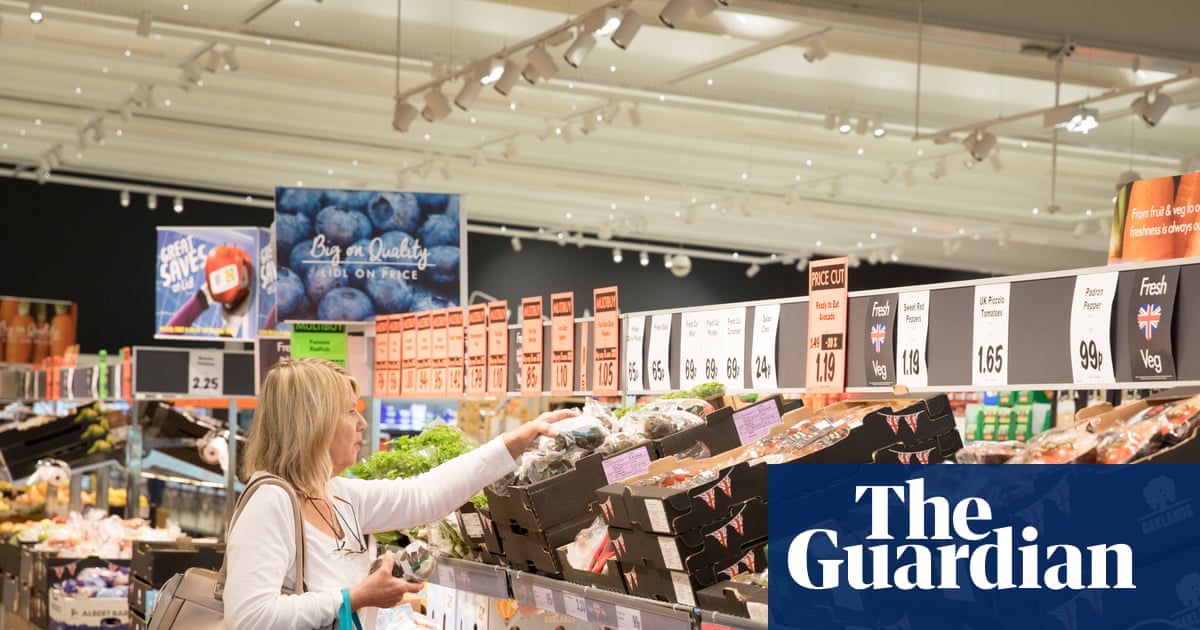
Lidl’s sales in Great Britain jumped 10% to more than £13bn this year, as shoppers sought out cheaper fresh meat, fruit and vegetables and snapped up its Deluxe range.
asserted
shoppers → jump → range
Pre-tax profit at the German-owned supermarket’s arm in Great Britain grew by 30% to £245.5m in the year ended in February, up from £156.8m in the previous year.
asserted
profit → own → year
Shoppers have flocked to discounters such as Lidl amid rising food inflation, with in-store prices stepping up to an annual rate of 1.5% in August, up from 0.9% in July.
asserted
prices → flock → July
Inflation for fresh produce remained high at 3%.
asserted
Inflation → remain → %
Lidl said it had spent £315m on price cuts and promotions such as its “pick of the week” product, while increasing numbers of shoppers were choosing its Deluxe upmarket food range.
asserted
numbers → say → range
“Deluxe sales are up 12% as more households dine in rather than eat out,” the Lidl GB chief executive, Ryan McDonnell, said.
asserted
executive → dine → ?
“Customers are looking to trade up and treat themselves at home.”
asserted
Customers → look → home
This year Lidl beat Morrisons to become the fifth largest grocer in Great Britain, with its market share hitting 8.6% in the 12 weeks to 17 May, according to figures from the market analysts Worldpanel by Numerator.
uncertain
share → beat → Numerator
That compared with an 8.3% share for Morrisons, which increased its sales by just 1.3% compared with a year earlier.
asserted
which → compare → %
Aldi and Lidl have grown rapidly, thanks partly to slowing performance at Asda and Morrisons after both were acquired in debt-fuelled private equity deals.
However, Aldi’s growth has slowed recently as Tesco and Sainsbury’s have offered more savings via their loyalty schemes and ranges that match the German discounter on price.
asserted
that → grow → price
Lidl said performance at its loyalty programme Lidl Plus had been particularly strong, with a 23% rise in participants this year.
asserted
performance → say → participants
The analyst Clive Black, the vice-chair at the broker Shore Capital, said that was in contrast to Aldi “where management has a clear strategy to deride such programmes”.
asserted
management → say → programmes
Aldi is the only big supermarket chain in the UK that does not offer operate a loyalty scheme.
asserted
that → offer → scheme
This month the boss of Aldi UK, Giles Hurley, criticised some loyalty discounts that he said tricked customers by starting with “unrealistically high prices” that then dropped.
asserted
that → criticise → prices
He told BBC News that discounts were helpful “when they’re real and when they show realistic reductions”, but criticised what he described as unrealistic reductions which “dupe customers”.
asserted
which → tell → customers
The UK’s competition watchdog investigated loyalty pricing schemes at supermarkets in 2024 and found that shoppers “almost always make a genuine saving”.
asserted
shoppers → investigate → saving
 The Aporia