That is 0 articles you have read today.
The Aporia is free and carries no advertising, so readers are the only
thing paying for it. If you are getting this much out of it, a small
donation is what keeps it independent.
Daily limit reached
You have read 0 articles today.
That is more than the 15 a day The Aporia gives away,
and well past what it can carry on nothing. Your allowance resets at
midnight.
There is no advertising here and nothing about you is sold, so readers
are the only thing paying for it. If the site is worth this much of
your day, it is worth a few dollars.
Everything else stays open: the
maps, the
directory and
search do
not count against this, and neither does re-opening something you have
already read today.
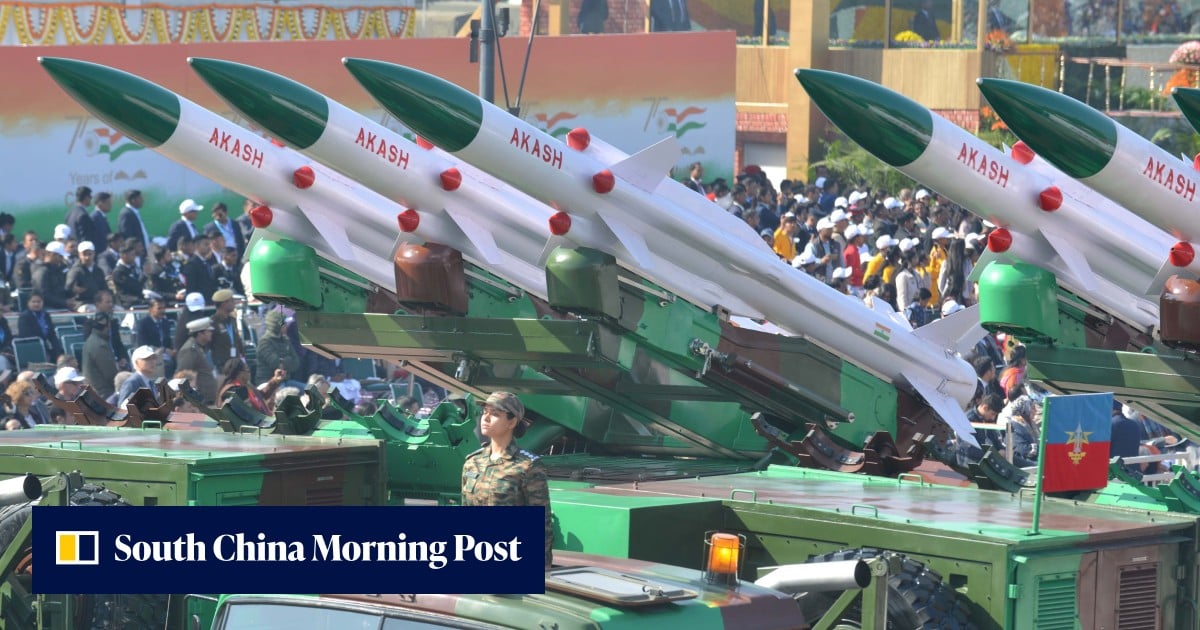
India’s recent sale of Akash missile systems to Central Asian nations highlights a new geopolitical dynamic in the region. Defence Secretary Rajesh Kumar Singh confirmed these deals last Thursday, noting the cost-effectiveness and reliability of the Akash system as a key factor for interest from multiple countries. Developed by India's Defence Research and Development Organisation, the Akash is capable of engaging multiple targets simultaneously within an operational range of 4.5km to 25km, making it a significant deterrent against aerial threats.
Written locally by qwen2.5:14b on 2026-10-05,
using this article's own text rather than the other coverage of the
same event (that is the story summary below).
Story summary
India has been making significant strides in exporting its Akash surface-to-air missile systems to countries in Central Asia, offering a cost-effective and reliable military option. The Akash, developed by India’s Defence Research and Development Organisation, is a short-range missile system capable of engaging multiple targets simultaneously and includes built-in protection against electronic jamming. Each missile weighs approximately 710kg and can hit aerial targets between 100 meters and 20km high, with an operational range of up to 25km. Delhi confirmed these sales in a statement from Defence Secretary Rajesh Kumar Singh on Thursday last week, highlighting the system's success as one of India’s military exports. These deals are seen as significant not only for enhancing regional security but also for challenging traditional suppliers like Russia and China, who have long dominated arms sales in this region.
Written for “India Missile Deals Central Asia” on 2026-10-05,
grounded in this article and the 0 other(s) covering the same event.
Why this leaning score
This article does not take a side on a contested political
question, so it has no leaning score. That is an
answer rather than a gap: a match report or a rescue can be warmly
or critically written without being left or right, and scoring it
anyway is how approval of a subject gets recorded as a political
position.
No political leaning scored for article 57143 · logged 2026-10-05
Why India’s missile deals in Central Asia matter to Russia and China
By supplying Akash missile systems, Delhi offers Central Asian nations a cheap, reliable alternative
asserted
Delhi → supply → alternative
Defence Secretary Rajesh Kumar Singh confirmed the latest sales on Thursday last week, hinting at interest from elsewhere as he called the Akash “one of our success stories”.
asserted
he → confirm → stories
Developed by India’s Defence Research and Development Organisation, the Akash is a home-grown, short-range surface-to-air missile system that can hit multiple targets at once and includes built-in protection against electronic jamming.
asserted
that → develop → jamming
It can hit aerial targets between 100 metres and 20km (328 feet to 12½ miles) high, with an operational range of 4.5km to 25km, according to the Defence Ministry.
uncertain
It → hit → Ministry
Each 5.87-metre (19-foot) long missile weighs roughly 710kg (1,565lbs) and use command guidance to lock onto targets.
asserted
missile → weigh → targets
 The Aporia