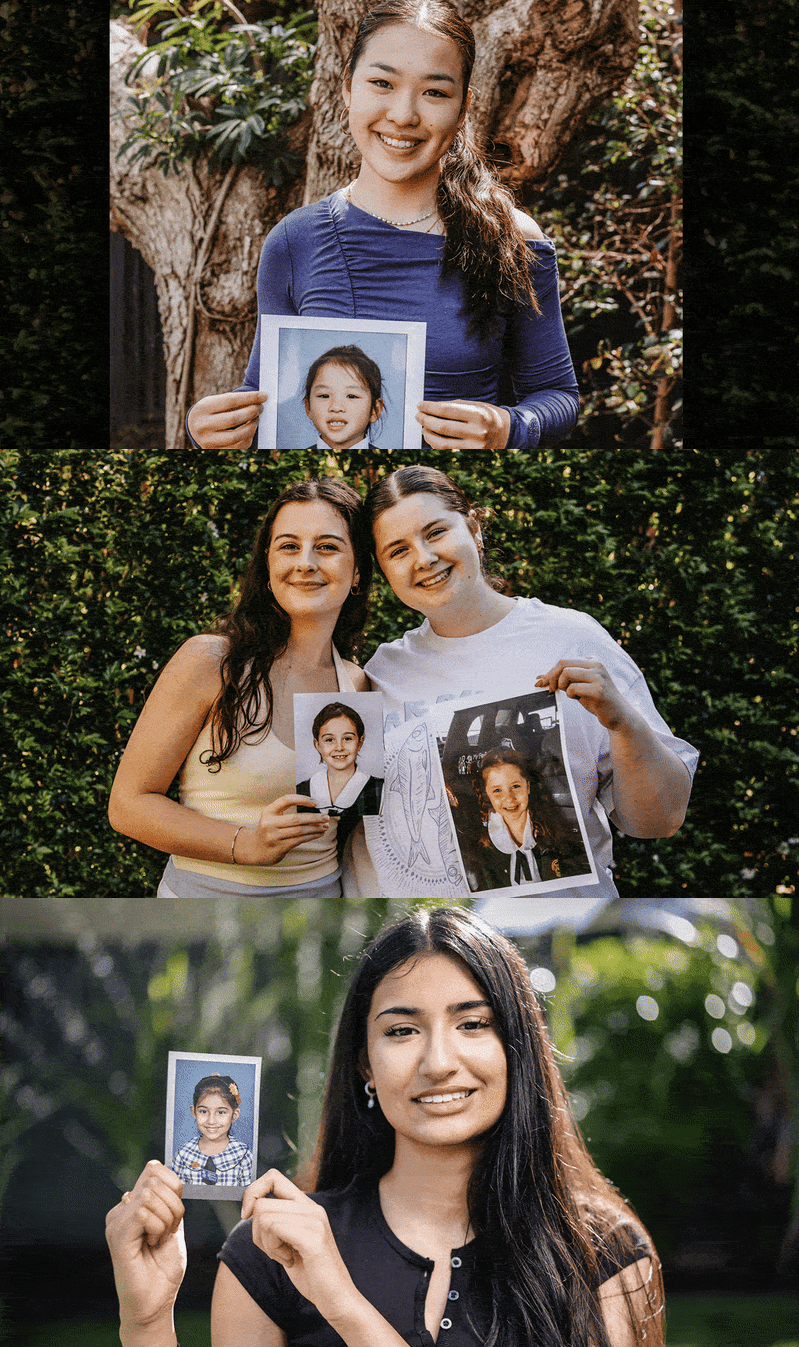
Story summary
Emily Kowal wrote about the experiences of year 12 students with significant age differences in New South Wales, Australia. Angelina Sidhu, aged 16, is one of the youngest starting her Higher School Certificate (HSC) year, having been born in July and enrolled in kindergarten at four years old. Meanwhile, some classmates are driving to school, drinking Vodka Cruisers, and voting. Her aunt, Harleen Kaur, is enrolling her son Aviraj Dhaliwal at age four for the same reason, seeing similar early adaptability in him as she did with Angelina.
In NSW, children can start kindergarten if they turn five before July 31 but must be enrolled by their sixth birthday. This rule allows up to a 19-month age gap between students within one class. Parents face perennial dilemmas deciding whether to accelerate or delay entry into formal schooling based on individual child development rather than strict academic benchmarks.
Written for “Age Dynamics In School” on 2026-10-05,
grounded in this article and the 0 other(s) covering the same event.
While her year 12 classmates drive to school, sip Vodka Cruisers and vote, 16-year-old Angelina Sidhu will be watching on.
asserted
Sidhu → drive → Cruisers
Angelina, who was born in July and was enrolled in kindergarten at age four, is entering her HSC year as one of the youngest in her grade.
asserted
who → bear → grade
It is a trajectory her family is now repeating with her four-year-old nephew, Aviraj Dhaliwal.
asserted
family → repeat → nephew
As Aviraj prepares to start school at the same tender age, his mother, Harleen Kaur, said any hesitation vanishes when she looks at Angelina, who is her younger sister.
asserted
who → prepare → Angelina
Kaur says her son – who introduces himself as he writes the alphabet on his magnetic sketch pad – reminds her exactly of Angelina at the same age.
asserted
he → say → age
“They both adapt, observe and pick up on things very quickly,” Kaur said.
asserted
Kaur → adapt → things
Deciding whether to start school early or wait an extra year remains a perennial dilemma for parents.
asserted
Deciding → decide → parents
To see how that choice plays out long term, the Herald sat down with year 12 students across the age spectrum.
asserted
Herald → see → spectrum
In NSW, a child can begin kindergarten at age four if they turn five before July 31, and must be enrolled by their sixth birthday.
asserted
they → begin → birthday
That rule allows for classroom age gaps of up to 19 months.
asserted
rule → allow → months
State data shows more NSW parents are waiting until the year their child turns six to send them to school.
asserted
child → show → school
The proportion of students starting aged five or younger declined from 78 per cent in 2011 to 69 per cent in 2024, department data shows.
asserted
data → start → 2024
In contrast, those turning six by July rose from 19 per cent in 2011 to 28 per cent in 2024.
asserted
those → turn → 2024
Angelina shrugs off the age divide.
asserted
Angelina → shrug → divide
“It didn’t make a difference for me, I never felt like I was less mature than anyone else.
asserted
I → make → anyone
I think it was actually really great that I started off early because I am able to finish school earlier and get a head-start.”
asserted
I → think → start
She notes there are disadvantages: she got her driver’s licence later than her peers and won’t be 18 until she is in the middle of uni.
asserted
she → note → uni
“My friends aren’t the biggest party people anyway,” she said.
asserted
she → say → ?
At the other end of the spectrum is Grainne McCloskey, 18, who recently finished classes at Mercy Catholic College in Chatswood.
asserted
who → finish → Chatswood
Grainne started school at four and was initially the youngest.
asserted
Grainne → start → four
She remembers “always feeling weird” having to explain she was a year younger than her classmates.
asserted
she → remember → classmates
Her mother decided to repeat her, making her the oldest student in her grade.
asserted
her → decide → grade
Grainne is glad she repeated.
asserted
she → repeat → ?
She got her driver’s licence and turned 18 before any of her peers.
asserted
She → get → peers
She has been able to go out drinking and clubbing all year.
asserted
She → go → ?
Turning 18 before her peers “adds a bit of character”, Grainne said.
asserted
Grainne → turn → character
“Being the eldest in the year becomes a fun joke … everyone starts calling you grandma,” she said.
asserted
she → become → you
She said the primary school students who were a year younger were sometimes treated differently.
asserted
who → say → ?
“You would have sporting events, and they would have to go into different groups for their ages.
asserted
they → have → ages
By high school, the gap felt more consequential.
asserted
gap → feel → school
Her friend, Edie Donnan, born in June, started kindergarten when she was five and a half.
asserted
she → bear → kindergarten
She said she appreciated the extra time at preschool.
asserted
she → say → preschool
“I was kind of better equipped to navigate not only learning to read and write and engage with all these new things, but also friendships, managing your emotions when things don’t always go your way and developing independence
asserted
things → equip → independence
,” she said.
asserted
she → say → ?
“It’s not just about being ready to learn; it’s about being ready for the environment in which the learning takes place.”
asserted
learning → ’ → place
Her mother, Samantha Donnan, said she opted to wait to send her daughter after her husband’s experience of starting school early.
asserted
she → say → school
“Starting school early caught up with him.
asserted
Starting → start → him
He wasn’t old enough to socialise with his peers in year 12 because they were 18, and he was only 17.
asserted
he → socialise → year
“It catches up with you, and it can be brutal from a social, relationship and emotional development point of view,” she said.
asserted
she → catch → view
Born in September, she started school when she was five, turning six, and said she didn’t really think about age that much.
asserted
she → bear → age
…and 12 more, not listed.
 The Aporia