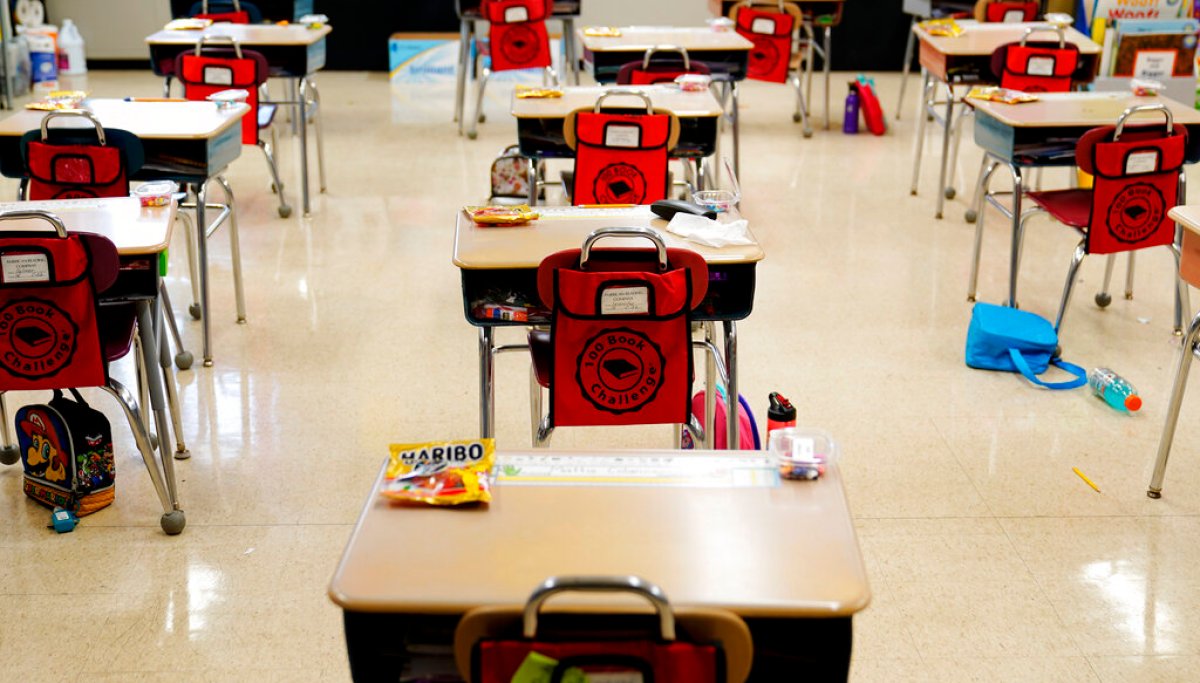
The start of a new school year brings a familiar ritual: Backpacks are packed, first-day photos are snapped, and families send children to school with optimism about the year ahead.
asserted
families → bring → year
That optimism is backed by a significant investment.
asserted
optimism → back → investment
This year, American families are expected to spend more than $43 billion preparing for school — a reflection of how deeply parents believe education can shape their children’s future.
asserted
education → expect → future
That hope is real, but so is the frustration many families feel.
asserted
families → feel → ?
62% of Americans think K-12 education is on the wrong track nationwide, and only 37% believe K-12 schools are headed in the right direction.
asserted
schools → think → direction
Those numbers should not be read as an indictment of teachers or local schools.
asserted
numbers → read → teachers
They point to something more constructive: families need resources so students can access learning opportunities and thrive.
asserted
students → point → opportunities
Like generations before them, parents hope their children will have opportunities they never had and will build better lives than their own.
asserted
they → hope → own
The question now is how to help more families access the options and support their children need.
asserted
children → help → options
Too often, education debates are framed as a choice between one type of school and another.
asserted
debates → frame → school
Parents this year are not looking for political arguments.
asserted
Parents → look → arguments
They are looking for solutions that help their children learn, grow, and succeed.
asserted
children → look → solutions
Every child learns differently.
asserted
child → learn → ?
Some need tutoring or specialized services.
asserted
Some → need → tutoring
Others benefit from a different learning environment, additional technology, transportation support, or educational resources that make learning click.
asserted
learning → benefit → environment
Giving families more ways to meet those needs creates more opportunities for students to succeed.
asserted
students → give → opportunities
Beginning Jan. 1, 2027, the Education Freedom Tax Credit offers Americans a new way to expand those opportunities.
asserted
Credit → begin → opportunities
For the first time, taxpayers can receive a federal tax credit for donating to approved Scholarship Granting Organizations, which provide scholarships and other qualifying educational services tailored to students’ individual needs.
asserted
which → receive → needs
Already, 30 states have chosen to participate.
asserted
states → choose → ?
Just as important, the Education Freedom Tax Credit does not reduce state education funding.
asserted
Credit → reduce → funding
Instead, it encourages new charitable investment in education, creating additional resources to help students succeed.
asserted
students → encourage → resources
That moves the conversation beyond the false choice between supporting schools and supporting students.
asserted
That → move → students
America’s tradition of generosity tells a different story.
asserted
tradition → tell → story
In 2025, Americans donated more than $92 billion to education, an 11.7% increase from the year before.
asserted
Americans → donate → year
Families also spend more than $43 billion each back-to-school season because they believe education is worth investing in.
asserted
education → spend → school
When Americans see a clear opportunity to help children and strengthen communities, they step forward.
asserted
they → see → communities
The Education Freedom Tax Credit builds on that tradition by creating a new pathway for charitable investment in students.
asserted
Credit → build → students
If just 15% of taxpayers with a federal tax liability participate, the program could generate an estimated $12 billion annually in new donations to expand educational opportunity across the country.
uncertain
program → participate → country
Best of all, students in every learning environment are slated to benefit.
asserted
students → slat → environment
Imagine what that could mean: More students could start the year with access to tutoring that helps them catch up or move ahead.
uncertain
them → imagine → tutoring
More families could afford the school or learning environment that fits their child.
uncertain
that → afford → child
More communities could connect students with tutoring, technology, educational therapies, or other services that make a meaningful difference.
uncertain
that → connect → difference
Student needs are becoming more diverse, while communities are adapting to changing demographics and enrollment patterns.
asserted
communities → become → demographics
Back-to-school season reminds us of what education is ultimately about.
asserted
education → remind → what
It is not about winning political arguments.
asserted
It → win → arguments
It is about giving every child the opportunity to reach their potential, grow academically, and gain the tools they need to succeed.
asserted
they → give → tools
The Education Freedom Tax Credit will give Americans a practical way to help make that happen.
asserted
that → give → way
Taxpayers can identify approved Scholarship Granting Organizations and consider contributing when the credit becomes available.
asserted
credit → identify → Organizations
Community leaders, employers, educators, and parents can help spread the word so families know these opportunities exist.
asserted
opportunities → help → word
If we want next year’s back-to-school season to look different, the work begins now.
asserted
work → want → school
…and 1 more, not listed.
 The Aporia