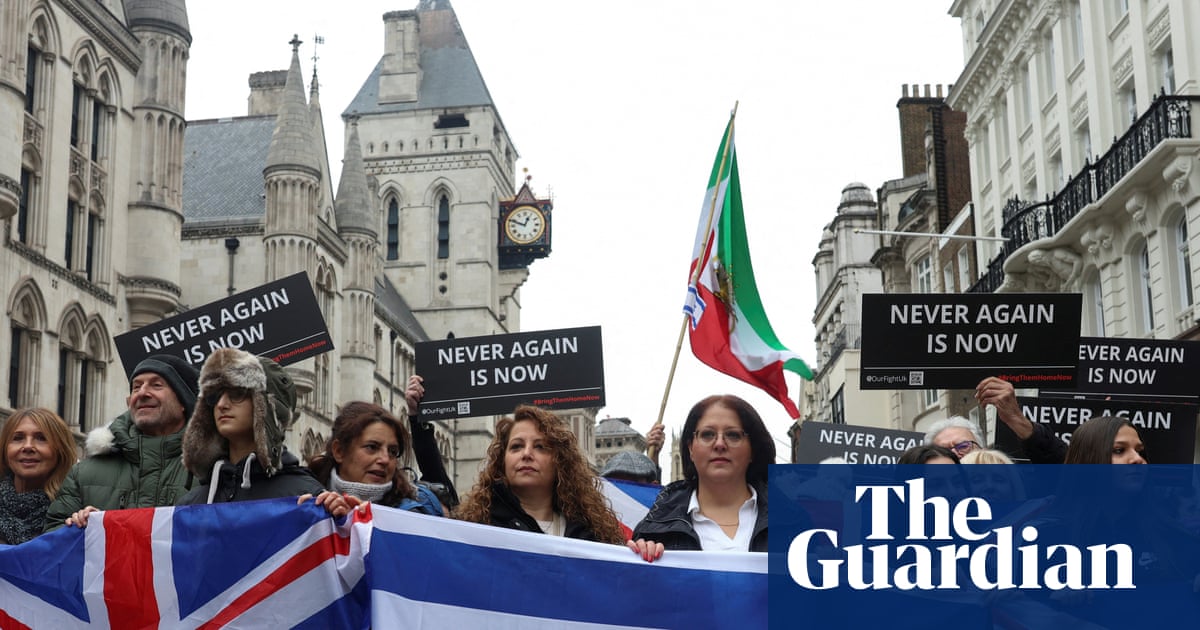
A study by the Institute for Jewish Policy Research shows that British Jews have become more likely to identify as Zionist, consider emigrating to Israel, and feel emotionally attached to Israel since October 2023 attacks. Specifically, the percentage of Zionists among British Jews increased from 59% in 2022 to 66% by June 2025, while those feeling antisemitism is a significant issue tripled to 50%. The study also found that Jewish members of the Green party, who were already least likely to feel attached to Israel, saw further declines in their emotional connection and support for Israel.
Written locally by qwen2.5:14b on 2026-10-05,
using this article's own text rather than the other coverage of the
same event (that is the story summary below).
British Jews have become more likely to identify as Zionist, consider emigrating to Israel, and feel a close attachment to the country since the 7 October attacks, research has found.
asserted
research → become → attacks
A study from the Institute for Jewish Policy Research (JPR) titled “October 8 Jews: The Impact of October 7 on British Jewish Identity”, by Dr David Graham, found the percentage of British Jews who identified as Zionist rose seven points to 66%, between 2022 and 2025.
asserted
who → title → 2022
By June 2025, the numbers who felt antisemitism in the UK was a “very big problem” had tripled to 50%.
asserted
antisemitism → feel → %
The percentage of British Jews who felt “very emotionally attached to Israel” rose to 51% in June 2025, up 13 points from before the Israel-Gaza war.
asserted
who → feel → war
Meanwhile, those who felt supporting Israel was “very important” to their Jewish identity rose 10 points to 45%.
asserted
supporting → feel → %
However, the report found Jewish people who vote for the Green party felt their attachment to Israel had weakened.
asserted
attachment → find → Israel
The research was compiled before a motion stating “Zionism is racism” was voted on at this weekend’s Green party conference.
asserted
Zionism → compile → conference
Previous JPR research found up to one in five British Jews were backing the Green party by June last year.
asserted
Jews → find → June
The study found that between 2023 and 2024, the percentage of Jewish Greens who felt “very emotionally attached to Israel” fell one point to 7%, while the percentage who felt supporting Israel was “very important” to Jewish identity fell eight points to 3%.
asserted
who → find → %
Jewish Greens were least likely to see antisemitism as a “very big problem in the UK”, with the percentage declining seven points to 7% in the same period.
asserted
percentage → see → period
Meanwhile, between 2022 and 2024, the percentage of Greens who identify as Zionist fell three points to 14%.
asserted
who → identify → %
The JPR director, Jonathan Boyd, said Jewish Greens tended to be secular, adding: “If your social framework is much more open, you’re more likely to be shaped by the conversation in wider society.”
Jewish Greens were least likely to say they would migrate to Israel in the next five years, with a mean score of 0.2 on a scale of zero to 10, declining from 0.7 between 2022 and 2024.
asserted
score → say → 2022
In the wider community, the score was at 1.99, rising from 1.38 before 7 October, with Haredi Orthodox Jews and 50- to 59-year-olds the most likely.
asserted
Jews → rise → October
Sixteen- to 29-year-olds were also less likely to say Israel was “very important” to their identity, with the percentage falling by one point – to 27% – in 2024.
asserted
percentage → say → 2024
Boyd said their experience of Israel had been “much more about Gaza and Hamas” than their parents’ generation.
asserted
experience → say → generation
Boyd said the overall growth in British Jewish attachment to Israel was “directly associated with concern about antisemitism in Britain” as well as “associations with Israel as a Jewish homeland”.
asserted
growth → say → homeland
He said the UK government had been “very supportive on a security level” to British Jews, but needed to show more commitment to bridging Israeli-Palestinian differences and an understanding of how policy could affect UK levels of antisemitism.
uncertain
policy → say → antisemitism
He added that unless tougher rhetoric on Israel was balanced with a willingness to tell society “we understand why [Israel] is so important to Jews”, it risked “pushing Israelis rightwards and British Jews away”.
asserted
it → add → Israelis
Boyd said: “Israel represents security to many Jews.
asserted
Israel → say → Jews
When there’s a sense that Israel is more insecure, it is unsettling for Jews’ sense of safety, and they are likely to rally to its side.
asserted
they → ’ → side
Seventy per cent of British Jews have close friends and family there, those connections are very real and mean British Jews were impacted by the 7 October attacks.”
Boyd said he expected the growth in the UK Orthodox community, who have higher birthrates than secular Jews, was likely to deepen attachment to Israel over time because of the strength of Orthodox culture in Israel, even though many Haredi Orthodox Jews do not identify with secular political Zionism.
asserted
Jews → have → Zionism
The research, using a sample of 2,500 people from the 315,000-strong British Jewish community, tracked opinion across the spectrum of Jewish religious and political affiliation apart from Reform UK supporters, because the tracking period predated the party’s rise.
asserted
period → use → rise
Conservative voters led the growth towards pro-Israel and Zionist sentiment and were most likely to be concerned about antisemitism.
asserted
voters → lead → antisemitism
The research period predated the Manchester synagogue attack, the first anniversary of which was this month, the Iran war, and new trade sanctions.
asserted
anniversary → predate → which
The report comes after previous JPR research showed British-Jewish support for a two-state solution dropping to 49% – the lowest level since records began.
asserted
records → come → %
 The Aporia