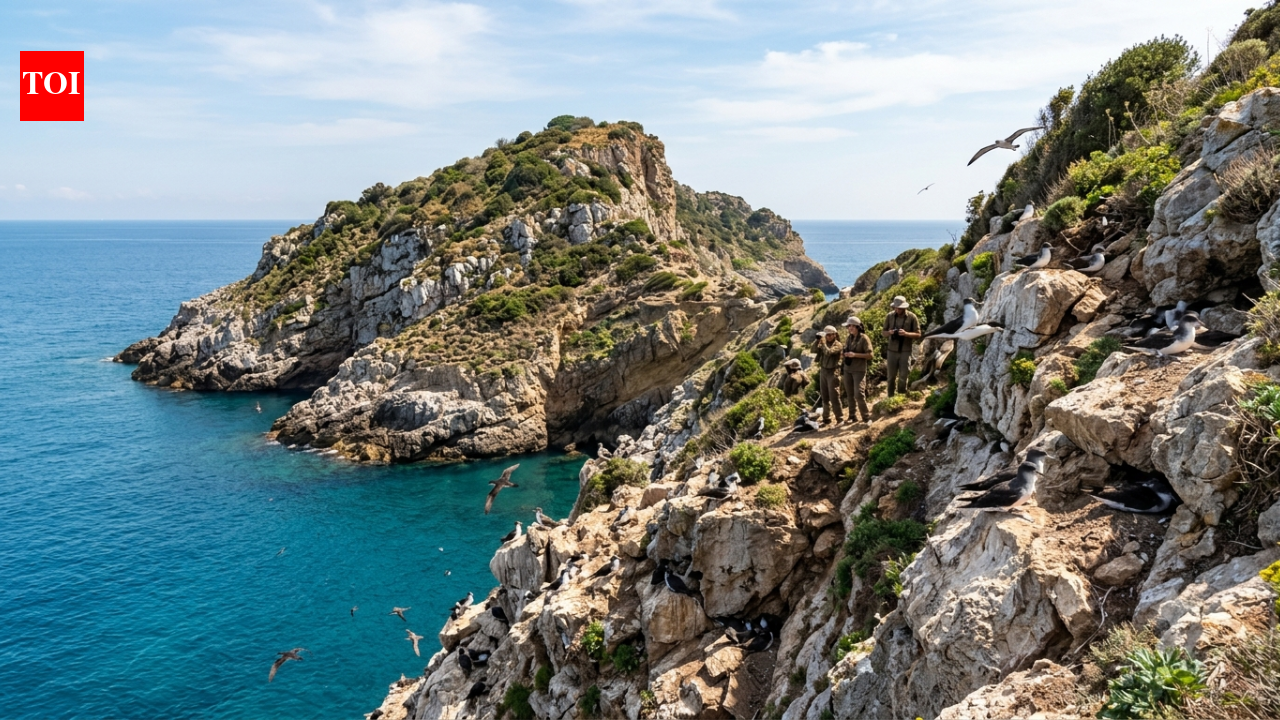
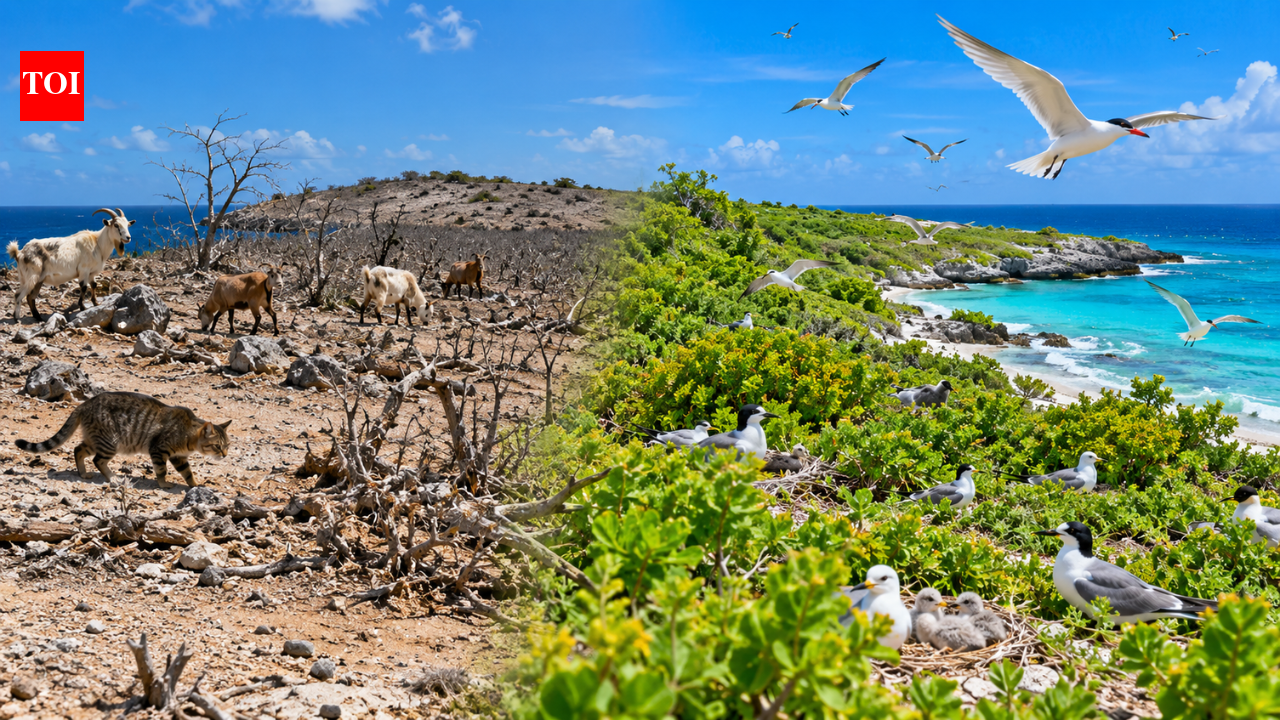
On a Mediterranean island off Italy, a conservation project aimed at removing an invasive rodent produced a change that could be seen in the seabird colony.
uncertain
that → aim → colony
Zannone had been among the larger Italian islands targeted in the country’s expanding rat eradication programme.
asserted
Zannone → target → programme
The work was part of a wider effort to remove black rats from islands where they posed a threat to native wildlife, particularly seabirds that nest in burrows.
asserted
that → remove → burrows
On Zannone, the eradication was completed in 2007.
asserted
eradication → complete → 2007
The number of breeding pairs of Scopoli’s shearwater subsequently rose from 27 in 2007 to 80 in 2016, giving conservationists a clear example of how removing an introduced predator could alter the fortunes of an island bird colony.
uncertain
removing → rise → colony
Black rat eradication transforms Italy’s islands for native wildlife
Black rats, or Rattus rattus, have been removed from a growing number of Italian islands since the late 1990s.
asserted
rats → transform → 1990s
The work was supported in many cases by the European Union’s LIFE programme, which helped fund projects designed to protect native island ecosystems.
asserted
which → support → ecosystems
By the time of the review, rats had been eradicated from 14 Italian islands, with projects under way on five others.
asserted
projects → eradicate → others
Islands offered a particular advantage for this kind of intervention.
asserted
Islands → offer → intervention
Their isolation can make eradication more manageable than it would be on a mainland landscape, while also helping to protect the result once the invasive animals have been removed.
asserted
animals → make → result
The projects varied considerably, however.
asserted
projects → vary → ?
Some islands were tiny, while others covered hundreds or thousands of hectares.
asserted
others → cover → hectares
Some were uninhabited, while others contained homes and small communities.
asserted
others → contain → homes
Terrain was another consideration, with steep or inaccessible areas making conventional bait placement difficult.
asserted
placement → make → ?
Zannone tests new methods for black rat eradication
Zannone was larger and more difficult to treat than the very small islands where some of Italy’s earliest eradication projects had taken place.
asserted
some → test → place
According to the Occasional Paper of the IUCN Species Survival Commission titled ‘
Black rat eradication on Italian islands: planning forward by looking backward’ rats had begun to be eradicated from islands exceeding 100 hectares from 2005 onwards, with Zannone among them.
uncertain
Zannone → accord → them
The island’s uneven terrain also influenced how bait was distributed.
asserted
bait → influence → ?
On Zannone, bait stations were used at a lower density than during some earlier operations.
asserted
stations → use → operations
In areas that could not easily be reached, rodenticide bait blocks were hand-broadcast from a helicopter.
uncertain
blocks → reach → helicopter
The blocks were placed inside biodegradable bamboo dispensers before being distributed.
asserted
blocks → place → dispensers
As conservation teams gained experience, techniques were adapted to the physical conditions of individual islands rather than relying on one standard method.
asserted
techniques → gain → method
Larger islands presented different logistical problems from small, relatively accessible sites, while the presence of other animals also had to be considered when selecting bait and delivery methods.
asserted
presence → present → methods
What makes black rats a threat to burrowing seabirds
Scopoli’s shearwaters are burrow-nesting seabirds, and rats can be particularly damaging to species that breed in this way.
asserted
that → make → way
The Italian review points to evidence from several Mediterranean islands where declines in burrowing seabirds had been associated mainly with introduced predators, especially rats.
asserted
declines → point → predators
The species affected included Scopoli’s shearwater, Yelkouan shearwater, Balearic shearwater and European storm petrel.
asserted
species → affect → shearwater
When data for Scopoli’s and Yelkouan shearwaters were pooled, islands without rats recorded a considerably higher breeding success than islands where rats remained.
asserted
rats → pool → islands
The figures given in the review were 0.78 on islands without rats compared with 0.14 on islands with rats.
asserted
figures → give → rats
Rat-free islands saw Scopoli’s shearwater colonies grow
The Zannone figures are among the clearest in the review.
asserted
figures → see → review
After the rat eradication in 2007, the Scopoli’s shearwater colony increased from 27 breeding pairs in 2007 to 80 pairs in 2016.
asserted
colony → increase → 2016
The source presents the figures as an example of the effect rat removal had on shearwater colonies, rather than as an isolated population count detached from the wider eradication programme.
asserted
removal → present → programme
Zannone was not the only island where a colony expanded following rat removal.
asserted
colony → expand → removal
At La Scola, the review records a rise in the Scopoli’s shearwater colony from between 60 and 100 pairs in 2001 to between 150 and 250 pairs in 2010, ten years after eradication, as reported.
asserted
review → record → eradication
These examples helped illustrate why shearwater populations were considered when Italian conservationists decided which islands should receive priority.
asserted
islands → help → priority
Conservationists turned to biosecurity after removing island rats
Eradication did not mean the conservation work could simply stop.
uncertain
work → turn → rats
Rats can return to islands, either by swimming from nearby land or islands or through human transport.
asserted
Rats → return → transport
The review records reinvasions on several Italian islands and notes that some occurred where neighbouring rat populations remained.
asserted
populations → record → islands
The distances involved could be surprisingly small.
uncertain
distances → involve → ?
In the cases examined, reinvading rats had travelled from nearby islands or the mainland, with the maximum distance recorded at 320 metres and the average at about 219 metres.
asserted
distance → examine → metres
That made biosecurity an important part of maintaining an island after an eradication project had been completed.
asserted
project → make → island
The researchers also describe how better understanding of rat movements and quarantine practices made it possible to attempt projects in places where reinvasion had previously been considered too risky.
asserted
reinvasion → describe → places
…and 8 more, not listed.
 The Aporia