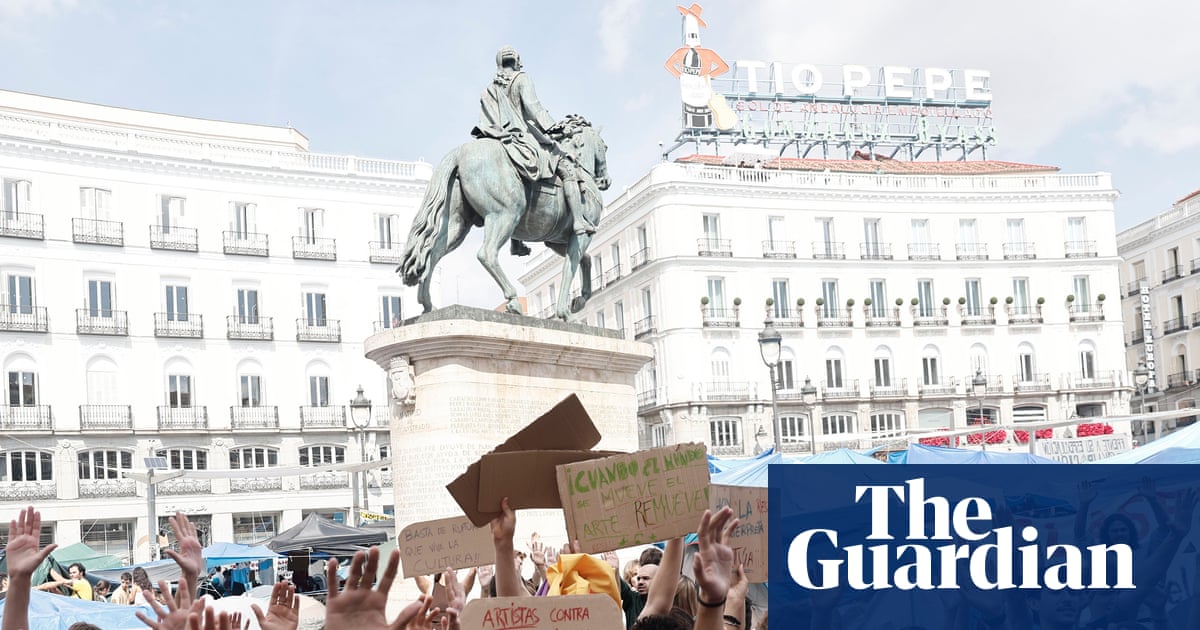
Spain’s constitutional court is poised to clear the final legal hurdle allowing exiled Catalan separatist leader Carles Puigdemont to return home this week after nearly nine years abroad. Puigdemont fled Spain in 2017 following a controversial independence referendum. If the court rules that charges against him are covered by an amnesty law passed in 2024, he could come back without fear of arrest. However, Catalonia’s political landscape has dramatically shifted since his departure: it is now governed by pro-Spanish Socialists and faces economic challenges like low wages and high rents, affecting the priorities of young people. Additionally, the foreign-born population in Catalonia has risen from 13.8% to 18.7%, complicating notions of Catalan identity and nationalism.
Written locally by qwen2.5:14b on 2026-10-05,
using this article's own text rather than the other coverage of the
same event (that is the story summary below).
After years of legal wrangling, Spain’s constitutional court is expected to remove the last obstacle to the return of the former Catalan president Carles Puigdemont after nearly nine years in exile this week.
asserted
court → expect → exile
Puigdemont fled in 2017 to avoid being jailed for his part in the failed and illegal independence push for which nine of his colleagues were imprisoned on sentences of up to 13 years, although all were released within three years.
asserted
all → flee → years
If on 6 October the court decides, as expected, that the charge of misuse of public funds is covered by the amnesty law passed by the Spanish government in 2024, Puigdemont should be free to return without fear of arrest.
asserted
Puigdemont → decide → arrest
But will he come back like Lenin, leaping from the train in St Petersburg to galvanise the faltering revolution, or as yesterday’s man, the last of the Romanovs, bound for the dustbin of history?
asserted
man → come → history
Whether he returns in triumph or, as he departed, in the boot of a car, Catalonia today is very different from the place he left nine years ago.
asserted
he → return → place
Firstly, the political climate has changed beyond recognition.
asserted
climate → change → recognition
The fervour of mass demonstrations and constant conflict and provocation between Barcelona and Madrid has given way to a climate of cooperation.
asserted
fervour → give → cooperation
Since 2024, the region has been governed by the Socialists’ party of Catalonia (PSC), the first time since 1980 that a non-nationalist party has been in charge.
asserted
party → govern → charge
Led by Salvador Illa, Spain’s health minister during the Covid epidemic, it has ushered in an era of entente with Madrid, where the Socialist Workers’ party, to which the PSC serves as a regional section, is also in the driving seat.
asserted
PSC → lead → seat
Another change is that those young people who got fired up about independence are not only older now but face issues that are more pressing than sovereignty, principally jobs and housing.
asserted
that → fire → sovereignty
As a result, 82% of Catalonia’s 18- to 30-year-olds still live with their parents.
asserted
% → live → parents
On Friday Puigdemont’s Junts per Catalunya (Together for Catalonia) voted down the government’s progressive housing proposals, a move that won’t endear them to young Catalans, nor to their parents.
asserted
that → vote → parents
When Puigdemont went into exile, 13.8% of the Catalan population was foreign-born; the figure today is 18.7%.
asserted
figure → go → population
This shift is most marked in the capital, Barcelona, where 32% of residents are immigrants representing 118 nationalities, a figure that rises to 50% in the 12-35 age group.
asserted
that → mark → group
For nationalists, this raises the question: who is a Catalan?
asserted
who → raise → question
Jordi Pujol, the Catalan president from 1980 to 2003, insisted that a Catalan was anyone who lived and worked in Catalonia.
asserted
who → insist → Catalonia
Out of the disillusion of the independence movement has risen Aliança Catalana, a far-right nationalist party whose leader says “there isn’t room for everyone” in Catalonia.
asserted
leader → rise → Catalonia
Specifically, there would be no room for Muslims, not even those born in Spain, which by implication would include, for example, the Barcelona and Spain football star Lamine Yamal.
asserted
which → bear → star
This has dragged Junts, traditionally the party of the Catalan bourgeoisie, to the right as those on the ethno-nationalist margins gravitate towards the unselfconsciously racist Aliança, whose positions on sovereignty are otherwise barely distinguishable from Junts’.
asserted
positions → drag → Junts
Over the past 25 years, Catalonia, and above all Barcelona, has gone from being a bicultural, bilingual Catalan-Spanish society to one that is multicultural and multilingual.
asserted
that → go → one
Puigdemont’s pitch is based on identity and a historical sense of grievance at Spain’s perceived abuse of and disdain for Catalonia, a sentiment shared by many, perhaps most, Catalans.
asserted
pitch → base → Catalans
This ingrained sense of difference and grievance isn’t going away, but his vision may prove a harder sell than it was 10 years ago.
uncertain
it → go → difference
As demography changes, so does identity.
asserted
identity → change → ?
Immigrants now make up nearly a fifth of the population, have their own identity issues and have no particular beef with Spain.
asserted
Immigrants → make → Spain
As for independence, support never did reach 50%, and now hovers in the low 40s.
asserted
support → reach → 40s
Besides, as people migrate in search of a better or perhaps a more interesting life, it is becoming increasingly likely that the parents of those living in Catalonia will be from different countries, and their sense of national identity is multiple or simply not that important.
asserted
sense → migrate → identity
Puigdemont’s lifelong dream is for Catalonia to take its place among the world’s independent nation states.
asserted
Catalonia → take → states
Yet perhaps he is a man out of time and the nation state he craves, with its monocultural, monolingual badge of identity, has passed its sell-by date.
asserted
he → crave → date
 The Aporia