Toronto Star
· collected 2026-10-05 · by Edith M. Lederer The Associated Press
The article discusses the challenges facing the next United Nations secretary-general as of January 1st, highlighting the organization's aging structure and its diminished role in resolving major global conflicts such as those in Iran, Ukraine, and Gaza. It emphasizes the financial strain on the UN due to unpaid debts from the United States and consequent budget cuts impacting humanitarian efforts. Outgoing Secretary-General Antonio Guterres issued a series of challenges for his successor to uphold law over impunity, end wars before they consume generations, tackle inequality, act decisively on climate change, and govern artificial intelligence responsibly. The selection process for the new leader is ongoing, with significant pressure to modernize the UN's approach while also playing a central role in mediating global conflicts.
Written locally by qwen2.5:14b on 2026-10-05,
using this article's own text rather than the other coverage of the
same event (that is the story summary below).
Why this leaning score
The model judged this article politically coded and scored it -0.35, but all 2 of its quote(s) are attributed speech - words the article quotes from someone, not the article's own narration, so the score is not published.
Written under an earlier scoring contract, which gave a paragraph
rather than checkable quotes. Re-analysing this article replaces it.
Leaning score withheld for article 56656: attributed speech only · logged 2026-10-05
UNITED NATIONS (AP) — On Jan. 1, the next United Nations secretary-general will take over an aging organization still controlled by World War II powers.
asserted
general → take → powers
What will the world need from that person?
asserted
world → need → person
Once a major player in solving conflicts and crises around the world, the 81-year-old institution has been sidelined from the top table in trying to end the wars in Iran, Ukraine and Gaza.
asserted
institution → solve → Iran
And its precarious financial situation — caused mainly by the billions of dollars the United States owes — has forced major cuts to its humanitarian and development programs where it has remained a key player.
asserted
it → cause → programs
The annual global gathering of world leaders at the United Nations that ended last week shed some light on what the next U.N. chief needs to focus on and pursue.
asserted
chief → end → what
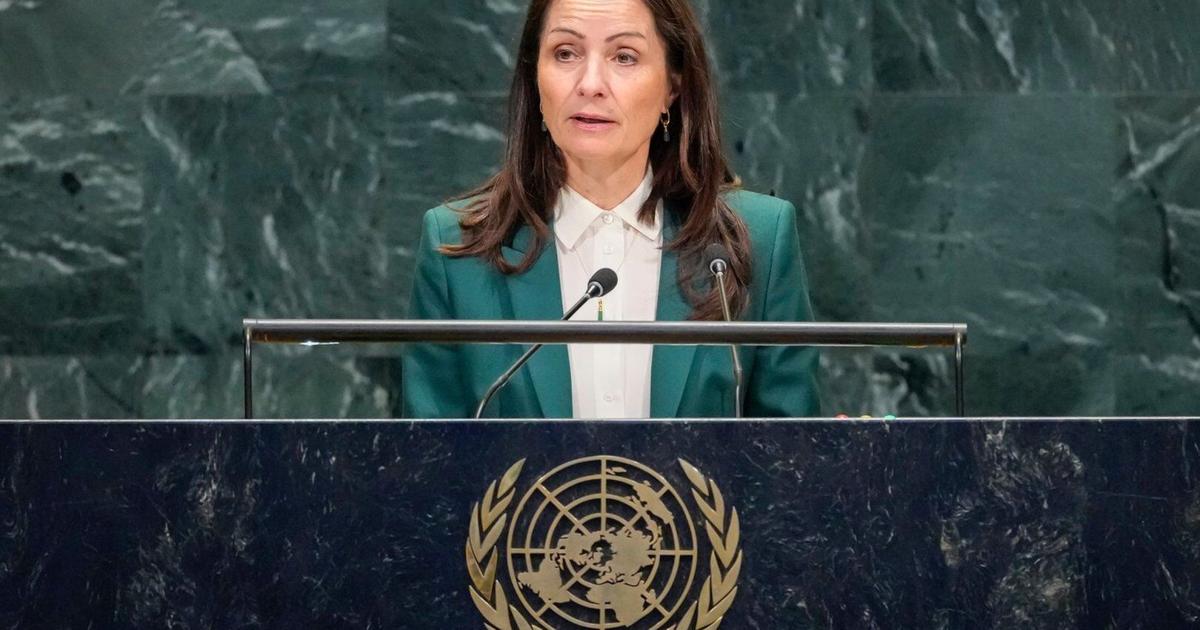
In his farewell address to the General Assembly, outgoing Secretary-General Antonio Guterres told global leaders, “The world does not need a weaker United Nations.”
asserted
world → tell → Nations
“It needs a U.N. strong enough to face the world as it is,” he said, “and determined enough to build the world as it should.”
asserted
it → need → world
Much talk of a shared future with the UN at the center
After 10 years at the helm of the United Nations, Guterres said he is strongly convinced that its greatest power is to build a tomorrow that works for everyone.
asserted
that → share → everyone
As he put it, “Our shared future will be forged by whether humanity can govern power wisely.”
asserted
humanity → put → power
Guterres then issued challenges to the United Nations that will be led by his successor, the 193 countries in the General Assembly “and humanity itself.”
asserted
that → issue → Assembly
Will you “uphold the law before impunity becomes normalized?”
asserted
impunity → uphold → law
Will you “end wars before they consume generations?”
asserted
they → end → generations
Will you tackle inequality “before societies fracture?”
asserted
societies → tackle → inequality
Will you accelerate climate action “before tipping points are crossed?”
asserted
points → accelerate → action
Will you govern artificial intelligence “before it governs us?” Guterres asked.
asserted
Guterres → govern → us
For the next secretary-general — the selection process is ongoing — the top priority will be reconfiguring the United Nations to reflect the 21st century rather than the post-World War II era when it was established.
asserted
it → reconfigure → era
The new U.N. chief “will have the most monumental task that the U.N. has faced in decades because you have a U.N. that’s going through this critical reform process that it has not gone through for a long time,” said Kizito Byenkya, the Open Society Institute’s advocacy director.
asserted
Byenkya → have → time
The U.N.‘s financial crisis has led to budget cuts and efforts to consolidate programs and agencies, and eliminate hundreds of mandates ordering the U.N. Secretariat to take a wide variety of actions and deliver reports, many that never get read.
asserted
that → lead → reports
That’s just to name a few.
asserted
That → ’ → few
At the same time, Byenkya told The Associated Press, “You have huge pressure on all sides for the new secretary-general to act like a general and really play a central role in mediation for world conflicts.”
asserted
general → tell → conflicts
He cited the late secretary-general Kofi Annan, who became directly involved in some conflicts and was a skilled mediator and negotiator.
asserted
who → cite → conflicts
“If you look at the conflicts we’ve been facing in the last few years, let’s say from Gaza to Sudan to Ukraine and more, you often have to ask yourself: Where has the role of the United Nations been with all of these?,” he said.
asserted
he → look → these
Reform sounds good but is a lot harder than one might think
During high-level week, leader after leader spoke of the need for reform.
uncertain
leader → sound → reform
But when it comes to taking action, serious and sometimes impossible differences emerge, especially when it comes to reforming the Security Council, the U.N.’s most powerful body and still controlled by the World War II victors.
asserted
it → come → victors
All U.N. member nations want to see the council reflect the 21st century world, but there are huge national differences on how it should be expanded.
asserted
it → want → world
That has stymied progress for decades.
asserted
That → stymie → decades
The five permanent members — the U.S., Russia, China, Britain and France — hold veto power, which gives them ultimate control.
asserted
which → hold → control
Africa, home to 1.5 billion people, has no permanent seat.
asserted
Africa → have → seat
Neither does Latin America.
asserted
America → do → ?
Neither do the collection of island nations whose existence is threatened by climate change.
asserted
existence → do → change
“Security Council reform is not a favor to Africa,” Ghana’s President John Mahama told world leaders last week.
asserted
Mahama → tell → leaders
Mahama also raised perhaps the most difficult problem that will confront the next U.N. chief: the world’s “intense fragmentation, deepening inequality and eroded trust in our multilateral system.”
asserted
that → raise → system
“We must address the alarming breakdown of global order today,” he said, pointing to “the dangerous drift toward unilateralism.”
asserted
he → address → unilateralism
Mahama lauded the U.N. Charter, whose opening words say the organization was founded to prevent a repetition of the 20th century’s two world wars.
asserted
organization → laud → wars
That, he said, “must reign supreme over the cynical doctrine that `might makes right.’”
uncertain
that → say → doctrine
___
Edith M. Lederer has covered international affairs for The Associated Press for more than a half century.
asserted
Lederer → cover → century
 The Aporia