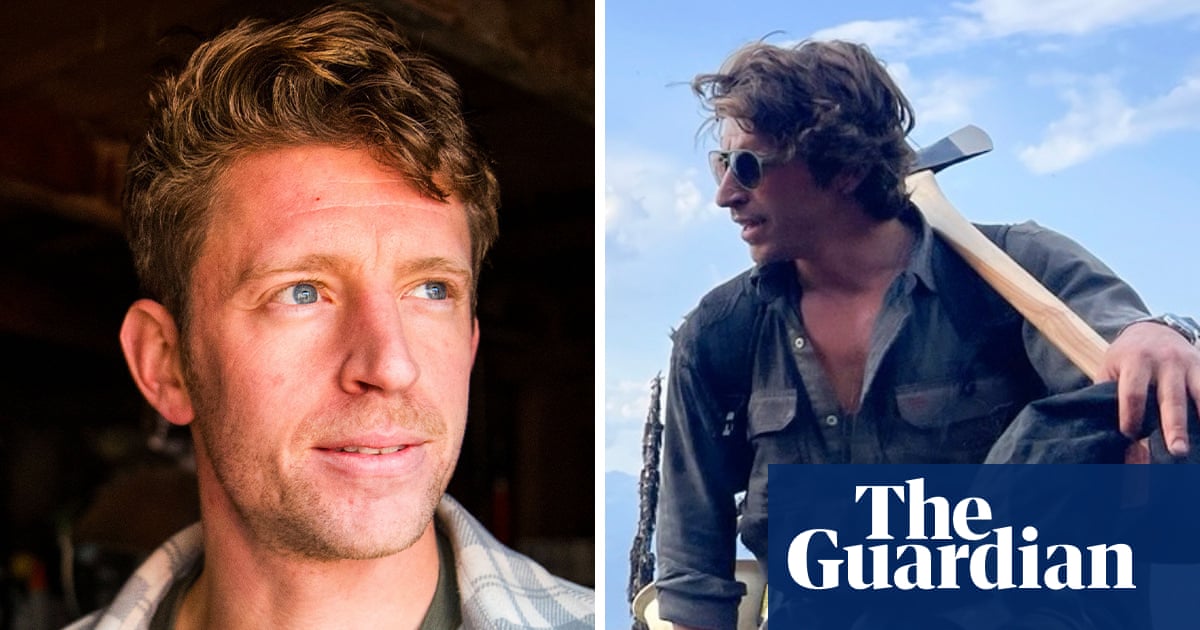
At around five o’clock on a winter evening in 2013, then college student Sam Forstag was driving through a snowstorm toward his third job of the day, making sandwiches at the Subway inside a Walmart.
asserted
Forstag → drive → Walmart
“I was always late,” Forstag recalled with a laugh more than a decade later.
asserted
Forstag → recall → laugh
Halfway there, the gray sedan in front of him lost traction.
asserted
sedan → lose → traction
It spun across the icy road and slid nose-first into a ditch.
asserted
It → spin → ditch
Forstag’s first instinct was to pull over.
asserted
instinct → pull → ?
Growing up in a tight-knit community in North Portland, Oregon, and later in Montana, he had learned that when someone’s car ended up in a ditch, you stopped.
asserted
you → grow → ditch
You grabbed a shovel or you called a neighbor.
asserted
you → grab → neighbor
You helped push the car back on to the road.
asserted
You → push → road
That was simply what people did.
asserted
people → do → what
But he kept driving.
asserted
he → keep → ?
“I remember thinking, ‘I should stop – but I don’t have time,’” he said.
asserted
he → think → time
He couldn’t afford to lose the job that helped pay his rent, car payment and groceries.
asserted
that → afford → rent
He thought about it for the rest of that sandwich-making shift.
asserted
He → think → shift
That memory has become part of Forstag’s political identity as a firefighter turned Democratic candidate hoping to flip Montana’s first congressional district in November’s midterm election.
asserted
memory → become → election
Once a scholarship kid at a Catholic high school, 32-year-old Forstag has built his campaign around a deeply personal argument: that the economic pressures consuming many Americans do more than empty their wallets.
asserted
pressures → build → wallets
They leave people with less time and capacity to care for one another.
asserted
They → leave → one
That message has helped Forstag galvanize young and working-class voters in a district that has long favored Republicans.
asserted
that → help → Republicans
“There are a lot of people in this country who don’t have the time,” he said.
asserted
he → be → time
“It’s much harder to extend the kind of compassion your neighbors deserve when you’re working three jobs just to get by.”
asserted
you → ’ → jobs
He sees Donald Trump-era politics as a consequence of years of economic struggle that has shattered the lives of working-class people.
asserted
that → see → people
And he believes that politicians such as the president exploit that desperation, he said, turning economic anxiety into anti-immigrant rhetoric and culture-war battles while voters’ material conditions continue to deteriorate.
asserted
conditions → believe → rhetoric
“If your life is getting materially worse year after year, and you vote for the party out of power, that’s how democracy works.
asserted
democracy → get → power
People who vote [for the opposition] are rightfully disillusioned and frustrated with the entire system because the system has not served them for too damn long,” he said.
asserted
he → vote → them
But his own life story gives him reason to think there’s another way out.
asserted
story → give → reason
Forstag grew up in a single-parent household in which his mother, an intensive care nurse, worked overnight shifts to raise her children.
asserted
mother → grow → children
“I remember being a nine-year-old who was worried that Mom was working too much,” he said.
asserted
he → remember → ?
On days when she had to work overnight, she would drop him and his sister at a friend’s house at about 6am.
asserted
she → have → am
By the time school ended, she was often still at the hospital.
asserted
she → end → hospital
Friends’ parents would drive him home, or he’d frequently ride his bike home: a $20 pink garage sale find, complete with sparkly decorations that were supposed to embarrass him when he’d lost a previous bike (“instead, I loved it,” he said).
asserted
he → drive → it
But what he remembers most is not how hard his mother worked, but how after a full emergency room shift, his mother didn’t treat caring for others as extraordinary.
asserted
mother → remember → others
By the time he turned 30, Forstag felt he had finally found stability, a place to call home and, most important, his community.
asserted
he → turn → stability
And it came through smokejumping, or parachuting into fire zones to put out the blaze.
asserted
it → come → blaze
Smokejumping was the first career that gave Forstag health insurance, a retirement account, and a paycheck steady enough to cover his mortgage and student loans.
asserted
that → give → mortgage
For eight fire seasons, he and his crew dropped into remote terrain to battle some of the country’s most dangerous fires.
asserted
he → drop → fires
The work was physically brutal and often dangerous, but the people who stood beside him became more than co-workers.
asserted
who → stand → workers
Many came from backgrounds that felt familiar to him – working-class families, small town residents, people who depended on the job not only for a paycheck but for healthcare, retirement and a sense of purpose.
asserted
who → come → purpose
Then, after Trump returned to the White House in 2025, that sense of security began to unravel.
asserted
sense → return → security
Trump had campaigned on reducing government and appointed Elon Musk to lead the “department of government efficiency” (Doge), which oversaw sweeping reductions in the federal workforce.
asserted
which → campaign → workforce
Among those affected were smokejumpers and other federal wildland firefighters in Montana.
asserted
smokejumpers → affect → Montana
Friends and union colleagues who had spent years risking their lives fighting wildfires suddenly found themselves without jobs or health insurance.
asserted
themselves → spend → jobs
…and 107 more, not listed.
 The Aporia