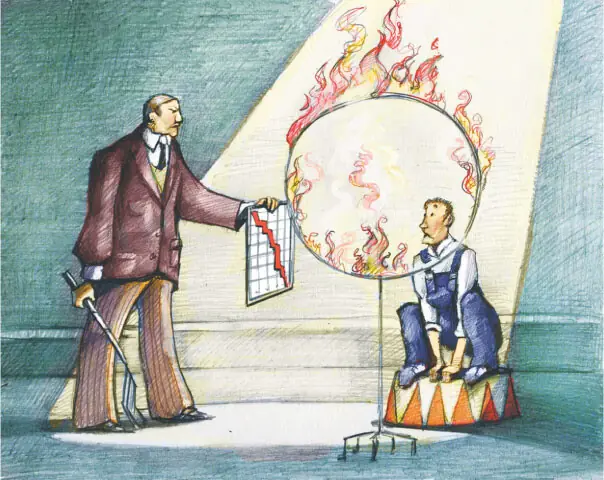
Pakistan faces a less forgiving global financial environment just as its sovereign risk has declined and foreign-exchange reserves have recovered.
asserted
reserves → face → environment
The yield on the 10-year US Treasury rose above five per cent in late September, touching 5.29pc on September 29, its highest level since 2007.
asserted
yield → rise → 2007
The obvious consequence is that Pakistan will pay more for dollar borrowing.
asserted
Pakistan → pay → borrowing
But the effects go further.
asserted
effects → go → ?
Persistently high US rates raise the returns demanded on foreign investment, reduce valuations of assets the government wants to privatise, increase the cost of maintaining borrowed reserves and complicate monetary policy at home.
asserted
government → raise → home
Pakistan’s reserves had recovered to $21.4 billion by September 18, an important achievement after the near-crisis of 2023.
asserted
reserves → recover → 2023
But reserves represent only one side of a country’s balance sheet.
asserted
reserves → represent → sheet
To the extent that they are accumulated through new external liabilities, the headline number can overstate the improvement in the underlying external position.
asserted
number → accumulate → position
If Pakistan borrows internationally at high rates and some of the proceeds sit in reserves invested in safer, lower-yielding assets, it has purchased valuable insurance against a foreign-exchange crisis — but at a cost.
asserted
it → borrow → cost
Reserves accumulated through exports do not create the same liability.
asserted
Reserves → accumulate → liability
Over time, what matters is not simply the level of reserves but the economy’s ability to replenish them through its own foreign-exchange earnings.
asserted
matters → matter → earnings
High rates raise the returns demanded on foreign investment, reduce valuations of assets the government wants to privatise, increase the cost of maintaining borrowed reserves and complicate monetary policy
High
asserted
government → raise → policy
US rates also alter the economics of foreign investment.
asserted
rates → alter → investment
Pakistan is placing considerable hopes on attracting capital into mining, energy and infrastructure.
asserted
Pakistan → place → mining
International investors, however, do not evaluate Pakistani projects in isolation.
asserted
investors → evaluate → isolation
When US government bonds yielded close to zero, a project offering an expected dollar return of 10pc could appear attractive despite substantial risk.
uncertain
project → yield → risk
If investors can obtain more than 5pc from US government debt, Pakistani projects must offer appreciably more to compensate for currency, regulatory, political and execution risks.
asserted
projects → obtain → risks
That raises Pakistan’s cost of equity as well as its cost of debt.
asserted
That → raise → debt
It also affects privatisation.
asserted
It → affect → privatisation
An asset’s value reflects the present value of its expected future cash flows.
asserted
value → reflect → flows
Higher discount rates reduce that value.
asserted
rates → reduce → value
Islamabad may therefore find itself trying to sell assets when expensive global capital is reducing what international investors are prepared to pay.
uncertain
investors → find → what
High US rates also complicate monetary policy.
asserted
rates → complicate → policy
The State Bank’s policy rate remains well above US rates, and its primary mandate is domestic price stability.
asserted
mandate → remain → rates
But global rates influence the attractiveness of dollar and rupee assets, external financing conditions and exchange-rate pressures.
asserted
rates → influence → assets
Nevertheless, persistently high US yields could narrow the room for domestic easing if inflation or pressure on the rupee were to re-emerge.
uncertain
inflation → narrow → rupee
The more important question concerns the use of foreign capital.
asserted
question → concern → capital
A country borrowing dollars at high rates cannot sustainably use those funds for consumption, recurrent expenditure or investments generating inadequate returns.
asserted
country → borrow → returns
Projects financed by external debt eventually need to produce sufficient economic value — and foreign-exchange earnings or savings — to service that debt.
asserted
Projects → finance → debt
This exposes a longstanding weakness in Pakistan’s development model.
asserted
This → expose → model
The country has often borrowed abroad to finance investments that generate economic activity domestically but limited foreign currency.
asserted
that → borrow → activity
Roads, power plants and urban infrastructure may raise welfare and productivity, but dollar debt incurred to finance them must ultimately be serviced through exports, remittances, foreign investment or further borrowing.
uncertain
debt → raise → exports
A project can therefore generate an acceptable domestic return while weakening the external balance sheet if the foreign exchange it earns or saves is insufficient to service the external debt incurred to finance it.
asserted
it → generate → it
The problem was easier to obscure when global money was cheap.
asserted
money → obscure → ?
It becomes harder when the risk-free dollar rate exceeds 5 per cent.
asserted
rate → become → cent
Pakistan’s successful $3bn international bond issue in September demonstrates how far market confidence has recovered.
asserted
confidence → demonstrate → September
It raised $1.75bn through 5.5-year bonds at 7.5 per cent and $1.25bn through 10-year bonds at 7.9 per cent.
asserted
It → raise → cent
Renewed market access is valuable, but it also creates a familiar temptation: to interpret the ability to borrow again as evidence that the external problem has been solved.
asserted
problem → create → evidence
Pakistan has experienced versions of this cycle before.
asserted
Pakistan → experience → cycle
Reserves recover, sovereign spreads decline, and imports rise as economic activity strengthens.
asserted
activity → recover → ?
…and 11 more, not listed.
 The Aporia