That is 0 articles you have read today.
The Aporia is free and carries no advertising, so readers are the only
thing paying for it. If you are getting this much out of it, a small
donation is what keeps it independent.
Daily limit reached
You have read 0 articles today.
That is more than the 15 a day The Aporia gives away,
and well past what it can carry on nothing. Your allowance resets at
midnight.
There is no advertising here and nothing about you is sold, so readers
are the only thing paying for it. If the site is worth this much of
your day, it is worth a few dollars.
Everything else stays open: the
maps, the
directory and
search do
not count against this, and neither does re-opening something you have
already read today.
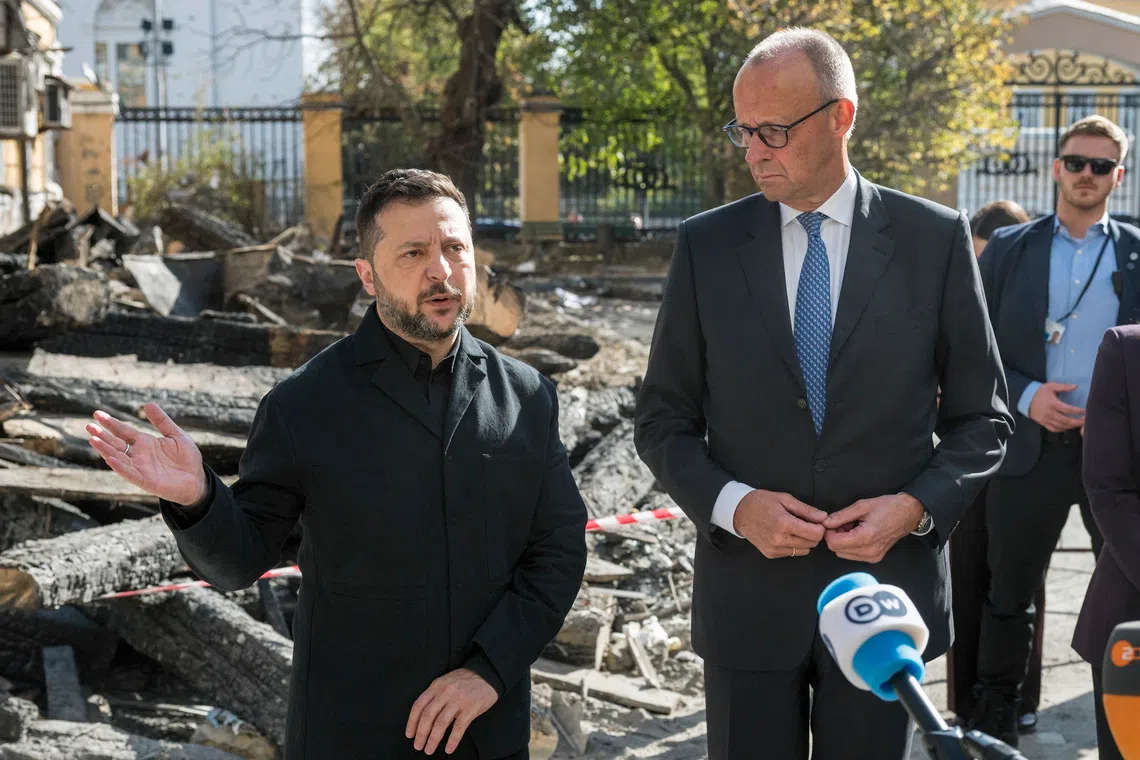
German Chancellor Friedrich Merz visited Kyiv on Sunday to show support for Ukraine amid increasing Russian attacks on the city’s infrastructure. Accompanied by Economy Minister Katherina Reiche, Merz met with Ukrainian Foreign Minister Andriy Sybiga and later spoke directly with President Volodymyr Zelenskyy about ongoing bilateral and international issues. The visit comes as Russia has warned of impending large-scale airstrikes in Kyiv, despite previous warnings being ignored by supportive nations like Germany.
Written locally by qwen2.5:14b on 2026-10-04,
using this article's own text rather than the other coverage of the
same event (that is the story summary below).
Story summary
On October 4, Ukrainian President Volodymyr Zelensky stated that the United States is proposing trilateral talks involving Ukraine and Russia by the end of October. During a press conference with visiting German Chancellor Friedrich Merz, Zelensky confirmed that Kyiv supports this timeline for returning to negotiations aimed at ending the nearly 5-year-long conflict. The Ukrainian president also indicated openness to holding discussions in the United Arab Emirates or another location suggested by the U.S.
Meanwhile, Merz arrived in Kyiv to announce €1 billion (S$1.4 billion) in military aid and an additional €350 million for repairing damaged energy infrastructure in Ukraine. The visit was marked by ongoing Russian drone attacks on Kyiv, including a strike that hit the Northern Bridge across the Dnipro River. Despite these threats, Merz reaffirmed Germany's commitment to supporting Ukraine, emphasizing it as crucial for Europe’s security.
Written for “Russia Strikes Ukraine During Talks” on 2026-10-04,
grounded in this article and the 18 other(s) covering the same event.
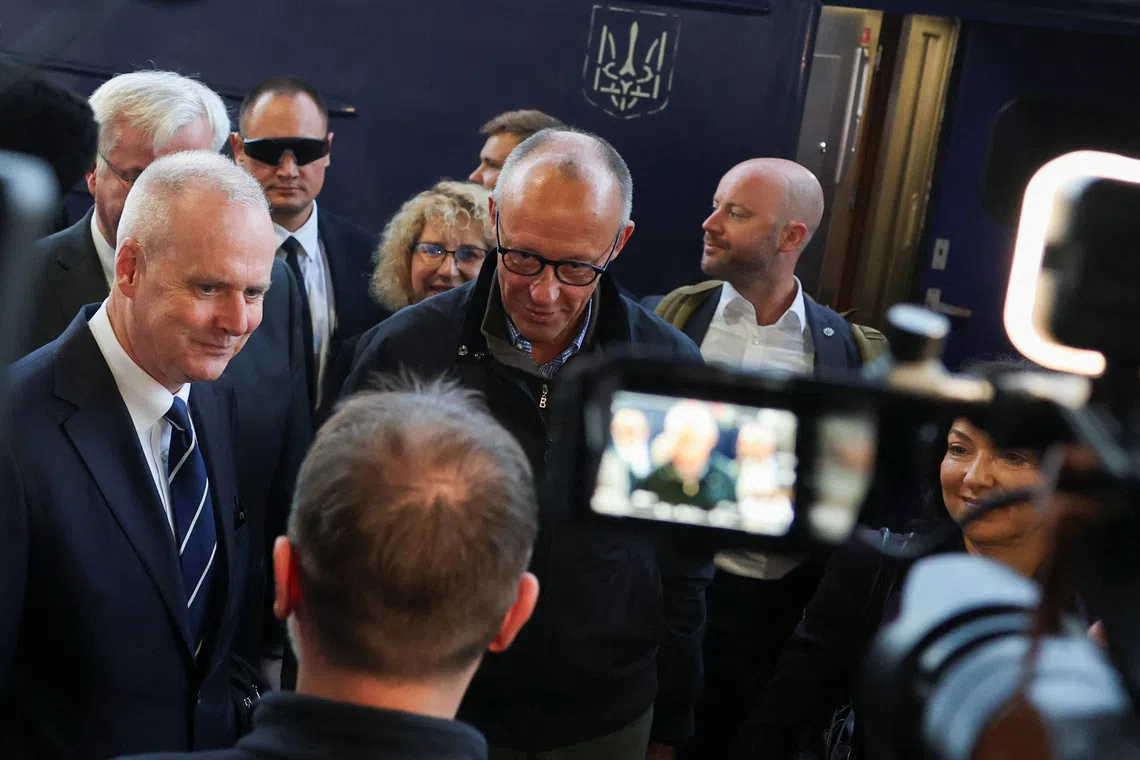
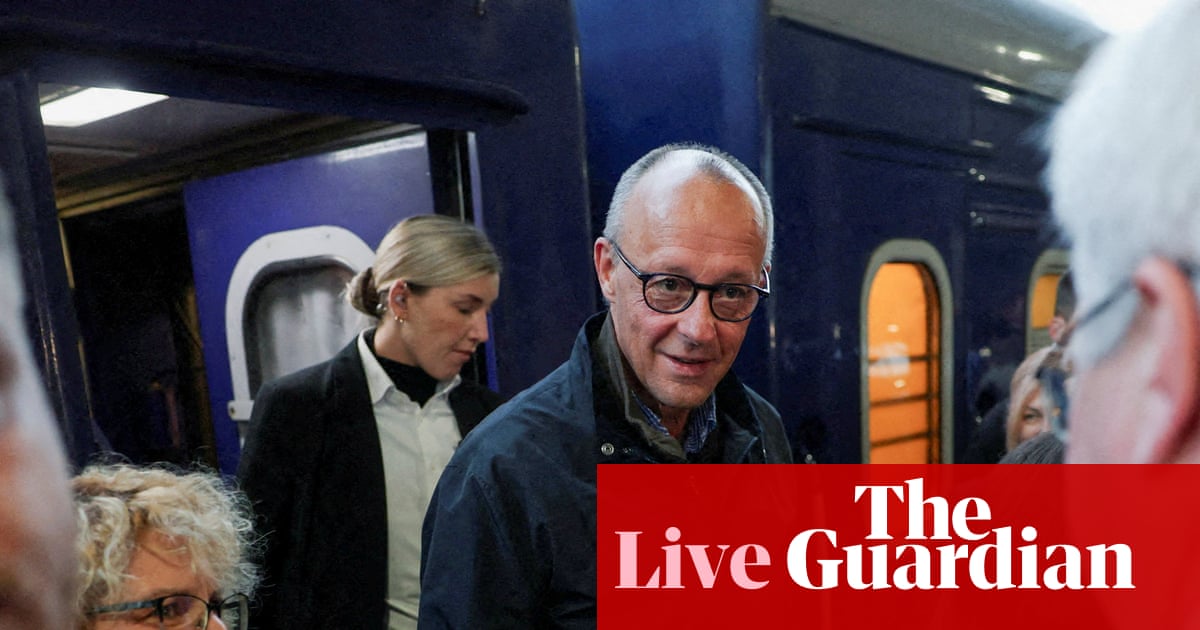
German Chancellor Friedrich Merz arrived in Ukraine's capital, Kyiv, on Sunday on an unannounced visit in a show of support for the country in its war with Russia.
asserted
Merz → arrive → Russia
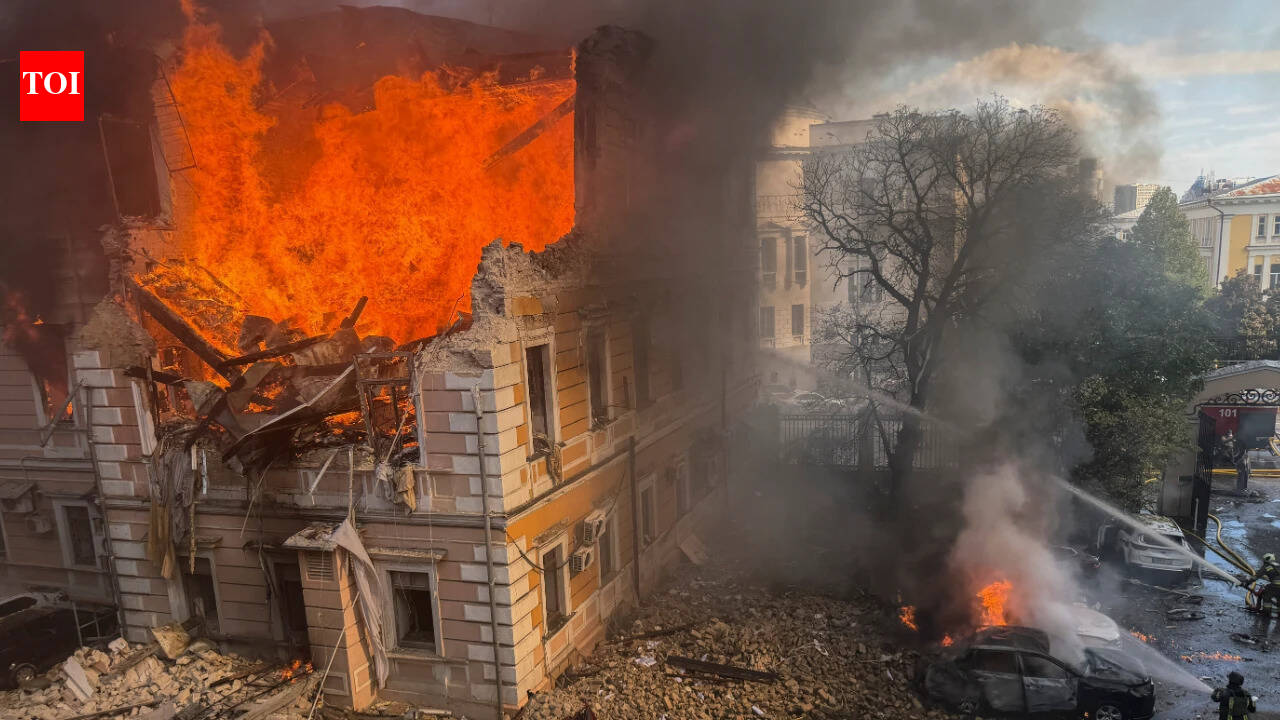
Kyiv is under increasing attack from Russian missiles and drones, which are targeting key infrastructure, including the energy sector vital for power and heating as winter approaches.
asserted
winter → increase → power
"I travelled to Kyiv today because Ukraine needs all our support in the coming weeks," Mr. Merz said in a statement issued after his arrival.
asserted
Merz → travel → arrival
"If Russia is not stopped, its war machine will sooner or later turn against us."
Mr. Merz, whose country is among Ukraine's largest supporters, has been joined on the trip by Economy Minister Katherina Reiche, according to government sources.
uncertain
country → stop → sources
He was met off the train by Ukraine's Foreign Minister Andriy Sybiga, who said he would hold talks with President Volodymyr Zelenskyy "on all matters of our bilateral, European, and international agenda."
asserted
he → meet → agenda
"Ukraine and Germany have built a strong strategic partnership, and we are determined to deepen it further," Mr. Sybiga wrote on X.
Mr. Merz said in his statement that he would tell Ukraine's leader: "You can continue to count on our help."
The statement also touted cooperation between German and Ukrainian companies.
asserted
statement → build → companies
The German Chancellor earlier this week called for unity within NATO, Europe and his own country, where the far-right and Moscow-friendly Alternative for Germany (AfD) opposition is on the rise.
asserted
opposition → call → rise
On Saturday, Russia warned foreigners and diplomats to leave Kyiv, saying "massive" new airstrikes would hit the city.
asserted
airstrikes → warn → city
The Russian Foreign Ministry declared in a statement that "responsibility for any potential negative consequences rests entirely with those who ignore this warning."
asserted
who → declare → warning
Moscow had issued a similar warning in May, but leaders from countries supporting Ukraine have defied the Russian warnings and continued to make visits.
uncertain
leaders → issue → visits
Kyiv has faced heavy airstrikes and has repeatedly pleaded for additional air defence munitions to counter Russian drone and missile attacks.
asserted
Kyiv → face → attacks
In recent days, Russia has attacked several bridges across the Dnipro river that divides the city, causing traffic gridlock and transport disruption.
asserted
that → attack → gridlock
Kyiv Mayor Vitali Klitschko said on Friday that the city, which is far from the front line of fighting between soldiers, was in a "very dramatic situation" and should now be on a war footing.
asserted
which → say → footing
 The Aporia