The article analyzes why lower inflation rates in Pakistan do not reflect reduced costs for everyday essentials. Despite a slowdown in headline inflation, essential items like onions, electricity, diesel, petrol, wheat flour, beef, and vegetable ghee remain significantly more expensive than they were two years ago. For instance, the price of a 20kg bag of wheat flour increased by 47%, while petrol prices rose by 56.9% during this period. The piece highlights that lower inflation rates indicate slower price increases rather than returning to previous levels, explaining the gap between official statistics and consumer experiences.
Written locally by qwen2.5:14b on 2026-10-04,
using this article's own text rather than the other coverage of the
same event (that is the story summary below).
A SLOWDOWN in inflation may offer some statistical relief to the government, but prices of everyday essentials remain substantially higher than they were two years ago.
uncertain
they → offer → essentials
The apparent contradiction lies in the difference between what inflation measures and what consumers experience when they enter the market.
asserted
they → lie → market
Headline inflation measures how quickly the overall price basket is changing.
asserted
basket → measure → ?
It does not show how far the general price level has already risen.
asserted
level → show → ?
The official measure is based on prices collected from different markets and cities and combined into urban, rural and national indices.
asserted
measure → base → indices
Therefore, a national average may not correspond to the retail price paid by an individual consumer in a particular market.
uncertain
average → correspond → market
Lower inflation does not mean prices have returned to previous levels.
asserted
prices → mean → levels
It simply means that they are rising more slowly on average.
asserted
they → mean → ?
Consumers continue to bear the cumulative impact of price increases recorded in previous years.
asserted
Consumers → continue → years
This helps explain why easing inflation has yet to translate into a comparable reduction in the cost of living.
asserted
inflation → help → living
A comparison of Pakistan Bureau of Statistics prices between October 2024 and October 2026 illustrates the extent of that accumulated burden.
asserted
comparison → illustrate → burden
Several essential food and energy items remained substantially more expensive than they were two years earlier, even though headline inflation later moderated.
asserted
inflation → remain → ?
Slower inflation masks cumulative rise in essential prices over past two years
These individual price movements do not, of course, represent overall inflation, which is calculated from a weighted basket of goods and services.
asserted
which → mask → goods
But they help explain the disconnect between official inflation readings and what consumers encounter in retail markets.
asserted
consumers → help → markets
Wheat flour provides one of the clearest examples.
asserted
flour → provide → examples
The national average price of a 20kg flour bag increased from Rs1,835 in October 2024 to Rs2,697 in October 2026 — an increase of 47 per cent.
asserted
price → increase → cent
Beef with bone became 26.7pc more expensive, while the price of a 2.5kg tin of vegetable ghee rose by 18.5pc.
asserted
price → become → 18.5pc
Petrol rose from Rs248.18 per litre in October 2024 to Rs389.51 in October 2026, an increase of 56.9pc.
asserted
Petrol → rise → 56.9pc
High-speed diesel increased from Rs252.43 to Rs402.53 per litre over the same period, a rise of 59.5pc.
asserted
diesel → increase → 59.5pc
This is where the distinction between inflation and the price level becomes especially important.
asserted
distinction → become → inflation
Inflation captures the pace at which prices are changing across a weighted basket.
asserted
prices → capture → basket
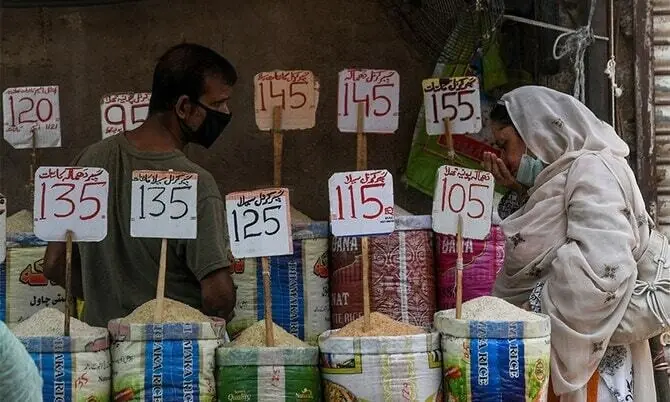
By contrast, consumers confront the actual price level when buying flour, meat, fuel and other necessities.
asserted
consumers → confront → flour
Several factors are contributing to the current price pressures, but former economic adviser to the government Dr Ashfaq Hasan Khan attributes them largely to higher global energy prices and domestic food prices, particularly wheat.
asserted
Khan → contribute → prices
He said higher energy prices were a global phenomenon, but governments elsewhere had sought to cushion consumers by reducing the incidence of taxation.
asserted
governments → say → taxation
In Pakistan, he argued, the impact of higher international energy prices had been compounded by the petroleum levy.
asserted
impact → argue → levy
“The petroleum levy is the root cause of rising inflation in Pakistan, besides higher global energy and food prices,” Dr Khan said, referring to a levy of Rs85 per litre.
asserted
Khan → rise → litre
He described the current pressures as predominantly from the supply side rather than the result of excessive consumer demand.
asserted
He → describe → demand
That distinction matters for the choice of policy response, he argued.
asserted
he → matter → response
“IMF is pressurising Pakistan to devalue its exchange rate and also increase SBP policy rate,” he said.
asserted
he → pressurise → rate
Under a conventional IMF stabilisation programme, tighter monetary policy is used to curb demand, helping contain inflation and ease balance-of-payments pressures.
asserted
policy → use → pressures
But if inflation is being driven mainly by energy costs, petroleum levies and food prices, higher interest rates do not directly address the underlying sources of the increase, Dr Khan argued.
asserted
Khan → drive → increase
“Raising interest rates is not the right solution to supply-side inflation,” he said, referring to the IMF demand for an increase in interest rates.
asserted
he → raise → rates
 The Aporia