That is 0 articles you have read today.
The Aporia is free and carries no advertising, so readers are the only
thing paying for it. If you are getting this much out of it, a small
donation is what keeps it independent.
Daily limit reached
You have read 0 articles today.
That is more than the 15 a day The Aporia gives away,
and well past what it can carry on nothing. Your allowance resets at
midnight.
There is no advertising here and nothing about you is sold, so readers
are the only thing paying for it. If the site is worth this much of
your day, it is worth a few dollars.
Everything else stays open: the
maps, the
directory and
search do
not count against this, and neither does re-opening something you have
already read today.
The Guardian
· collected 2026-10-03 · by Peter Walker Senior political correspondent
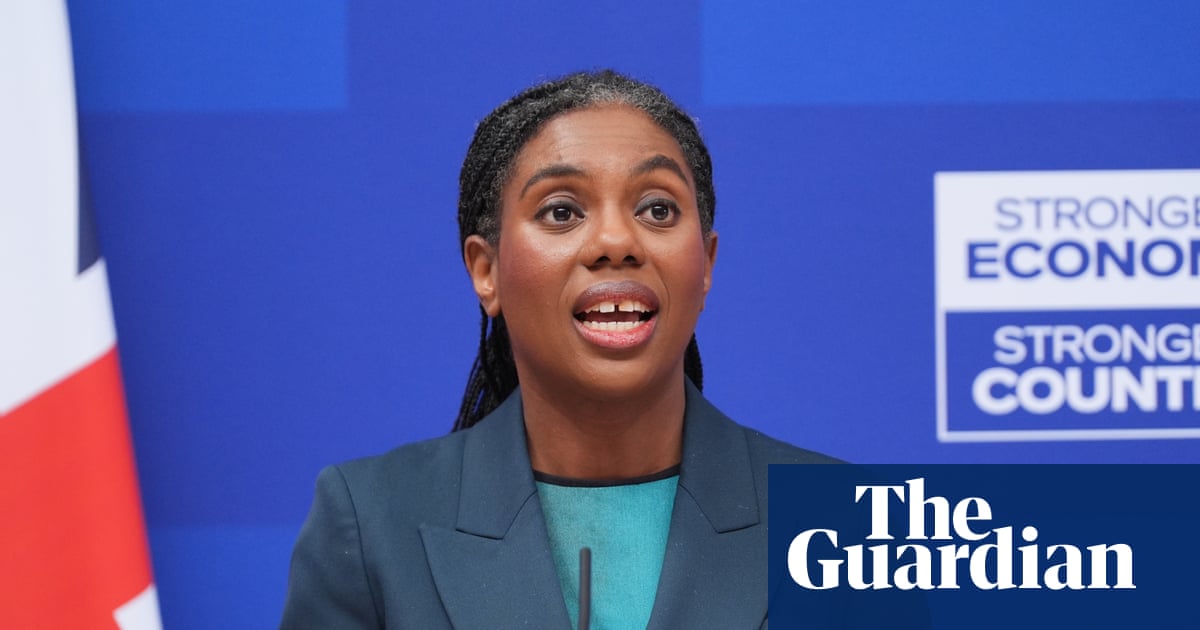
The Conservative Party has proposed expanding free childcare benefits to high-income families, eliminating the current salary cap of £100,000. This plan, which would cost approximately £700 million annually, was outlined by Women and Equalities Minister Kemi Badenoch ahead of the party's annual conference in Birmingham. The proposal aims to remove a disincentive for higher earning parents to increase their work hours or accept promotions, arguing that current policies punish those who earn more than £100,000 annually, regardless of another parent’s income contribution.
Written locally by qwen2.5:14b on 2026-10-03,
using this article's own text rather than the other coverage of the
same event (that is the story summary below).
Story summary
The Conservative Party, on the eve of their conference in Birmingham, announced plans to scrap the current childcare subsidy threshold of £100,000 per year. Under existing rules, families can receive up to 30 free hours of childcare weekly if both parents earn less than £100,000 annually; however, they lose this benefit if one parent crosses that income limit. Kemi Badenoch, the Conservative leader, described the current system as "absurd" and a disincentive for working more.
The proposed policy would extend childcare benefits to all parents who work at least 16 hours weekly, regardless of their earnings. The Conservatives estimate this change will cost approximately £700 million annually, which they propose funding by cutting jobs from organizations such as the Arts Council England and the Environment Agency, potentially saving up to £1.6 billion by the end of the decade through reduced staffing at these bodies.
This announcement is part of broader efforts by the Conservatives to address issues in the tax system that can discourage work or investment, aiming to support families financially without penalizing them for higher earnings.
Written for “Tories Childcare Pledge” on 2026-10-05,
grounded in this article and the 3 other(s) covering the same event.
The Conservatives have unveiled a proposed £700m childcare giveaway for high earners ahead of their annual conference, saying they would end the “cliff edge” where free entitlement ends at salaries above £100,000.
asserted
entitlement → unveil → 100,000
The plan, set out the day before the event begins in Birmingham, follows the earlier proposal by Kemi Badenoch’s party to abolish most stamp duty, another change to taxation that would disproportionately benefit wealthier people.
asserted
that → set → people
Under the current system, put in place under Rishi Sunak’s government, families with young children in England are eligible for 30 hours a week of free childcare, but this cuts off if one parent earns more than £100,000, irrespective of another parent’s salary.
asserted
parent → put → salary
Under the Conservative plans, this limit would be abolished, with all parents working 16 or more hours a week able to claim the childcare.
uncertain
parents → abolish → childcare
The party says it would cost aabout £700m a year, which it says would be paid for by cutting jobs at organisations such as Arts Council England and the Environment Agency.
asserted
it → say → England
In comments released to promote the idea, Badenoch said the current system was “absurd” and a disincentive to work more.
asserted
system → release → idea
She said: “Conservatives believe that you shouldn’t be punished for working more, but this childcare cliff edge does exactly that.
asserted
edge → say → that
“I’m a mum-of-three and I’ve had to make the same choices many families have had to make on work and childcare.
asserted
families → ’m → work
Those choices are difficult already, government should not be making them harder.
asserted
them → make → ?
“No one should be turning down a promotion or a pay rise because they literally cannot afford to earn more.
asserted
they → turn → more
“It is often women who end up carrying more of the childcare responsibility so a system that makes it harder for them to progress in their careers is not helping families, it is not helping women and it is definitely not helping the economy.”
asserted
it → end → economy
A Labour spokesperson said: “It tells you everything you need to know about the Tories that the first of their own tax policies they want to unpick is one helping higher earners.
asserted
they → say → earners
They clearly don’t want to admit that they set the thresholds in the first place.”
asserted
they → want → place
The idea of abolishing stamp duty on people’s primary residences in England and Northern Ireland was unveiled by Badenoch at last year’s conference, costing an estimated £9bn a year.
asserted
idea → abolish → 9bn
While some economists have argued that stamp duty can have a drag on the housing market and even the economy, as it disincentivises moving, scrapping it rather than reforming the tax would disproportionately benefit better-off people and those in London and south-east England.
asserted
scrapping → argue → London
The other main policy set out ahead of the conference was a plan to build 50,000 new prison spaces in England and Wales, a 50% expansion in capacity.
asserted
policy → set → capacity
This would be paid for in part by slashing overseas aid to £1bn a year, a 90% cut on current plans.
asserted
This → pay → plans
Under Keir Starmer, Labour said they would reduce aid from 0.5% of GDP to 0.3% by 2027, but even that lower proportion would still amount to £9bn a year.
asserted
proportion → say → 9bn
When Reform UK announced plans to cut aid to £1bn a year, aid groups warned that this would not cover existing contributions to global bodies such as the UN and World Bank, shredding Britain’s international influence.
asserted
this → announce → influence
 The Aporia