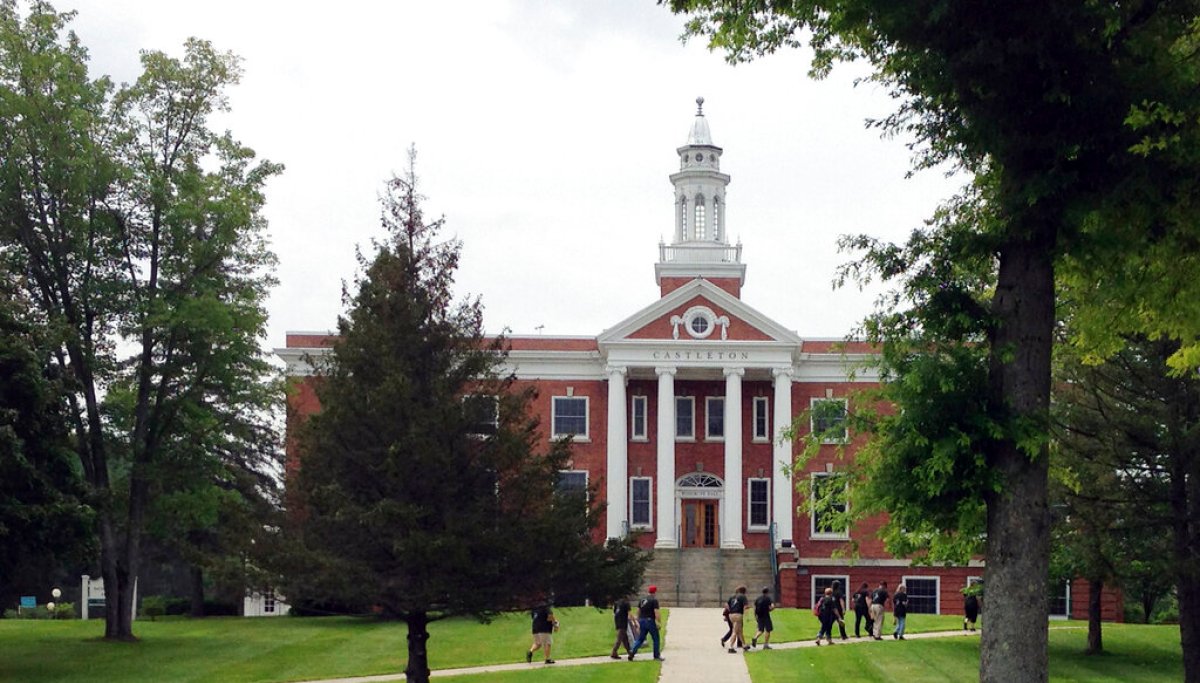
American colleges and universities are panicking, for good reason.
asserted
colleges → panic → reason
Enrollment across all of academia has been dropping for years, and starting now, there will be fewer and fewer college-aged people every year for the forseeable future.
asserted
Enrollment → drop → future
Colleges are scrambling for a way to survive.
asserted
Colleges → scramble → way
Big schools are slashing their course offerings.
asserted
schools → slash → offerings
Small schools are making desperate plays to find a niche in a shrinking market.
asserted
schools → make → market
The bitter irony is this: American colleges and universities brought this crisis on themselves.
asserted
colleges → bring → themselves
The Baby Bust has a thousand causes, but some of the most significant anti-natal cultural and economic trends were created by America’s colleges and universities.
asserted
some → have → colleges
From anti-family feminism to extended adolescence, through unreasonable expectations and mountains of debt, colleges created conditions that put their own survival at risk by turning out graduates who were indisposed to creating the next generation.
asserted
who → create → generation
In 2007, the public had 4.32 million babies, and a Total Fertility Rate of 2.12 babies per woman — right about the “replacement level” at which a population can hold stable.
asserted
population → have → which
Since then, the number of babies born has dropped nearly every year, reaching 3.61 million in 2025, giving us a Total Fertility Rate of 1.79.
asserted
number → bear → 1.79
We’ve passed Peak Child as a country.
asserted
We → pass → country
The Baby Bust began 18 years ago, which means that last Spring’s high school graduating class was the largest one for the foreseeable future.
asserted
class → begin → future
Basically, every year for at least the next 18 years, the number of potential college freshmen will fall.
asserted
number → fall → freshmen
What has caused the Baby Bust?
asserted
What → cause → Bust
But some of those causes came out of academia itself.
asserted
some → come → academia
Most obviously, young people are starting their adult lives — and their families — later and later every year.
asserted
people → start → lives
In 1990, about 24% Americans aged 25-34 had a college degree.
asserted
Americans → age → degree
Now it’s more than 42%.
asserted
it → ’ → ?
That’s a 75% rise.
asserted
That → ’ → ?
Increasingly, a white-collar job seems to require an advanced degree, which pushes folks into their late 20s before they even enter the workforce.
asserted
they → seem → workforce
Colleges (outside of BYU and a handful of others) make it very clear that one is not to get married or even consider having children until after graduation.
asserted
one → make → graduation
As a tangible sign of this norm, only about 8% of colleges and universities offer housing for students who are parents, according to the Campus Family Housing database.
uncertain
who → offer → database
As a result, Americans are getting married later.
asserted
Americans → marry → result
In 2006, before the Baby Bust, the average age at first marriage was 25 for women and 27 for men according to Census data.
uncertain
age → accord → data
That number moves later as educational attainment increases.
asserted
attainment → move → ?
These numbers are medians, which indicates that most Americans make it into their 30s never having been married.
asserted
Americans → indicate → 30s
Waiting longer before starting a family increases the odds that one might never have children (especially because fertility declines throughout one’s 30s), and it mechanically reduces the birth rate simply by spacing out the generations.
uncertain
it → wait → generations
Also, college graduates enter adulthood with significant debt.
asserted
graduates → enter → debt
A majority of people with a bachelor’s degree borrowed to pay for it, and the median amount of debt among that majority is over $25,000.
asserted
amount → borrow → majority
All of this leads to later — and thus less — family formation.
asserted
All → lead → formation
Follow the cultural debate on social media, and you will get an insight into the mind of a Gen Z’er who sees family as out of reach.
asserted
who → follow → reach
You will see them complain about a budget that includes food delivery, and then defend themselves by saying that the ability to cook oneself dinner is a privilege, and that it is oppressive to suggest one rely on store-bought Ramen noodles for dinner sometimes.
asserted
one → see → dinner
You will see them react with horror to the idea of sharing a room with a friend or even a sibling.
asserted
them → see → friend
And you will wonder where they got the idea that a normal American in his or her 20s should live a comfortable life.
asserted
American → wonder → life
If your idea of college is rubber chicken on Wednesday nights and chipped linoleum floors in a drafty dorm room, you should update that picture for today.
asserted
you → chip → today
Elite schools and large public universities often look like resorts rather than upscale prisons.
asserted
schools → look → prisons
Subsidized heavily by the federal government, there’s only so much these schools can spend on instruction, so they compete with one another by making the experience more pleasant.
asserted
experience → subsidize → one
One result is 22-year-old graduates accustomed to luxury.
asserted
result → accustom → luxury
If they grew up middle-class or above, they never experienced the temporary poverty that defined college for Gen. X, and defines the years of being newlywed with children in one’s 20s.
asserted
that → grow → 20s
These expectations set by colleges probably delay family formation, because having kids entails financial sacrifices, especially if one has those kids in one’s 20s.
asserted
one → set → 20s
…and 12 more, not listed.
 The Aporia