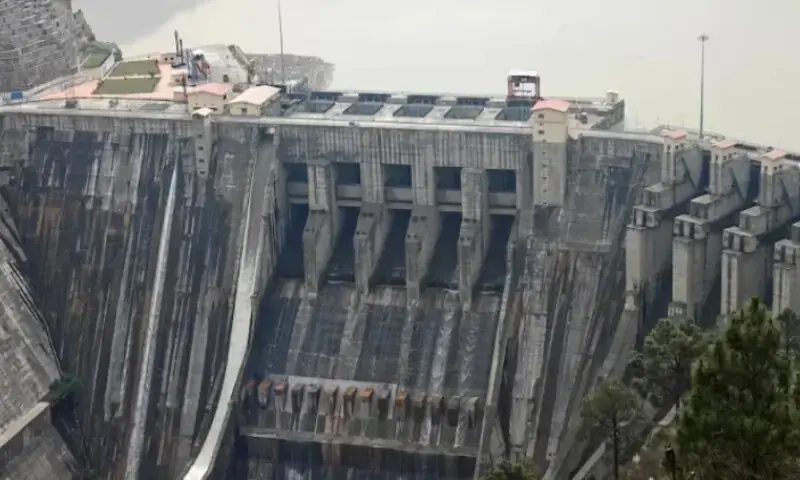
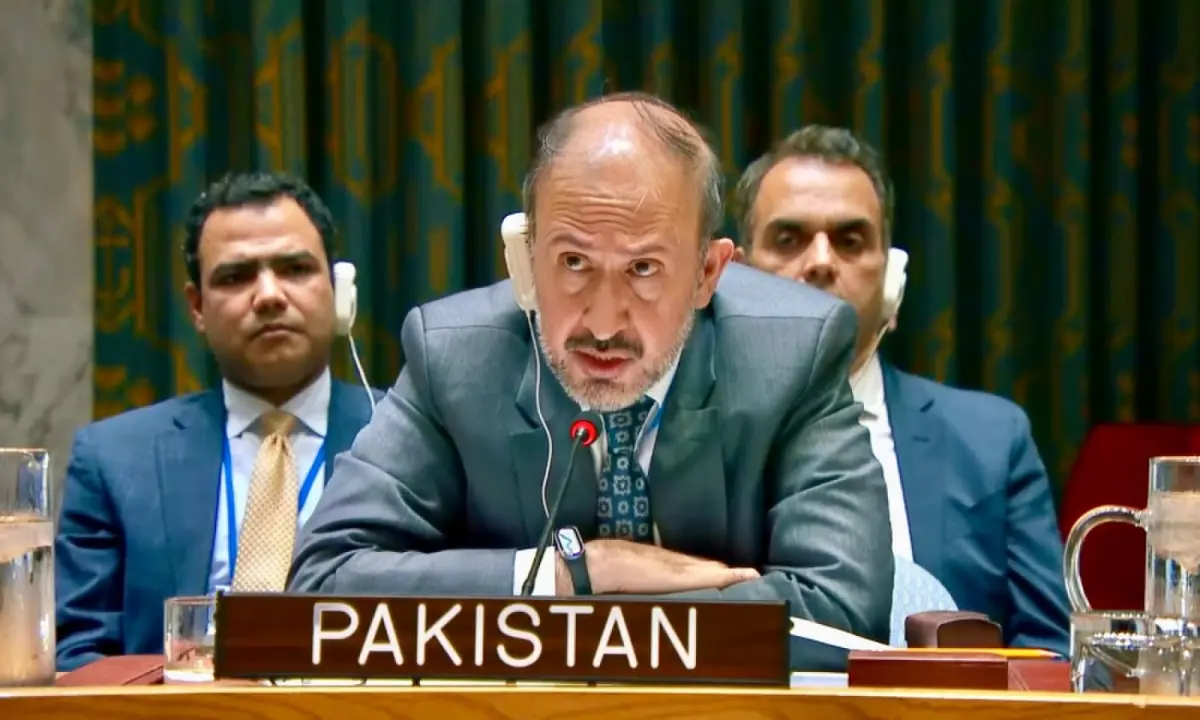
Photo via Dawn

Indus Waters Treaty abeyance puts millions at risk, UNHRC event warns

Read the original at Dawn ↗
Cite

Iqbal, A. (2026, October 3). Indus Waters Treaty abeyance puts millions at risk, UNHRC event warns. Dawn. https://www.dawn.com/news/2034445/indus-waters-treaty-abeyance-puts-millions-at-risk-unhrc-event-warns

Dated when The Aporia collected the article, usually within hours of publication. Check the original for its exact date and byline.

Dawn · collected 2026-10-03 · by Anwar Iqbal

Quick Summary

At a side event during the UN Human Rights Council session in Geneva, concerns were raised about India's decision to place the Indus Waters Treaty (IWT) in abeyance, affecting millions reliant on the Indus Basin for water security and agriculture. Legal experts discussed the implications of this move on international water law and human rights, with Rashida Abbas emphasizing that rivers impact people directly beyond just state relations. The event also highlighted broader trans-boundary water challenges and the need for cooperative frameworks to ensure water justice and resilience in South Asia and the Middle East.
Written by AI on 2026-10-03, from this article's own text only (the story summary below draws on all the coverage).

AI analysis

Story summary

On October 2, a side event at the UN Human Rights Council in Geneva discussed concerns over India's decision to place the Indus Waters Treaty (IWT) in abeyance. The event focused on water security, agriculture, and livelihoods of millions dependent on the Indus Basin. Legal experts and diplomats gathered to discuss international water law, human rights, and management of shared rivers. The PCA confirmed that despite India's actions, the IWT remains legally binding. The meeting highlighted trans-boundary water challenges in South Asia, emphasizing the importance of cooperation between nations regarding shared river systems.

Written for “Indus Waters Treaty Dispute” on 2026-11-18, grounded in this article and the 0 other(s) covering the same event.

Compared with similar articles

This article reads leans left and hedges 0% of its claims. Each row says how that neighbour differs.
Dawn
Hedges 1 of 28 claims Outlet record 67/100
“Article A describes a side event at the UN Human Rights Council discussing concerns over the Indus Waters Treaty, while Article B discusses Pakistan's calls for action on climate finance and cooperation in the Second Committee of the UN General Assembly. These are different events addressing related but distinct issues.”
Dawn
Leans left Hedges 3 of 5 claims Outlet record 67/100
“The articles discuss related issues regarding the Indus Water Treaty but describe different events (one a speech by Atahullah Tarar and the other a UNHRC side event).”
IWT’s future Different event
Dawn
Leans strongly left further left than this Hedges 3 of 19 claims Outlet record 67/100
“Article A describes a side event at the UN Human Rights Council in Geneva discussing the Indus Waters Treaty, while Article B discusses Pakistan's Information Minister speaking about India's action regarding the treaty in Islamabad.”

Story

Indus Waters Treaty Dispute
World · 1 article(s) covering the same event.
How this article was measured signals, leaning charts, publisher record, byline, topics and claims

Signals How these are calculated →

Claims extracted
30
sentences that state something as happening or true
Uncertain
0%
0 of 30 hedged ("reportedly", "may", "according to")
Leaning
Leans left
of the writing, not the subject · beta estimate
Publisher signals
67/100
Dawn's corrections and hedging, across everything collected from it. Not a measure of accuracy.
Outlets on this story
1
World
Same framing elsewhere
1
articles that frame the event the way this one does
Analyzed 2026-10-03 · how these are computed

How this is being covered How these are calculated →

Article leaning vs. publisher reliability
Source leaning vs. consistency

Publisher

Dawn · 3393 article(s) · 5 correction(s) detected
Running correction rate · 5 correction(s)

Who wrote this

Anwar Iqbal
36 article(s) here · 1 carrying a prediction
The proposed overhaul would extend recruitment periods, restrict sponsorship by companies that have recently laid off US workers and eliminate special exemptions currently available to certain healthcare professionals. Labour Secretary Keith Sonderling said existing rules had allowed companies to sponsor foreign workers “without fully considering American applicants”, a practice the department seeks to address through “expanded recruitment and enforcement requirements”. The proposals would affect employers seeking to sponsor foreign nationals through the EB-2 and EB-3 employment-based green card categories under the Permanent Labour Certification (PERM) programme.
The debate highlighted growing concerns that the confrontation could disrupt international trade, energy supplies and food shipments while increasing the risk of a wider regional conflict.
Another provision reaffirmed that the arbitrary detention of UN, diplomatic and humanitarian personnel by the Houthis could constitute grounds for additional sanctions.
Representative Veronica Escobar, whose Texas district includes the border city of El Paso, said she wanted far-reaching reform but recognised that legislation could not pass without Republican support. “
Americans voted on Tuesday in a midterm election seen as a nationwide referendum on US President Donald Trump that could wrest control of Congress from his Republican Party and impose major restraints on the remaining two years of his presidency.
Democratic leads in Texas and Kansas, in particular, would have appeared unlikely only a few months ago.
Omar has rejected the administration’s actions as political intimidation, saying: “I will not be silenced.”
Separately, UN Special Rapporteur Richard Bennett told the General Assembly that five years after seizing power, the Taliban had shown no willingness to reverse systematic human rights violations.
Also by Anwar Iqbal
Nothing else under this byline is closely related to this article, so these are simply their most recent.
All 36 articles by Anwar Iqbal →

Topics

Geneva India UNITED NATIONS: the Indus Waters Treaty the UN Human Rights Council

Subjects

Abbas PERSON · 4× India GPE · 3× Pakistan GPE · 2× Council ORG · 1× Geneva GPE · 1× PCA ORG · 1× Rashida Abbas PERSON · 1× The Permanent Court of Arbitration ORG · 1× UNITED NATIONS: GPE · 1× the UN Human Rights Council ORG · 1×

Narrative

The event, titled “Water Justice and Climate Resilience: Advancing Transboundary Cooperation in South Asia and the Middle East,” brought together legal experts, researchers, diplomats, practitioners and civil society representatives to discuss international water law, human rights, climate resilience, environmental justice and management of shared rivers. “Trans-boundary Water Challenges in South Asia” was among the principal themes, with particular attention to the Indus River system and the legal and institutional framework governing shared waters.
framing: assertive · carried by 1 article(s) · first seen 2026-10-03
Harmayn Mujahid, a legal scholar and fellowship coordination officer, linked water insecurity with human rights concerns.

Claims (30 extracted, 0 hedged)

India’s decision to place the Indus Waters Treaty (IWT) in abeyance has raised concerns over the water security, agriculture and livelihoods of millions of people dependent on the Indus Basin, as the six-decade-old agreement faces one of its most serious challenges. asserted
agreement → place → challenges
The concerns were discussed on Friday, Oct 2, at a side event held in Geneva on the margins of the 63rd session of the UN Human Rights Council. asserted
concerns → discuss → Council
The Council’s current session is being held from Sept 7 to Oct 7. asserted
session → hold → Oct
The event, titled “Water Justice and Climate Resilience: Advancing Transboundary Cooperation in South Asia and the Middle East,” brought together legal experts, researchers, diplomats, practitioners and civil society representatives to discuss international water law, human rights, climate resilience, environmental justice and management of shared rivers. “Trans-boundary Water Challenges in South Asia” was among the principal themes, with particular attention to the Indus River system and the legal and institutional framework governing shared waters. asserted
Challenges → title → waters
The Permanent Court of Arbitration (PCA), which administers the proceedings over the IWT, has determined that the treaty remains in force despite India’s decision to place it in abeyance. asserted
treaty → administer → abeyance
India has rejected the arbitration process, while Pakistan has cited the court’s order as supporting its position that the agreement remains effective. asserted
agreement → reject → position
Rashida Abbas, founder of the Hydro-Justice Student Research & Policy Fellowship and a PhD candidate at the University of Geneva, addressed the South Asian dimension of the discussion, focusing particularly on the Indus system. asserted
Abbas → address → system
Abbas said rivers should not be viewed solely as matters between states because their consequences are experienced directly by people and communities. asserted
consequences → say → people
“Rivers are not experienced only by states,” Abbas said. asserted
Abbas → experience → states
“They are experienced by people.” asserted
They → experience → people
She linked water governance with human rights, noting that decisions concerning rivers can affect drinking water, agriculture, livelihoods, communities and health. asserted
decisions → link → water
Abbas argued that the future management of South Asia’s shared waters should be based on law, dialogue, science, functioning institutions and justice. asserted
management → argue → law
She also stressed that trans-boundary agreements should not become optional when relations between states deteriorate. asserted
relations → stress → states
The discussion addressed concerns about using shared water resources as instruments of political pressure. asserted
discussion → address → pressure
Abbas highlighted the interests of downstream communities and the need for legal frameworks to protect their water security and human rights. asserted
Abbas → highlight → security
Other speakers placed the Indus dispute within a broader discussion of trans-boundary water challenges. asserted
speakers → place → challenges
Majid Hawi Alwan addressed geopolitical pressures surrounding shared water systems in arid regions, including the Gulf and wider Middle East. asserted
Alwan → address → Gulf
His contribution focused on regional approaches in which water security is treated as a shared necessity rather than an instrument of unilateral leverage. asserted
security → focus → leverage
Seraina Eldada brought a mediation and diplomacy perspective, examining the institutional design of transboundary water arrangements and the role of third-party mediation and permanent mechanisms in resolving disputes. asserted
Eldada → bring → disputes
Harmayn Mujahid, a legal scholar and fellowship coordination officer, linked water insecurity with human rights concerns. asserted
Mujahid → link → concerns
The discussion considered how changing river patterns and climate-related stress can affect vulnerable communities and why questions of equity need to be considered alongside state sovereignty in international water law. asserted
questions → consider → law
Tahir Mahmood addressed the relationship between resource scarcity and security, including risks associated with water-related tensions in regions already affected by political and territorial disputes. asserted
Mahmood → address → disputes
He also discussed prevention and resilience in the context of what he described as “hydro-terrorism.” asserted
he → discuss → terrorism
The contributors noted that shared river systems face increasing pressure from climate change, population growth, environmental degradation and rising demand for freshwater. asserted
systems → note → freshwater
For Pakistan, the Indus Basin is particularly significant because its waters support agriculture, food production and millions of livelihoods. asserted
waters → support → livelihoods
The river system has sustained human settlements in the region for thousands of years. asserted
system → sustain → years
The Geneva discussion placed the current India-Pakistan dispute within a wider question of whether institutions governing shared rivers can continue to function during periods of political tension. asserted
institutions → place → tension
The PCA award represents a significant development in the legal proceedings, but it has not resolved the underlying political disagreement between India and Pakistan. asserted
it → represent → India
The award and the separate order concerning interim measures, however, remain on the PCA’s official record. asserted
award → concern → record
The Geneva meeting underscored the importance of maintaining established mechanisms for dialogue and dispute resolution as countries sharing vital water resources confront both political tensions and growing environmental pressures. asserted
countries → underscore → tensions

Give feedback · no sign-in needed

No sign-in needed for now. Your note is sent without a name, so it cannot be answered.

History Support