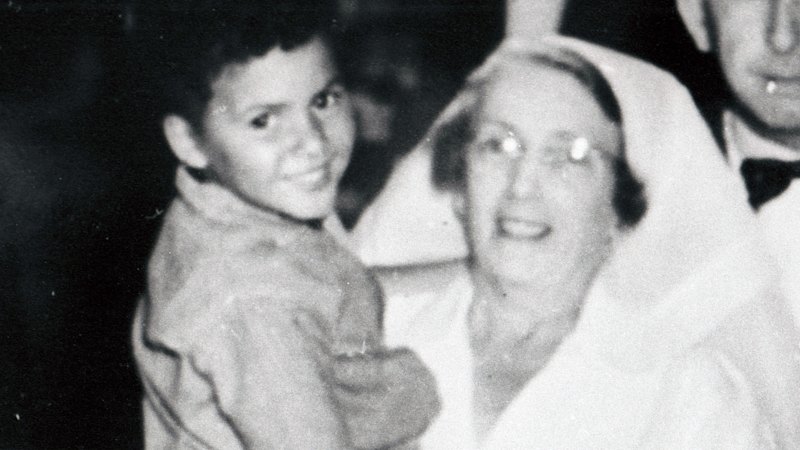
The tale of the lonely boy left at a Sydney orphanage broke the hearts of a nation.
asserted
tale → leave → nation
Described as a war child of mixed race with “sad eyes”, Geoffrey Joiner was the result of a wartime romance between an Australian woman and an African-American man who met at a Sydney nightclub.
asserted
who → describe → nightclub
Joiner was born in Sydney on the day after his father, Trennon, a US Navy sailor, was shipped home in 1944.
asserted
father → bear → 1944
Three years later the boy was surrendered to Dalwood Children’s Home at Seaforth on Sydney’s northern beaches by his mother, Jean Aughey.
asserted
boy → surrender → mother
Joiner had no other home and was stateless.
asserted
Joiner → have → home
“There are potentially thousands of children [like Joiner] born of war who have been neglected by the United States and Australia,” said historian Dr Victoria Grieves Williams, who developed an Australian Research Council project looking into such cases.
asserted
who → be → cases
“We have almost 40 of the children and their families in the project, and every story is different.”
asserted
story → have → project
“People fell in love and wanted to marry,” Grieves Williams said.
asserted
Williams → fall → love
“Many were bitterly disappointed by the two racially segregating regimes [Australia and the US] not allowing them to marry and form families for their children.”
asserted
them → disappoint → children
Like Joiner, many were never issued a passport or any papers.
asserted
many → issue → passport
The story of five-year-old Geoffrey Joiner’s abandonment, his loneliness and the generosity of the public and a prominent philanthropist and trustee of Taronga Park Zoo, Sir E. J. Hallstrom, who funded Joiner’s reunion with his father Trennon in the US, made gripping news.
asserted
who → fund → news
Like a real-life soap opera, it prompted daily coverage by newspapers to quench readers’ interest in the boy’s fate.
asserted
it → prompt → fate
By March, the five-year-old was reunited with the father he had never met.
asserted
he → reunite → father
Joiner never made it back to Australia before he died, aged 79, in Ohio in 2023, and did not ever see his mother or his older sister Betty again.
asserted
he → make → mother
This year, though, his son, Geoffrey Joiner jnr, of Virginia Beach, US, brought his late father’s ashes back to Australia.
asserted
son → bring → Australia
Before his father died Joiner jnr asked: “Would you like for me to take you back to Australia and dump your ashes somewhere?
asserted
me → die → ashes
And he was like … ‘That’ll be the best thing that could ever happen.
uncertain
that → happen → ?
That way I’ll be back to where I started from’.”
asserted
I → start → where
Joiner’s remains were spread at Dalwood, no longer a children’s home, and at Aughey’s grave.
asserted
remains → spread → grave
His family sprinkled more ashes at Taronga Zoo, where Hallstrom’s archives are held.
asserted
archives → sprinkle → Zoo
A long-serving director and trustee of the zoo, Hallstrom made his fortune selling Silent Knight refrigerators.
asserted
Hallstrom → serve → refrigerators
He wrote a blank cheque to cover the costs of sending Joiner to live with his father in the United States.
asserted
He → write → States
Hallstrom’s philanthropy also included bringing three boatloads of animals from Africa, South America and Papua New Guinea after the war to Australia, which he had bought and donated to the zoo.
asserted
he → include → zoo
In correspondence, Hallstrom marvelled that Joiner had grown to more than two metres tall.
asserted
Joiner → marvel → correspondence
The boy may have remained at Dalwood for his entire childhood if it wasn’t for a report by The Daily Telegraph on the eve of his fifth birthday in 1949, and headlines describing him as “the loneliest boy in the world”.
uncertain
it → remain → world
“Geoffrey never has a visitor, and nobody contributes to his support … he gets all dressed up and sits waiting for someone to come see him, but no one ever calls,” the report said.
asserted
report → have → him
It included a plea from Trennon Joiner, writing from Ohio.
asserted
It → include → Ohio
“Won’t you please send my son to me?
asserted
you → send → me
Why should he suffer for what was wrong?”
asserted
what → suffer → ?
The next day the boy with no visitors had crowds of them, and a mountain of toys.
asserted
boy → have → toys
Soon after, Hallstrom gave him the blank cheque to get him home.
asserted
Hallstrom → give → him
Later in life Geoffrey Joiner wanted to return to Australia, but he had been scared that if he left the US he would not be able to come back.
asserted
he → want → US
And when the boy arrived in the United States he was detained until the paperwork for his entry was complete.
asserted
paperwork → arrive → entry
He was not issued with a passport.
asserted
He → issue → passport
Joiner jnr said his father never recovered from his experience in Australia.
asserted
father → say → Australia
A fear of abandonment had haunted Joiner snr’s life, making him insecure in relationships and unsure of his citizenship.
asserted
him → haunt → citizenship
In an undated letter, he writes to his half-sister Betty in Australia, apologising for not being in touch: “I had no way of corresponding with mother and you.”
asserted
I → write → mother
He writes that he doesn’t know how they were separated, and adds, “please don’t let it happen again”.
“He didn’t really know if he had proper citizenship in the United States, and he had been living under the radar his entire life,” Joiner jnr said.
asserted
jnr → write → radar
“The biggest question we all have is why Jean didn’t come.
asserted
Jean → have → ?
Sometimes I ask myself if it was the military, or if she had a change of heart.
asserted
she → ask → heart
…and 11 more, not listed.
 The Aporia