A federal judge in Oklahoma ruled Thursday that a police officer violated the Fourth Amendment rights of a woman accused of meth trafficking when he searched her license plate in Flock’s automated license plate reader system simply because her license plate was from California, then used her travel history as part of the reason to search her car.
asserted
plate → rule → car
The judge’s opinion is one of the first times a federal judge has decided Flock searches can be unconstitutional, and suggested that Flock’s network is “a type of indiscriminate mass surveillance.”
uncertain
network → decide → surveillance
The officer’s “use of the ALPR Systems was an Unconstitutional Warrantless Search,” and “was not supported by probable cause, and it was done without a warrant in violation of [the defendant’s] Fourth Amendment rights,” the judge, Sara Hill, wrote, implying that the law enforcement officer should have obtained a warrant before searching for the vehicle in Flock’s system.
asserted
officer → support → system
Hill's decision will not set a binding precedent and there are several other cases throughout the nation considering the legality of warrantless ALPR searches.
asserted
decision → set → searches
Hill argued that previous judge opinions saying Flock searches were not a Fourth Amendment violation because they track cars in public do not consider the context that Flock’s nationwide network is quickly “approaching dragnet-type law enforcement practice,” and that courts should update their understanding of the technology moving forward.
asserted
courts → argue → technology
The circumstances of the court case are really interesting and highlight how commonplace Flock searches have become for police, and the depth of the information they can reveal.
asserted
they → highlight → information
In May, a Tulsa County Deputy Sheriff named Freddie Alaniz was parked along the side of the highway in Oklahoma when he saw a Mazda SUV driven by a woman named Melisa Kyle with a California license plate pass by.
uncertain
SUV → name → plate
“Alaniz then pulled his vehicle on the highway to follow the Mazda for no apparent reason other than the fact that it had a California license plate.
asserted
it → pull → plate
Alaniz also ran a query on the Flock system for the California license plate number on the Mazda SUV,” Hill wrote.
asserted
Hill → run → SUV
Alaniz then ostensibly pulled Kyle over for changing lanes without a turn signal.
asserted
Alaniz → pull → signal
Alaniz interrogated Kyle about her travel “while he continued to review the ALPR systems for the car she was driving,” the judge wrote.
asserted
judge → interrogate → car
Alaniz made Kyle recount everything she had done in the last several days, and compared it to the Flock data.
asserted
she → make → data
He told her that because she was only in California for a short period of time, he suspected her of trafficking drugs.
asserted
he → tell → drugs
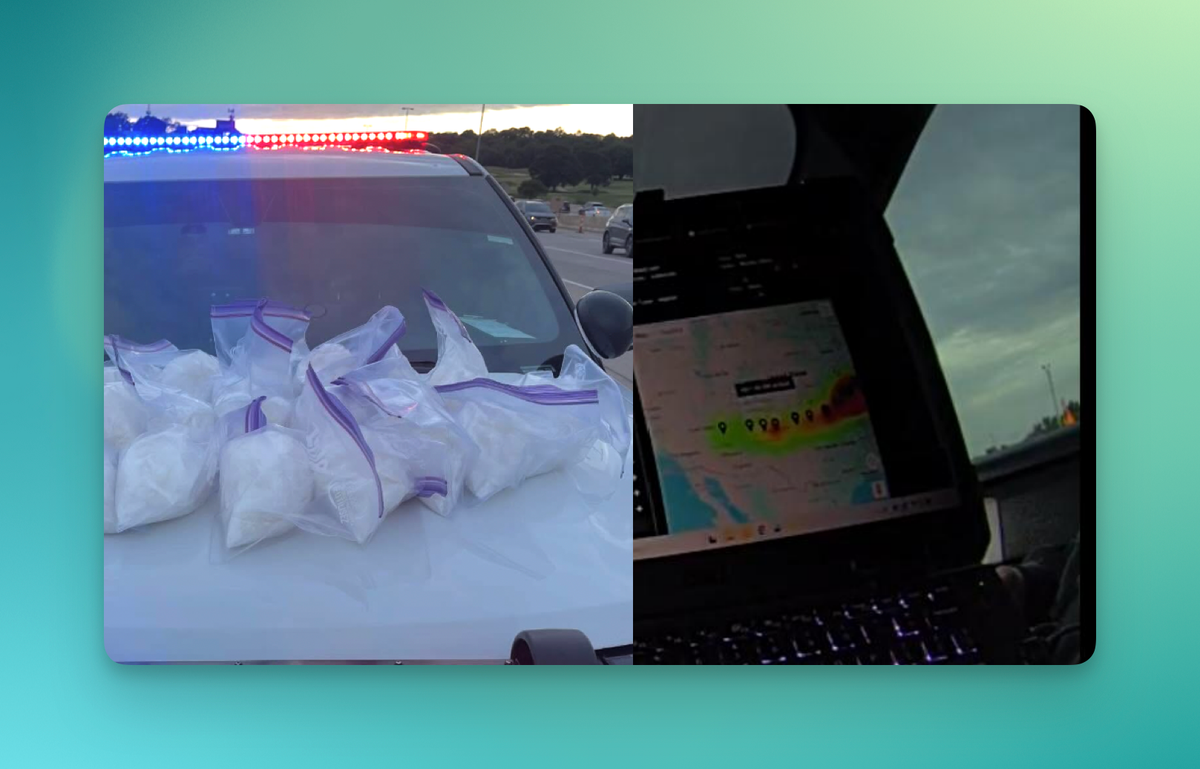
He used her travel history as seen in the Flock system as part of the justification to search her car; she was found to have 91 pounds of meth in the vehicle.
asserted
she → use → vehicle
Hill ruled that all Flock evidence and all evidence from Alaniz’s search of the car must be thrown out.
asserted
evidence → rule → car
“The Fourth Amendment requires courts to draw a line when the cost is too great.
asserted
cost → require → line
Alaniz’s search in just the ALPR system provided him with more than 50 individual records of Kyle’s whereabouts across the country for an entire month,” Hill wrote.
asserted
Hill → provide → month
“The Court finds that because the ALPR systems Alaniz used to search Kyle’s historical location information intruded on her reasonable expectation of privacy in the whole of her physical movements, it was a search under the Fourth Amendment.
asserted
it → find → Amendment
Based on the information in the record, the only reason Alaniz conducted that search was because he saw her license plate was from California.
asserted
plate → base → California
“The factors that the government relies upon are the same type of circumstances that everyday Americans encounter on long road trips for many legitimate reasons.
asserted
Americans → rely → reasons
Many of us drive longer than we want to get to a desired destination, or to no destination at all other than the road and sights ahead,” she added.
asserted
she → drive → road
The decision is a landmark one, and comes in the aftermath of the Supreme Court’s Chatrie v United States decision that found police accessing a person’s digital data, including cell phone location data, constituted a search.
asserted
accessing → come → search
It recognizes one thing that courts ignore which is the sheer breadth of these systems, that they collect so much information about so many people in a way that sets them apart.
asserted
that → recognize → them
This decision ascribes appropriate weight to the fact police are building out this massive database that can reveal incredibly intimate details of people’s lives,” Michael Soyfer, a lawyer at the Institute for Justice, which has studied Flock camera abuse and is litigating several cases on Fourth Amendment grounds, told 404 Media.
asserted
which → ascribe → Media
“It’s extremely important.
asserted
It → ’ → ?
The way courts have resolved these cases previously has been way too myopic and has ignored the depths of these systems and the sweeping modes of surveillance that allow police to reconstruct the movements of anyone in the country.”
asserted
police → resolve → country
Hill’s opinion also comes on the back of a decision earlier this week in a case the Institute for Justice brought.
asserted
Institute → come → Justice
In that, a jury found a traffic stop scheme involving license plate reader scans done by U.S. Border Patrol as part of a predictive policing unit were unconstitutional.
asserted
scheme → find → unit
The new decision also immediately invalidates the core argument that Flock’s CEO Garrett Langley has made saying that Flock was not a constitutional issue.
asserted
Flock → invalidate → argument
“You and I don’t get to pick what’s a constitutional violation and what’s not.
asserted
what → get → ?
We have judges, we have elected officials, there’s a process for that.
asserted
we → have → that
We follow the law, we follow the Constitution.
asserted
we → follow → Constitution
So far, in our belief and what will be for a long time, the courts have deemed this is not a warrantless search; this is a valid product as it relates to the Fourth Amendment.
asserted
it → deem → Amendment
So I don’t see any change there,” Langley told The Drive in July, adding the issue was “pretty cut and dry.”
asserted
issue → see → July
Notably, Hill suggested that other courts that have ruled Flock searches do not constitute a Fourth Amendment search were likely wrong to do so, and that they have not considered the widespread and automated context of the AI-powered surveillance system.
uncertain
they → suggest → system
Previous decisions that ruled ALPR searches do not require a warrant have leaned on a Supreme Court case called United States v Knotts, in which police put a tracking device in a chemical container after being tipped off that an employee of a chemical plant was stealing from their employer.
asserted
employee → rule → employer
That case was decided in 1983 and found, “[a] person travelling in an automobile on public thoroughfares has no reasonable expectation of privacy in his movements from one place to another.”
asserted
person → decide → another
But Hill wrote, “that language exists in the context of the facts presented in the case.
asserted
language → write → case
Rather than a large-scale, dragnet-type surveillance system like the ALPR technology in this case, the Court in Knotts was confronted with much less sophisticated technology.”
asserted
Court → confront → technology
“The Court acknowledges that people, in at least a broad sense, do not have a reasonable expectation of privacy in their movements on a public roadway,” Hill wrote.
asserted
Hill → acknowledge → roadway
…and 9 more, not listed.
 The Aporia