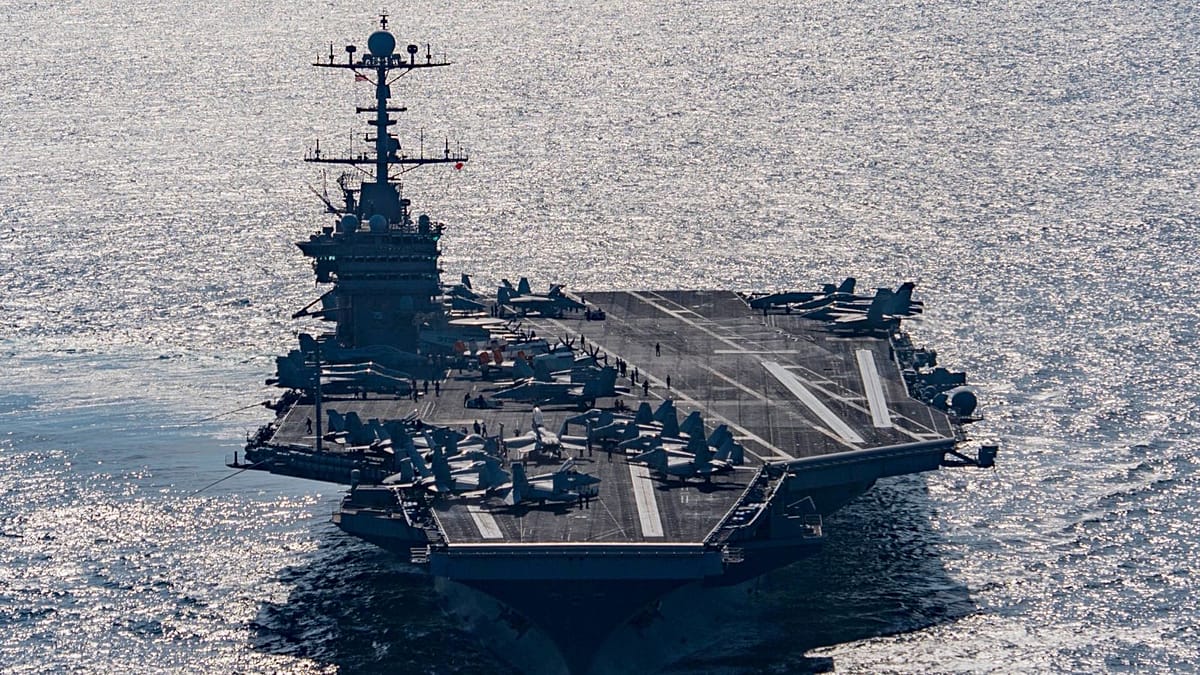
The United States is deploying a third aircraft carrier strike group to waters in the Middle East close to Iran, a US official has told Al Jazeera, as the war enters its eighth month and both sides weigh escalation and diplomatic engagement.
asserted
sides → deploy → escalation
Thousands more troops are also on their way to the region, just a month before November US midterm elections, which could see US President Donald Trump’s Republican Party hit hard by his handling of the war, which is deeply unpopular in the US.
uncertain
which → see → US
Recommended Stories
list of 3 items- list 1 of 3Trump launches midterms campaign blitz amid record low approval ratings
- list 2 of 3US to send third aircraft carrier towards Iran: US official to Al Jazeera
- list 3 of 3Iran urges Iraq to lift flight ban amid US sanctions
We look at what the latest troop deployment means and whether it signals a coming escalation in the war on Iran:
What troops and military equipment have been deployed?
asserted
troops → launch → Iran
A US official told Al Jazeera that the USS Theodore Roosevelt carrier strike group left its San Diego base on Sunday, bound for the region, followed a day later by the Makin Island Marine Expeditionary Unit (MEU), which is carrying more than 2,000 Marines.
asserted
which → tell → Marines
The Wall Street Journal reported that the strike group and naval deployments could involve an additional 9,000 to 10,000 US troops in total, including sailors and Marines assigned to the carrier strike group and other ships.
uncertain
group → report → group
By the end of November, the official said, three aircraft carriers and two amphibious landing groups will be positioned near Iran.
asserted
carriers → say → Iran
The official said the concentration of force would hand President Donald Trump a wider menu of options if he decides to act.
asserted
he → say → options
Al Jazeera’s Tanya Noury, reporting from Washington, said the new deployment, which includes F-35 fighter jets, will add to the roughly 50,000 US service members already stationed in the region.
asserted
which → report → region
The goal, Noury said, quoting sources inside the Pentagon and White House, is to keep military options “on the table” for Trump regardless of how diplomacy unfolds.
asserted
diplomacy → say → Trump
The Pentagon is not currently planning to withdraw any assets even if an agreement with Iran is reached.
asserted
agreement → plan → Iran
Defense Secretary Pete Hegseth has said forces are “ready to go” should Trump order new attacks.
asserted
Trump → say → attacks
What forces does the US already have in the Middle East?
asserted
US → have → East
The US has stationed troops and military assets at bases in the Middle East for decades.
asserted
US → station → decades
According to the Council on Foreign Relations, the US operates from a broad network of military sites, both permanent and temporary, across at least 19 locations in the region.
uncertain
US → accord → region
Of these, eight are permanent bases, located in Bahrain, Egypt, Iraq, Jordan, Kuwait, Qatar, Saudi Arabia and the United Arab Emirates.
asserted
eight → locate → Bahrain
The US’s first deployment of soldiers in the Middle East took place in July 1958, when combat troops were sent to Beirut during the Lebanon crisis.
asserted
troops → take → crisis
Trump has been beefing up the US military presence in the Middle East since the start of this year, initially sending warships, including the USS Abraham Lincoln aircraft carrier, to the Arabian Sea.
What military assets and troops did the US send ahead of the war?
asserted
US → beef → war
According to open source intelligence analysts and military flight-tracking data, the US has deployed more than 120 aircraft to the region since early February.
uncertain
US → accord → February
Reported deployments include E-3 Sentry Airborne Warning and Control System (AWACS) aircraft, F-35 stealth strike fighters and F-22 air superiority jets alongside F-15 and F-16 fighter aircraft.
asserted
deployments → report → aircraft
Flight-tracking data showed many of these planes departing bases in the US and Europe, supported by cargo aircraft and aerial refuelling tankers, a sign of sustained operational planning rather than routine rotations, military analysts said.
asserted
analysts → track → planning
In March, the Pentagon also ordered additional US forces to the Gulf.
asserted
Pentagon → order → Gulf
The reinforcements consisted of three distinct formations, each with a different origin, route and timeline.
asserted
reinforcements → consist → origin
The first was the Tripoli Amphibious Ready Group, centred around the America-class assault ship USS Tripoli and the 31st Marine Expeditionary Unit (MEU).
asserted
first → centre → ship
The second was the Boxer Amphibious Ready Group, built around the Wasp-class assault ship USS Boxer and the 11th MEU, based in Southern California in the US.
asserted
second → build → US
Together, these two Marine groups have added 4,500 Marines and sailors in the region.
asserted
groups → add → region
The third was a contingent of about 2,000 soldiers from the 82nd Airborne Division’s Immediate Response Force, based at Fort Bragg, North Carolina.
asserted
third → base → Bragg
In total, nearly 7,000 additional soldiers have already been deployed to the Middle East since the war on Iran began.
asserted
war → deploy → Iran
What does the latest deployment signal?
asserted
deployment → signal → What
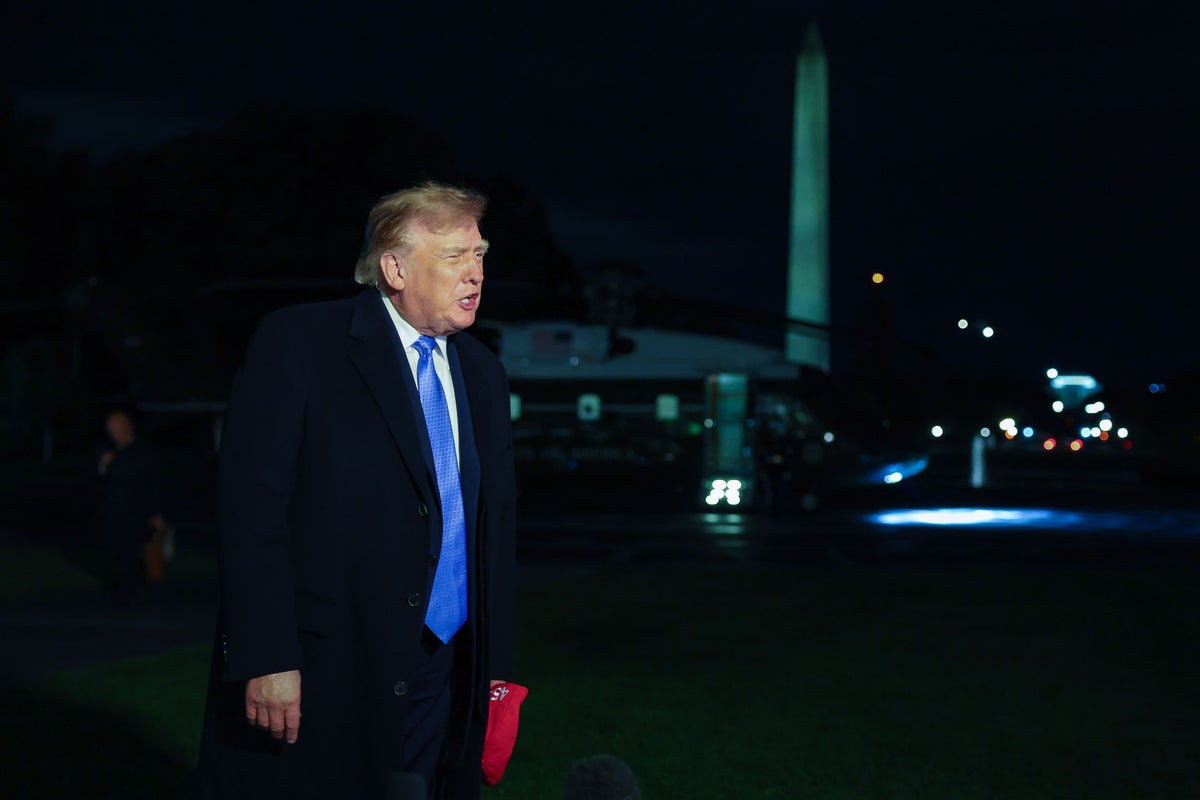
While it is not clear if the new troop deployment signals an escalation in the war, in an interview with Time magazine published on Thursday, Trump suggested that it is “possible” he could ramp up bombing Iran after the midterm elections.
uncertain
he → signal → elections
When asked by Time for further details, Trump said: “I can’t tell you that because look, you know, you’re asking, where are you going to bomb?”
asserted
you → ask → that
Some analysts have suggested that sending more troops to the region could be Washington’s negotiating technique with Iran.
uncertain
sending → suggest → Iran
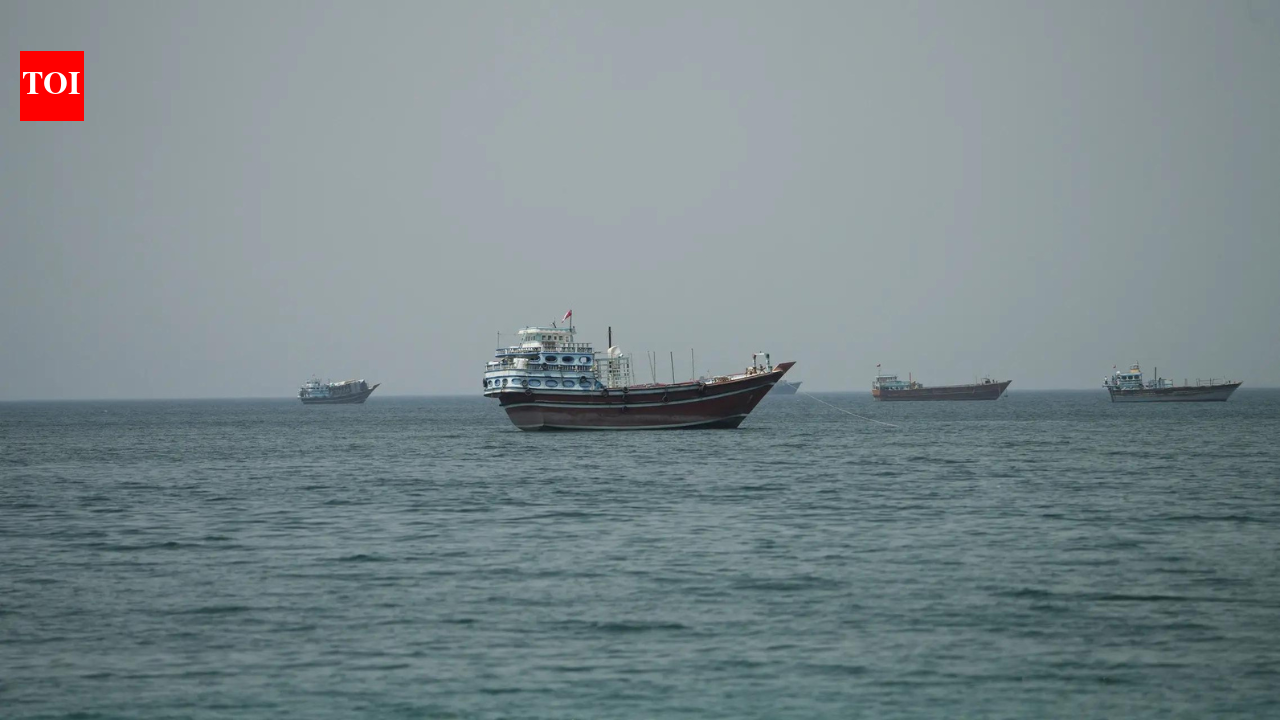
Last week, Iran sent a new proposal to reopen the Strait of Hormuz within seven days, subject to certain conditions it wants the US to meet, including the lifting of sanctions, unfreezing Iranian assets and guaranteeing an end to strikes.
asserted
US → send → strikes
However, the Trump administration rejected the proposal.
asserted
administration → reject → proposal
Analysts say the US wants other issues, such as Iran’s nuclear programme, to be discussed before it agrees to any terms.
asserted
it → say → terms
In his Time interview, Trump said that he had rejected the latest ceasefire proposal from Iran because it included “things” he “wouldn’t have approved a year ago” and “wouldn’t have today”.
asserted
he → say → things
Washington has paired the show of force towards Iran with economic pressure, sanctioning Iran’s rail and automotive conglomerates this week, as the Treasury Department called the new measures an effort to drain what remains of Tehran’s revenue.
asserted
what → pair → revenue
Last month, the US unveiled sweeping new sanctions on Iran, as well as on other countries which trade with it.
asserted
which → unveil → it
Indirect peace talks conducted between the US and Iran via mediators have been continuing without any breakthroughs.
asserted
talks → conduct → breakthroughs
At talks held on the sidelines of the United National General Assembly (UNGA) in New York last month and mediated by Qatar, the opening of the Strait of Hormuz remained a sticky subject.
asserted
opening → hold → Hormuz
At the talks, Iran pushed a seven-day roadmap, conveyed through Qatar, that would see it reopen the Strait of Hormuz and resume nuclear talks in exchange for an end to the US naval blockade, sanctions relief and a regional ceasefire covering Lebanon and Yemen.
asserted
it → push → Lebanon
…and 6 more, not listed.
 The Aporia