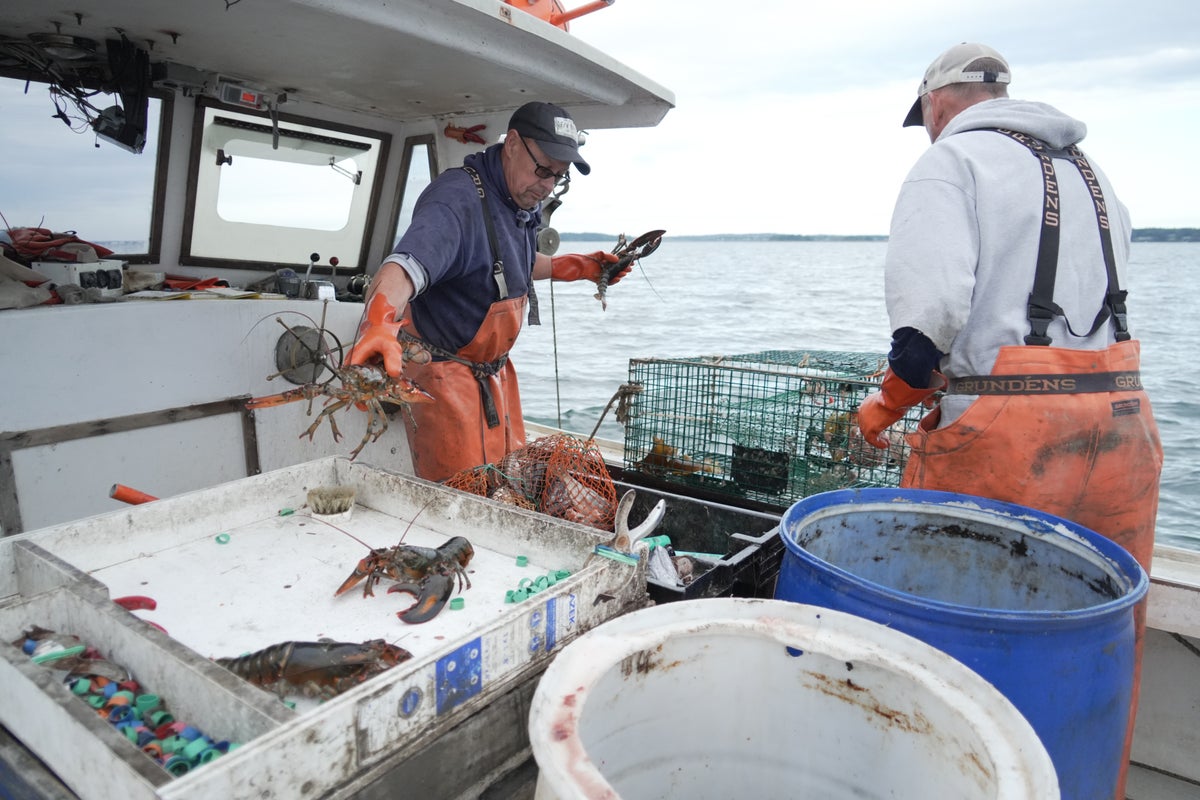
John Evich, a commercial fisherman in Washington and Alaska, has voted for President Donald Trump three times, viewing him as someone who would fight for his industry.
asserted
who → vote → industry
But these days, Evich is weary of the high cost of doing business at sea, with fuel prices rising and trade hostilities with Canada jeopardizing markets for the crabs that he pulls off the ocean floor.
asserted
he → do → floor
“If somebody came along that was going to do a better job, I would vote for them in a heartbeat,” he said.
asserted
he → come → heartbeat
Evich’s sentiment, echoed throughout the U.S. seafood industry, is another piece of a political puzzle that is working against Trump in the midterm elections.
asserted
that → echo → elections
Dissatisfaction among commercial fishermen could cause collateral damage for Republicans in competitive races in Washington, Alaska and Maine.
uncertain
Dissatisfaction → cause → Washington
“Having those costs be so much higher this year has really undermined the viability of some of our fisheries,” Alaska fisherman Linda Behnken said.
asserted
Behnken → have → fisheries
Trump sought to make an ally out of fishermen during his first term with expanded fishing territory, aggressive trade moves and cutting down regulations on the water.
asserted
Trump → seek → water
He did so again after his second election.
asserted
He → do → election
But one of Trump’s government cutback efforts, cuts to the National Oceanic and Atmospheric Administration, which regulates fisheries, has left the agency slower to respond to the industry’s needs, fishermen said.
asserted
fishermen → regulate → needs
Staff cutbacks also resulted in the agency reducing weather balloons used to gather data fishermen rely on.
asserted
fishermen → result → data
Fuel costs have also crept up during the war with Iran, pushing diesel fuel into the $6-per-gallon range when it was less than $4 per gallon a year ago — a major burden for a diesel-dependent industry.
asserted
it → creep → industry
And the trade war with Canada has complicated the American seafood industry’s relationship with a country it has long been interconnected with, fishermen said.
asserted
fishermen → complicate → country
The Trump administration has continued trying to win the hearts of fishermen with industry-friendly moves, including an early September promise to reduce more regulatory burdens in response to a 2025 executive order.
asserted
administration → continue → order
But support on the water could be waning.
uncertain
support → wan → water
“I’m for whatever has to happen for the greater good in the long run for my family and my country,” Evich said.
asserted
Evich → ’m → family
Trump has cozied up to the fishing industry for years
Trump has positioned himself as a pro-fishing president since his first term, when one of his major moves to impact the fishing industry was the rollback of Obama-era fishing restrictions for Northeast Canyons and Seamounts National Monument off the New England coast.
asserted
one → cozie → coast
Biden later restored the protections, and then Trump removed them again.
asserted
Trump → restore → them
A 2026 NOAA survey of commercial fishing crews found that 70% thought fishing rules were too restrictive, and Trump has fashioned himself as an enemy of bureaucracy and red tape.
asserted
Trump → find → bureaucracy
But in recent months, Trump has brought disruption to the fishing industry in a time when it can ill afford it, said John Sackton, founder of SeafoodNews.com and a longtime industry analyst.
asserted
Sackton → bring → SeafoodNews.com
He said he sees an industry that is eager to “turn the page” on the Trump administration.
asserted
that → say → administration
“Now what’s happened is that there has been this unbelievable wave of disruption from everything - targeting NOAA and fisheries, science and even weather reporting that people rely on,” said Sackton, who also cited tariffs and the rising cost of doing business as problems Trump brought to the industry.
asserted
Trump → happen → industry
Fuel costs and tariffs are huge concerns for fishermen
The high price of fuel is “one of the most immediate pressures on us as commercial fishermen,” said Bonnie Brady, executive director of the Long Island Commercial Fishing Association in New York.
asserted
Brady → say → York
Nearly all of the U.S.‘s commercial fishing fleet uses marine diesel fuel, which makes soaring fuel costs a burden they can’t avoid.
asserted
they → use → fuel
Sometimes fuel prices are so high right now that fishermen can’t afford to leave the dock at all, she said.
asserted
she → afford → dock
“Actual dockside marine-fuel prices vary, but the magnitude of the increase is undeniable.
asserted
magnitude → vary → increase
It determines whether a trip is economically viable, what the crew earns and whether necessary vessel maintenance can be performed,” Brady said.
asserted
Brady → determine → what
In Rhode Island, fisherman Chris Brown, who targets species such as fluke and squid out of Point Judith, puts it more bluntly.
asserted
who → target → it
“It’s huge.
asserted
It → ’ → ?
It’s crazy.
asserted
It → ’ → ?
Thank you, Donald Trump,” he said sarcastically.
asserted
he → thank → you
Trump’s trade war with Canada is a more complicated matter because Canada exempted U.S. fish and seafood products from its counter-tariffs that followed the U.S. placing tariffs on Canadian goods.
asserted
U.S. → exempt → goods
Prior to the exemption, Patrice McCarron, executive director of the Maine Lobstermen’s Association, said U.S. lobstermen risked becoming “collateral damage in a broader trade dispute.
asserted
lobstermen → say → dispute
But unease among fishermen remains, in part because Canada is the U.S.‘s largest seafood trading partner.
asserted
Canada → remain → part
The U.S. also relies on Canada for seafood processing and manufacturing of fishing gear.
asserted
U.S. → rely → gear
For some species, such as lobster and salmon, American and Canadian fishermen fish very close to each other or even in the same waters.
asserted
fishermen → fish → waters
A trade war with such a key partner could have negative consequences for the fishing industry, said Steve Train, a lobster fisherman from Long Island, Maine, who described himself as a “right-leaning centrist” who has voted Republican more than Democrat.
uncertain
who → have → Democrat
“I get the standing up to a bully concept, but too many people will be caught in the middle of this,” Train said.
asserted
Train → get → this
“Both sides need to reconsider these tariffs, and they need to reconsider soon.”
asserted
they → need → tariffs
Cuts to NOAA are troubling to fishermen
NOAA Fisheries, the arm of NOAA tasked with overseeing commercial fishing, is facing a budget cut of more than 40% in the fiscal 2027 budget proposal.
asserted
Fisheries → task → proposal
That would result in cuts to science programs, fisheries management and data collection.
asserted
That → result → programs
…and 5 more, not listed.
 The Aporia