Taiwan remains Asia’s ‘most dangerous’ issue, former Singaporean diplomat warns

Read the original at South China Morning Post ↗
Cite

Chik, H. (2026, September 5). Taiwan remains Asia’s ‘most dangerous’ issue, former Singaporean diplomat warns. South China Morning Post. https://www.scmp.com/news/china/diplomacy/article/3366488/taiwan-remains-asias-most-dangerous-issue-former-singaporean-diplomat-warns?utm_source=rss_feed

Dated when The Aporia collected the article, usually within hours of publication. Check the original for its exact date and byline.

South China Morning Post · collected 2026-09-05 · by Holly Chik

Quick Summary

Former Singaporean diplomat Kishore Mahbubani warned at the Penang Peace Dialogue that Taiwan is still the most dangerous issue in Asia. He stated that any conflict across the Taiwan Strait would likely draw in the US, with devastating consequences for Southeast Asia. Mahbubani, a former UN Security Council president, estimates that 4.3 billion people, or roughly 60% of the global population, live in Asia. He emphasized the need for improved relations between China and India, which he sees as crucial for Asia's future.
Written locally by qwen2.5:14b on 2026-09-06, using this article's own text rather than the other coverage of the same event (that is the story summary below).

AI analysis runs on qwen2.5:14b, locally

Story summary

Kishore Mahbubani, a former Singaporean diplomat and UN Security Council president, warned that Taiwan remains the most dangerous issue in Asia, with any cross-strait conflict likely to draw in the US and have a devastating impact on Southeast Asia. He made these comments at the inaugural Penang Peace Dialogue in Malaysia on Saturday. Mahbubani also stated that Asia is still shackled by "mental colonisation", despite accounting for over half of the global population, and that this mindset has hindered the region's progress for decades. However, he noted a shift in power towards Asia, where Asian states are gaining confidence while Western states are losing theirs.
Written for “Taiwan Strait Tensions Rise” on 2026-10-21, grounded in this article and the 0 other(s) covering the same event.

Story

📰 Taiwan Strait Tensions Rise
Politics · 1 article(s) covering the same event.

Compared with similar articles

This article reads leans strongly right and hedges 12% of its claims. Each row says how that neighbour differs.
Deutsche Welle
⚖️ leaning not scored 🔴 23% hedged 10 of 43 📰 publisher trust 95
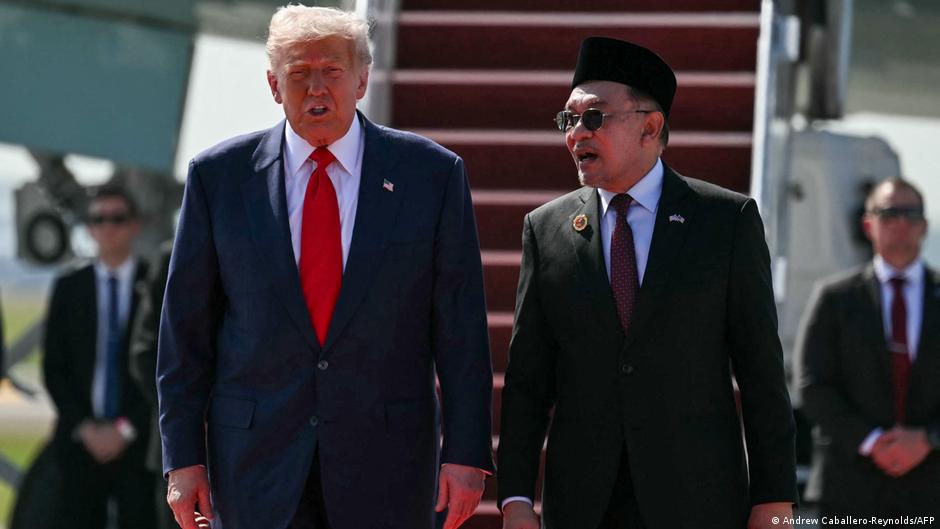
“Article A discusses Malaysian Prime Minister Anwar Ibrahim's comments on Taiwan, while Article B quotes a former Singaporean diplomat warning about the dangers of cross-strait conflict without mentioning Anwar's comments”
How this article was measured signals, leaning charts, publisher record, byline, topics and claims

Signals How these are calculated →

Claims extracted
8
sentences that state something as happening or true
Uncertain
12%
1 of 8 hedged ("reportedly", "may", "according to")
Leaning
Leans strongly right
of the writing, not the subject · beta estimate
Publisher signals
64/100
South China Morning Post's corrections and hedging, across everything collected from it. Not a measure of accuracy.
Outlets on this story
1
Politics
Same framing elsewhere
1
articles that frame the event the way this one does
Analyzed 2026-09-06 · how these are computed

How this is being covered How these are calculated →

Article leaning vs. publisher reliability
Source leaning vs. consistency

Publisher

South China Morning Post · 2799 article(s) · 6 correction(s) detected
Running correction rate · 6 correction(s)

Who wrote this

Holly Chik
9 article(s) here · 1 carrying a prediction
🔮 Even if global warming is limited to 1.5 degrees Celsius, scientists warn China’s densely populated coastline faces flooding this century They said gravitational shifts caused by shrinking Antarctic ice would redistribute water across the globe, causing higher ocean levels along China’s densely populated coastlines.
🔮 New Taipei-Hong Kong subsea route opened to cut risk and meet AI demand New path launched through underwater network to tackle recurring disruptions and surging data workloads, RETN says One of the world’s biggest network service providers has opened a new subsea route between Taipei and Hong Kong to strengthen the system against repeated underwater cable disruptions around the island. Britain-headquartered RETN said the new route would take its total to six serving Taiwan: four connecting Taipei and Hong Kong, and two linking Taipei and Tokyo.
🔮 Could Chinese explorers have settled New Zealand before the Maori?
🔮 “Our analysis reveals that US trade sanctions, such as the Entity List, have generated consequences that US policymakers may not have fully anticipated,” the researchers wrote in a policy article published in the peer-reviewed journal Science on Friday.
🔮 China will never allow any country in this world to achieve AI dominance: Victor Gao
🔮 “The big mistake that Asians made after the end of colonial rule [is assuming] that the end of physical colonisation would automatically mean the end of mental colonisation,” veteran Singaporean diplomat Kishore Mahbubani told the inaugural Penang Peace Dialogue in Malaysia on Saturday.
Also by Holly Chik
Nothing else under this byline is closely related to this article, so these are simply their most recent.
All 9 articles by Holly Chik →

Topics

Asian Penang Peace Dialogue Singaporean Taiwan Western

Subjects

Western NORP · 3× Asian NORP · 2× China GPE · 2× India GPE · 2× Kishore Mahbubani PERSON · 2× Mahbubani PERSON · 2× Singaporean NORP · 2× Taiwan GPE · 2× Asia GPE · 1× Penang Peace Dialogue ORG · 1×

Narrative

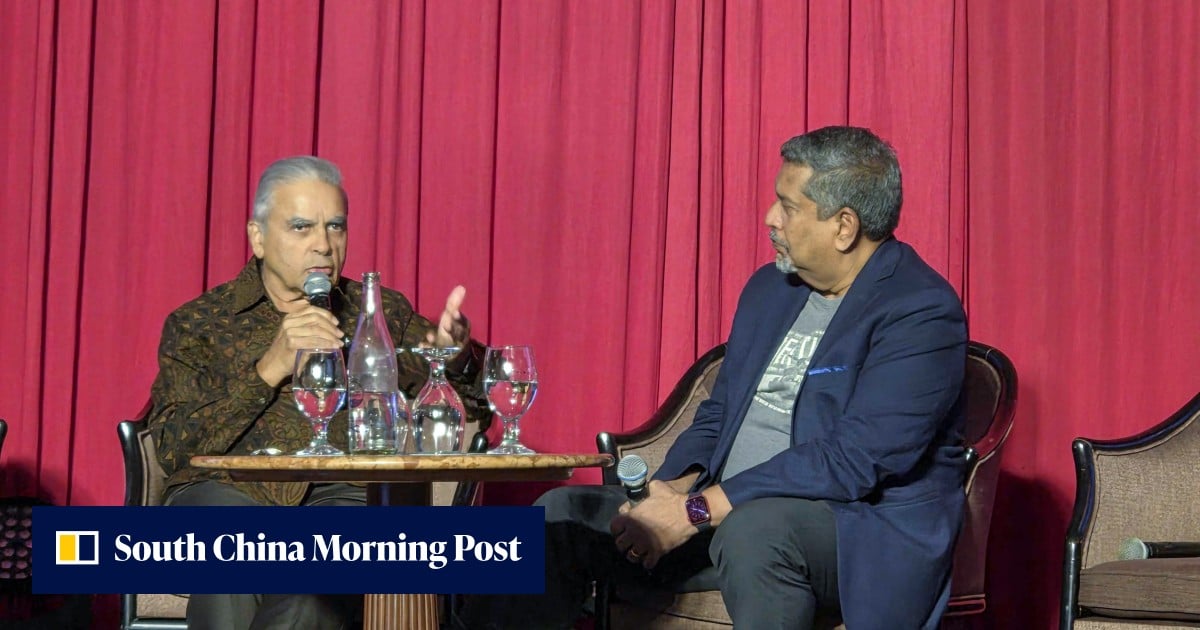
Taiwan remains Asia’s ‘most dangerous’ issue, former Singaporean diplomat warns Any cross-strait conflict likely to draw in US with devastating impact on Southeast Asia, Kishore Mahbubani tells Penang Peace Dialogue Asia remains shackled by “mental colonisation” despite accounting for over half the global population, a former UN Security Council president has said, while warning that Taiwan remains the region’s most dangerous flashpoint.
framing: assertive · carried by 1 article(s) · first seen 2026-09-06
🔮 “The big mistake that Asians made after the end of colonial rule [is assuming] that the end of physical colonisation would automatically mean the end of mental colonisation,” veteran Singaporean diplomat Kishore Mahbubani told the inaugural Penang Peace Dialogue in Malaysia on Saturday.
2026-09-06 · South China Morning Post
Taiwan remains Asia’s ‘most dangerous’ issue, former Singaporean diplomat warns · assertive framing

Claims (8 extracted, 1 hedged)

Taiwan remains Asia’s ‘most dangerous’ issue, former Singaporean diplomat warns Any cross-strait conflict likely to draw in US with devastating impact on Southeast Asia, Kishore Mahbubani tells Penang Peace Dialogue Asia remains shackled by “mental colonisation” despite accounting for over half the global population, a former UN Security Council president has said, while warning that Taiwan remains the region’s most dangerous flashpoint. asserted
Taiwan → remain → population
“The big mistake that Asians made after the end of colonial rule [is assuming] that the end of physical colonisation would automatically mean the end of mental colonisation,” veteran Singaporean diplomat Kishore Mahbubani told the inaugural Penang Peace Dialogue in Malaysia on Saturday. asserted
Mahbubani → make → Saturday
The lack of confidence to challenge Western-dominated narratives “continued for several decades”, he added. asserted
he → challenge → decades
But the tide may be turning. uncertain
tide → turn → ?
“What is happening now is a major reversal in history where the Western states are effectively losing their self-confidence and the Asian states are gaining confidence,” Mahbubani said. asserted
Mahbubani → happen → confidence
However, despite this “major transition point in world history”, he said the shift of power towards Asia had yet to reach a tipping point “where the Asian states will have the greatest say in the world [in the way] that the Western states [now] do.” asserted
states → say → way
Home to China and India, the world’s two most populous nations, Asia accounts for roughly 60 per cent of the global population, or 4.3 billion people. asserted
Home → account → population
Mahbubani also said improving China-India relations was vital for Asia’s future, with Southeast Asia needing to play a more active role in pushing for better ties between them. asserted
Asia → say → them
💬Give feedback
🕘History 🎫Support