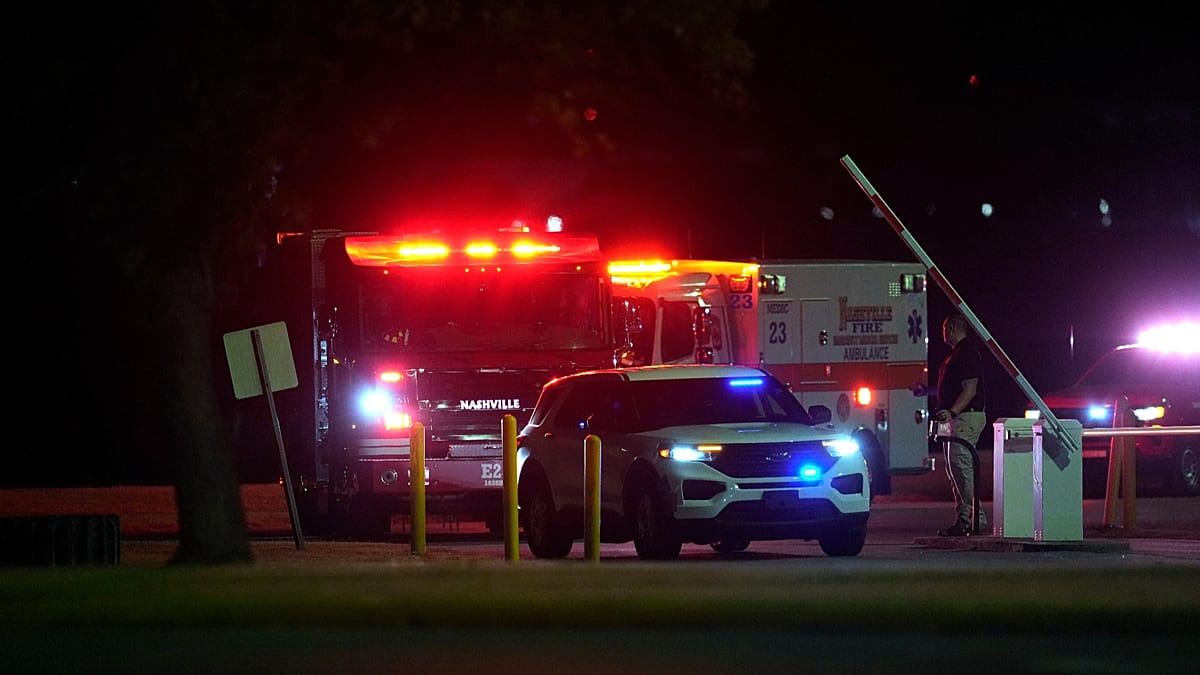
Story summary
Christa Pike, 50, is set for execution by lethal injection in Tennessee on Wednesday, becoming the first woman executed there in over 200 years. Pike was sentenced to death at age 18 after she and her boyfriend tortured and murdered Colleen Slemmer, a 19-year-old classmate from Knoxville Job Corps, in a jealous rage on January 12, 1995. The case garnered widespread attention due to the brutality of the crime and the presence of a satanic symbol carved into Slemmer’s body.
Pike's attorneys argue that she should not face execution given her history of severe sexual abuse as a child, untreated mental illness, and post-traumatic stress disorder. They have petitioned the US Supreme Court for a stay of execution but were denied by Tennessee Governor Bill Lee, who upheld Pike’s sentence after reviewing her clemency request.
Slemmer's mother, who has been waiting decades for justice, supports moving forward with the lethal injection despite Pike’s claims of mental health issues. If executed, Pike would be one of only 18 women put to death in the US since the 1970s, compared to over 1,600 men during that same period. Critics argue that current juries informed about Pike's background might not sentence her to death today. The case highlights ongoing debates around capital punishment and its appropriateness for crimes committed by minors with severe psychological trauma.
Written for “Tennessee Woman Execution” on 2026-10-04,
grounded in this article and the 136 other(s) covering the same event.
Christa Pike survived an execution attempt in Tennessee on Sept. 30, 2026, after receiving two doses of pentobarbital, a lethal drug, resulting in Gov. Bill Lee temporarily suspending executions in the state.
Pike became the first person ever to get full doses of the drugs intended to kill her and to live nonetheless.
asserted
Pike → survive → her
she is not the only person to have survived an execution failure in the Volunteer State.
asserted
she → survive → State
Tennessee set out to execute Tony Carruthers on May 21, 2026, but he lived to tell about it.
uncertain
he → set → it
Carruthers, who was sentenced to death for a 1994 triple murder, survived his date with death when the execution team members could find only one suitable vein in which to secure an IV, but not, as USA Today reports, the “backup line, which is required under the state’s lethal injection protocol.”
uncertain
which → sentence → protocol
After the failed attempt, Tennessee Gov. Bill Lee gave Carruthers a one-year reprieve, a decision the governor did not explain.
asserted
governor → fail → reprieve
What happened to Pike and Carruthers is a reminder that things frequently go wrong in executions, even if in almost all cases the problem is resolved and the execution is completed.
asserted
execution → happen → cases
Indeed, in the past 80 years, only eight other people have had experiences like Carruthers’ and Pike’s and survived execution attempts.
asserted
people → have → attempts
Four of those execution “survivors” were killed by a second execution attempt, while others escaped that fate.
asserted
others → kill → fate
Three others died on death row; one of them after the state agreed not to try to execute him a second time, and one of them is still alive and awaiting his fate.
asserted
one → die → fate
Having studied capital punishment for decades, I know the Eighth Amendment’s prohibition of “cruel and unusual punishment” has shaped constitutional discussions around failed executions.
asserted
prohibition → study → executions
But so far, courts have not stood in the way when state governments have wanted to try to execute the same man again.
asserted
governments → stand → man
Not just a lethal injection problem
Carruthers and Pike survived lethal injection attempts, but execution failures have not been confined to that method.
asserted
failures → survive → method
A look at the history of hanging reveals several instances in which it failed.
asserted
it → reveal → which
In 1833, for example, a hanging in Pennsylvania failed to kill Charles Getter, who had been sentenced to death for murdering his wife.
asserted
who → fail → wife
“The rope was placed around Getter’s neck.
asserted
rope → place → neck
The hangman drew it up fast,” true crime author Amanda Howard notes.
asserted
Howard → draw → it
“Getter struggled and kicked, choking, before the rope broke, throwing him to the ground.”
asserted
rope → struggle → ground
However, Getter did not die.
asserted
Getter → die → ?
The executioner sent someone to look for a stronger rope.
asserted
executioner → send → rope
This time, the rope did not break and Getter met “the fate of a murderer.”
asserted
Getter → break → murderer
In 1894, Will Purvis’ hanging also failed when the noose loosened.
asserted
noose → fail → 1894
Instead of dying from a broken neck, Purvis survived, suffering only rope burns on his neck.
asserted
Purvis → die → neck
Unlike Getter, Purvis returned to prison contending that he was innocent.
asserted
he → return → prison
His lawyers unsuccessfully tried to get the courts to prevent a second execution attempt.
asserted
courts → try → attempt
Purvis remained behind bars until 1898, when Mississippi’s governor pardoned him.
asserted
governor → remain → him
Purvis is the only execution survivor ever to receive such grace.
asserted
Purvis → receive → grace
In the late 19th century, the electric chair replaced hanging as the country’s primary execution method, but it did not prevent failed executions.
asserted
it → replace → executions
At least once in the 20th century, the electric chair also failed to kill.
asserted
chair → fail → century
In the spring of 1946, the state of Louisiana tried to use it in the execution of Willie Francis, a 16-year-old Black youth who had been convicted of murdering a local sheriff.
asserted
who → try → sheriff
At the time, the electric chair was said to be the most humane execution method.
asserted
chair → say → time
But what Francis experienced hardly seemed humane.
asserted
experienced → experience → what
When the electric current reached him, “He started going into convulsions.”
asserted
He → reach → convulsions
The executioner “flipped the switch again,” but Francis was not killed.
asserted
Francis → flip → switch
Later, like Purvis, Francis turned to the courts to try to stave off another execution attempt.
asserted
Francis → turn → attempt
The decision in his case would set the precedent for how judges would deal with other execution survivors.
asserted
judges → set → survivors
In January 1947, months after Francis survived the electrocution, the U.S. Supreme Court gave Louisiana permission to try again.
asserted
Court → survive → permission
The justices split, with five giving Louisiana the green light and four dissenting.
asserted
four → split → light
Justice Stanley Reed’s majority opinion emphasized that what had happened to Francis was accidental and that, without malicious intent, there was no violation of the Eighth Amendment.
asserted
happened → emphasize → Amendment
As he put it, “The fact that an unforeseeable accident prevented the prompt consummation of the sentence cannot, it seems to us, add an element of cruelty to its subsequent execution.”
asserted
it → put → execution
In his view, “The cruelty against which the constitution protects a convicted man is cruelty ‘inherent’ in the method of punishment, not the ‘necessary suffering’ involved in any method employed to extinguish life humanely.”
asserted
constitution → protect → life
…and 26 more, not listed.
 The Aporia