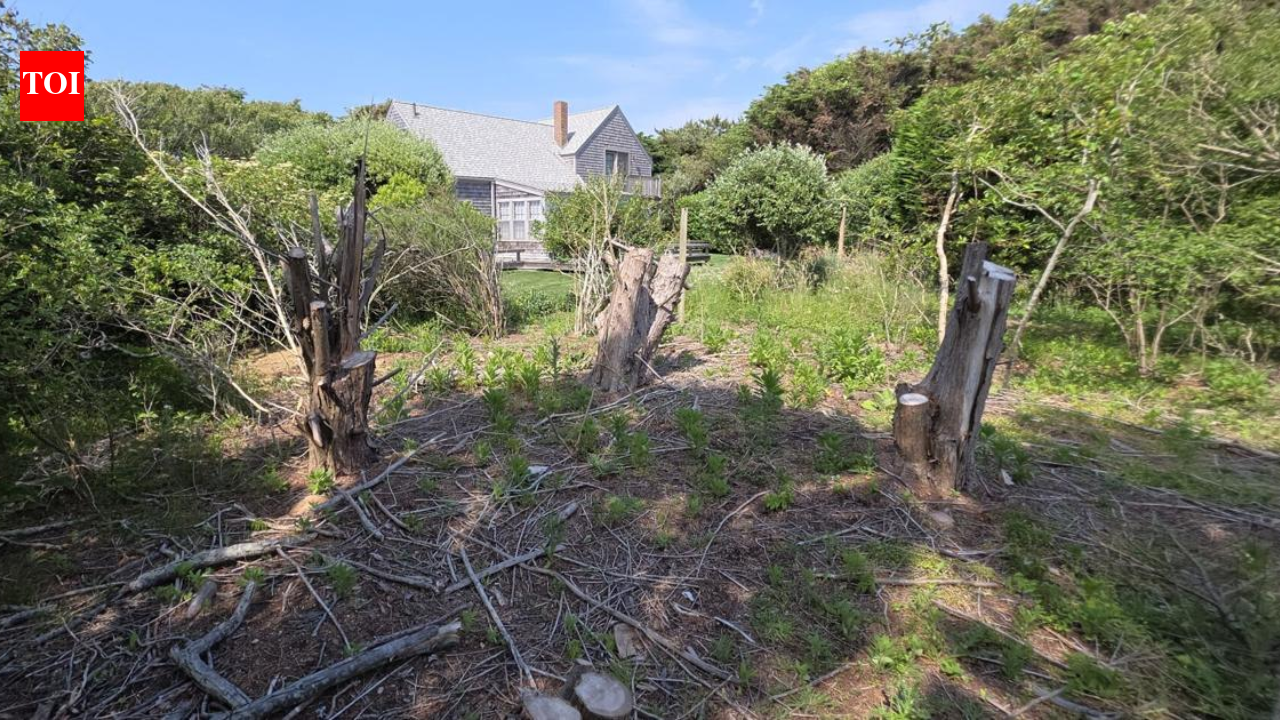
In a Massachusetts land dispute, a couple won a case against their neighbor without hiring lawyers, securing a $310,000 judgment for damages from illegal encroachments and tree destruction. The self-represented homeowners presented detailed survey records, photographs, and property assessments to prove the boundary violations and the value of damaged trees. The Massachusetts Appeals Court upheld the original ruling, affirming that self-representation in complex land disputes can lead to successful outcomes.
Written locally by qwen2.5:14b on 2026-10-01,
using this article's own text rather than the other coverage of the
same event (that is the story summary below).
A court dispute between neighbouring property owners in Massachusetts over damaged trees and illegal land encroachments has ended with a $310,000 judgment upheld on appeal, after the affected couple successfully handled their own case without hiring lawyers.
asserted
couple → neighbour → lawyers
The ruling by the Massachusetts Appeals Court is a major success for people who represent themselves in court.
asserted
who → represent → court
It shows that self-represented property owners can handle complicated land disputes and win large monetary awards against neighbouring property owners.
asserted
owners → show → owners
The case focused on property boundaries, unauthorised encroachments, and the cutting and damage of mature trees.
asserted
case → focus → trees
Those actions triggered state laws that protect trees and can greatly increase damages for illegal tree cutting and trespass on private property.
asserted
that → trigger → property
The dispute began when the Massachusetts homeowners found that their neighbour had changed property boundaries and made unauthorised structural and physical changes that reached onto their private land.
asserted
that → begin → land
Several trees on the homeowners' property were also cut down or damaged without their permission.
asserted
trees → cut → permission
Instead of taking no action or relying only on private efforts to settle the matter, the landowners brought the dispute to state court.
asserted
landowners → take → court
They faced potentially high legal costs for hiring lawyers who handle land and property cases, so the couple decided to represent themselves during the trial.
asserted
couple → face → trial
Under Massachusetts General Laws Chapter 242, Section 7, a person who cuts down or destroys trees on another person's land without legal permission can be required to pay the property owner three times the assessed damages.
asserted
who → cut → damages
This applies when the act was intentional and done without good reason.
asserted
act → apply → reason
During the trial, the self-represented couple presented detailed survey records, evidence from the property, photographs, and property assessments.
asserted
couple → represent → property
They used these materials to show where the property boundary was, what violations had occurred, and how much the damaged trees were worth.
asserted
trees → use → much
The trial judge reviewed the evidence and found that the neighbour had unlawfully encroached on the land.
asserted
neighbour → review → land
The judge also found that the destruction of the trees was willful, rather than accidental.
asserted
destruction → find → trees
Because state timber trespass law multiplies damages for tree destruction, and because the court also awarded money for property restoration and damage caused by the physical encroachments, the court entered a total judgment of $310,000 against the neighbour.
asserted
court → multiply → neighbour
Appeals court review and final judgment
The neighbouring landowner was not satisfied with the trial result and filed an appeal with the Massachusetts Appeals Court.
asserted
landowner → file → Court
The appellant argued that the trial judge had made mistakes in finding the facts and that the $310,000 award was too high.
asserted
award → argue → facts
In its written opinion, the Massachusetts Appeals Court rejected those arguments and upheld the trial court's judgment in full.
asserted
Court → write → judgment
The appellate panel found that the trial record contained enough evidence to support the judge's findings about the property boundaries, the intentional damage, and the value assigned to the destroyed trees.
asserted
record → find → trees
The appeals judges said that courts must generally respect the trial judge's decisions about witness credibility and findings of fact when those findings are supported by credible evidence in the record.
asserted
findings → say → record
Because the self-represented couple established the relevant facts and followed the applicable rules of evidence and civil procedure, the appeals court concluded that the $310,000 award should remain in place.
asserted
award → represent → place
Implications for self-represented litigants
Legal observers note that property and boundary cases in state courts can involve detailed surveys, expert evidence, property laws, and court procedures.
asserted
cases → represent → surveys
This can make representing yourself especially difficult for people who are not lawyers.
asserted
who → make → people
The appellate panel's decision confirms that self-represented litigants in Massachusetts must meet the same legal standards as licensed lawyers.
asserted
litigants → confirm → lawyers
It also shows that people representing themselves can succeed when their claims are supported by clear evidence and the laws that apply to their case.
uncertain
that → show → case
With the appeals court upholding the original judgment, the $310,000 award remains enforceable against the neighbour.
asserted
award → uphold → neighbour
That brings the multi-year dispute over the land to an end.
asserted
That → bring → end
 The Aporia