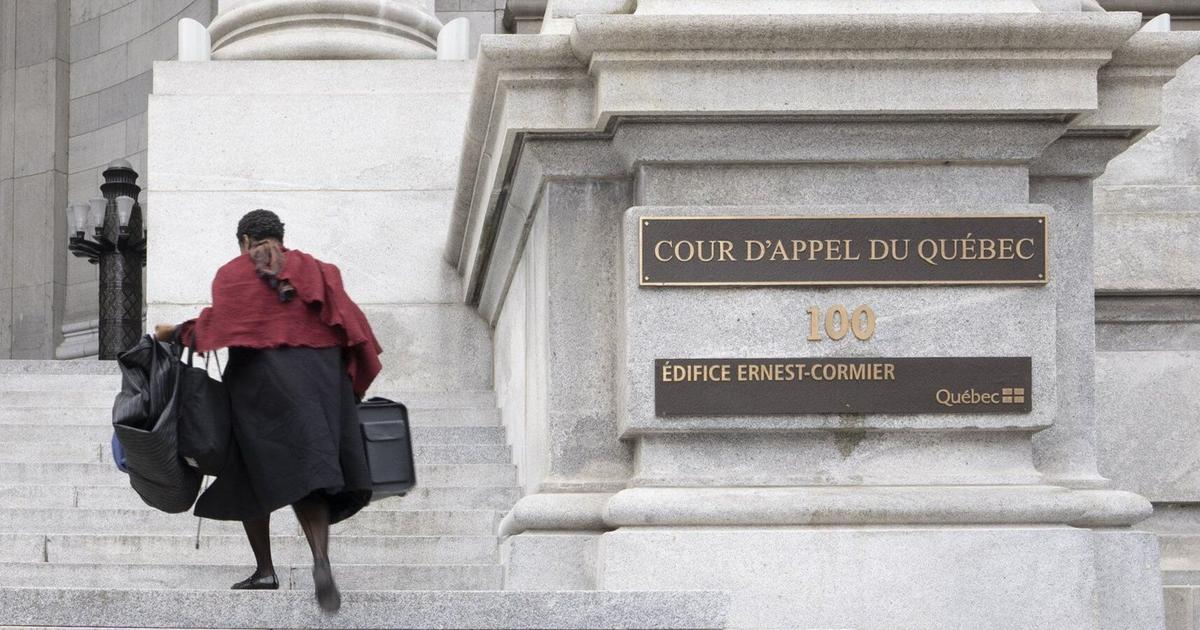
Quebec courts say generative AI cannot replace judges’ reasoning

Read the original at Global News ↗
Cite

Dev, P. (2026, September 5). Quebec courts say generative AI cannot replace judges’ reasoning. Global News. https://globalnews.ca/news/12049197/quebec-judge-ai/

Dated when The Aporia collected the article, usually within hours of publication. Check the original for its exact date and byline.

Global News · collected 2026-09-05 · by Prisha Dev

Quick Summary

Quebec's courts have issued new guidelines restricting judges' use of generative artificial intelligence. According to the 10-page document, AI cannot replace judicial reasoning or assess evidence and must remain under human control. The guidelines were adopted by four Quebec courts after questions were raised about a judge possibly using AI in preparing a decision. Specifically, judges are allowed to use AI for limited tasks such as correcting or translating text they have already written, but not for substantive legal reasoning or assessing evidence.
Written locally by qwen2.5:14b on 2026-09-05, using this article's own text rather than the other coverage of the same event (that is the story summary below).

AI analysis runs on qwen2.5:14b, locally

Story summary

Quebec's courts have issued new guidelines restricting judges' use of generative artificial intelligence, emphasizing that judging is a fundamentally human responsibility. The guidelines, adopted by the Quebec Court of Appeal, Superior Court, Court of Quebec, and municipal courts, state that AI can be used for supporting tasks but cannot replace judicial reasoning, evidence assessment, or deliberation. Generative AI lacks judgment, conscience, and accountability, making it unsuitable to understand complex human and legal contexts, according to the 10-page document. The move comes after questions were raised in March about a Quebec judge's potential use of AI in preparing a decision, which included references to non-existent case law.

Written for “Quebec Courts and AI Limits” on 2026-10-21, grounded in this article and the 1 other(s) covering the same event.

Story

📰 Quebec Courts and AI Limits
Technology · 2 article(s) covering the same event. See how they differ ↓

Compared with similar articles

This article reads unscored and hedges 8% of its claims. Each row says how that neighbour differs.
Toronto Star · 1.00 cosine similarity
⚖️ leaning not scored 🔴 8% hedged 2 of 26 📰 publisher trust 63
“Both articles describe the exact same news event on the same date and time, with identical excerpts.”
How this article was measured signals, leaning charts, publisher record, byline, topics and claims

Signals How these are calculated →

Claims extracted
25
sentences that state something as happening or true
Uncertain
8%
2 of 25 hedged ("reportedly", "may", "according to")
Leaning
withheld
no quote in the article backed the model's score
Publisher signals
63/100
Global News's corrections and hedging, across everything collected from it. Not a measure of accuracy.
Outlets on this story
2
Technology
Same framing elsewhere
2
articles that frame the event the way this one does
Analyzed 2026-09-05 · how these are computed

How this is being covered How these are calculated →

Article leaning vs. publisher reliability
Source leaning vs. consistency

Publisher

Global News · 2044 article(s) · 10 correction(s) detected
Running correction rate · 10 correction(s)

Who wrote this

Prisha Dev
11 article(s) here · 1 carrying a prediction
🔮 Shemesh said Jalota had been denied the right to bank at Ontario financial institutions and faced restrictions on where he could work after his name and photograph were widely circulated.
🔮 U.S. President Donald Trump says Canada wants to reach a deal with the United States “very badly” and suggested an agreement could come “fairly soon” if Ottawa addresses his concerns about agricultural trade.
2026-09-13 · assertive framing · Trump says Canada ‘wants to make a deal very badly’
🔮 Police are asking anyone with information about the investigation or who believes they may have experienced a similar incident to contact Northumberland OPP.
🔮 Canada will co-
🔮 Farmers in several provinces say unusually intense or poorly timed weather has damaged crops, accelerated growing seasons and made it increasingly difficult to predict what their fields will look like by Thanksgiving and Halloween.
🔮 The move comes months after questions were raised about whether a Quebec judge may have used generative AI in preparing a decision.
🔮 “If you shoot at two of our ships, we will impose an even higher economic cost — taking out three of yours,” CENTCOM commander Adm. Brad Cooper said in a statement.
🔮 Police said no further information would be released out of respect for Volo’s privacy.
Also by Prisha Dev
Nothing else under this byline is closely related to this article, so these are simply their most recent.
All 11 articles by Prisha Dev →

Topics

Court of Quebec La Presse Quebec Superior Court the Quebec Court of Appeal

Subjects

Quebec GPE · 2× Court of Quebec ORG · 1× La Presse ORG · 1× Superior Court ORG · 1× the Quebec Court of Appeal ORG · 1×

Narrative

The guidelines, jointly adopted by the Quebec Court of Appeal, Superior Court, Court of Quebec and the province’s municipal courts, say generative AI can be used for certain supporting tasks but cannot replace judicial reasoning, the assessment of evidence or deliberation.
framing: assertive · carried by 2 article(s) · first seen 2026-09-05
🔮 The move comes months after questions were raised about whether a Quebec judge may have used generative AI in preparing a decision.
2026-09-05 · Toronto Star
Quebec courts say generative AI cannot replace judges' reasoning · assertive framing
2026-09-05 · Global News
Quebec courts say generative AI cannot replace judges’ reasoning · assertive framing

Claims (25 extracted, 2 hedged)

Quebec’s courts have issued new guidelines restricting judges’ use of generative artificial intelligence, stressing that judging must remain a fundamentally human responsibility. asserted
judging → issue → intelligence
The guidelines, jointly adopted by the Quebec Court of Appeal, Superior Court, Court of Quebec and the province’s municipal courts, say generative AI can be used for certain supporting tasks but cannot replace judicial reasoning, the assessment of evidence or deliberation. asserted
AI → adopt → evidence
Judging, they say, must remain the exclusive responsibility of judges. asserted
they → say → judges
“Generative AI, however sophisticated, possesses neither judgment nor conscience and is not subject to any form of accountability,” states the 10-page document. asserted
document → possess → accountability
“It cannot understand the human, social and legal context specific to each case. asserted
It → understand → case
The move comes months after questions were raised about whether a Quebec judge may have used generative AI in preparing a decision. uncertain
judge → come → decision
La Presse reported in March that a decision contained references to case law that did not exist, raising the possibility that generative AI had been used. asserted
AI → report → possibility
The episode helped create a sense of urgency within the judiciary as it worked to establish rules for the technology. asserted
it → create → technology
The courts say there is currently no approved, secure institutional generative AI tool available to judges. asserted
courts → say → judges
They also warn that existing tools rely on algorithms whose workings remain largely opaque. asserted
workings → warn → algorithms
“Judging cannot be reduced to a technical exercise,” the guidelines say. asserted
guidelines → reduce → exercise
“It is an intrinsically human function, based on deliberation, consideration of context, respect for dignity, the requirement of fairness and the exercise of moral responsibility.” asserted
It → base → responsibility
The courts acknowledge that generative AI can be useful, but say it cannot be used as a source of legal authority or reasoning, to assess evidence or to make decisions. asserted
it → acknowledge → decisions
Judges may use it for limited tasks such as correcting, revising, rephrasing or translating text they have already written, certain administrative work, or locating information within specified sources. uncertain
they → use → sources
Any such use must remain under human control, and AI-generated material must be independently verified. asserted
material → remain → control
The guidelines make clear that judges remain fully responsible for their legal reasoning, the contents of their decisions, and the accuracy of the facts, references, quotations and legal authorities they cite. asserted
they → make → facts
“No error can be attributed to the tool used,” the document says. asserted
document → attribute → tool
“The use of a generative AI tool does not diminish the judge’s obligation to verify or their full responsibility for the final result.” asserted
use → diminish → result
The guidelines say AI cannot be used for substantive legal reasoning, analyzing or characterizing facts, assessing evidence or credibility, determining the outcome of a dispute, or drafting those parts of a decision. asserted
AI → say → decision
“If the use of AI has the effect or purpose of determining the legal outcome, assessing credibility or interpreting disputed facts, interpreting the relevance of facts, or formulating the reasons for a decision, it must not be used,” the guidelines say. asserted
guidelines → have → decision
The courts also warn judges about confidentiality risks. asserted
courts → warn → risks
Judges should not provide AI tools with draft judgments, notes about ongoing cases or information protected by law or a court order. asserted
Judges → provide → law
Until an authorized institutional system is available, judges using an AI tool for permitted purposes must also ensure its settings prevent information they enter from being used to train or improve the system. asserted
they → use → system
When in doubt, the guidelines recommend judges refrain from using generative AI. asserted
judges → recommend → AI
The guidelines are intended to protect principles including judicial independence, impartiality, fairness, human rights and access to justice, while ensuring confidentiality, security and data protection. asserted
guidelines → intend → confidentiality

💬Give feedback
🕘History 🎫Support