Vast as the lands of the Habsburg empire were, they never included Canada.
asserted
they → include → Canada
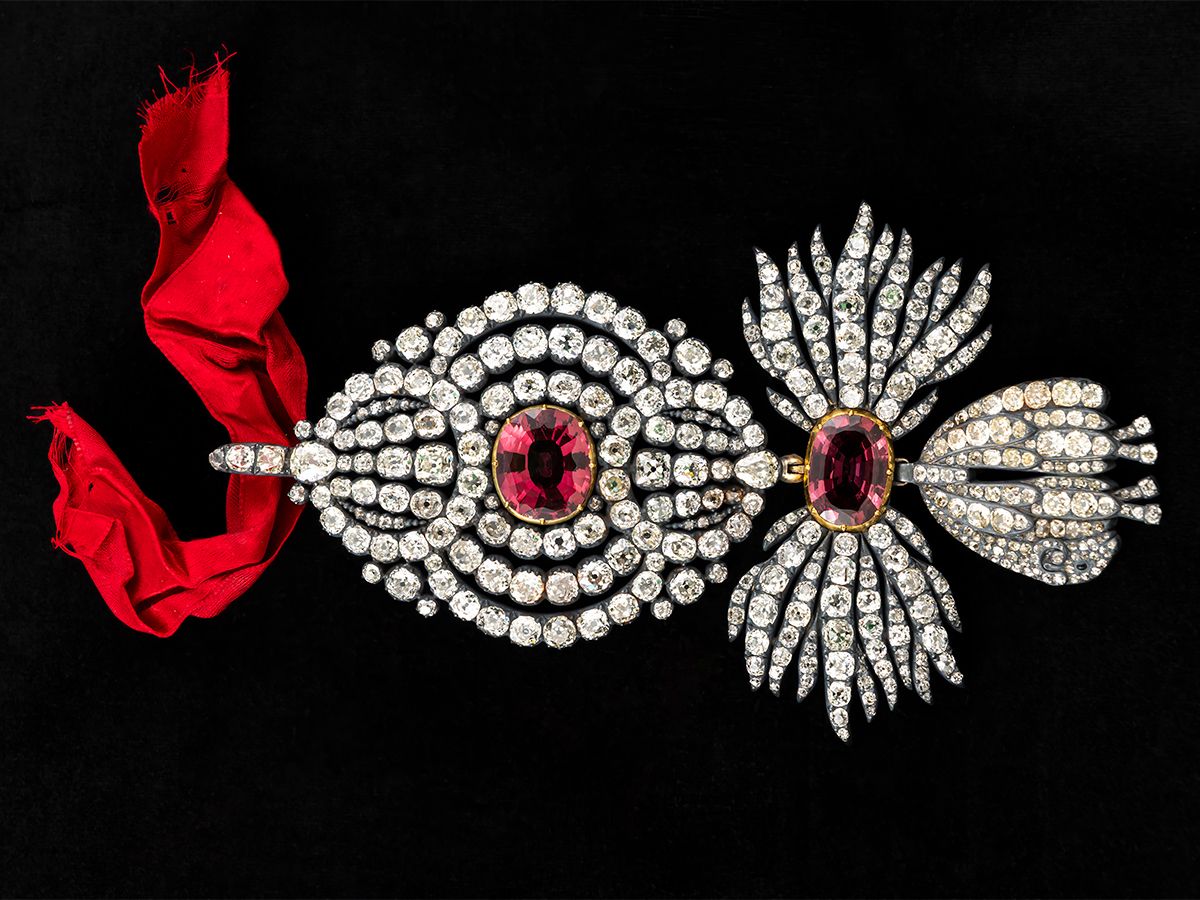
Relics of that period, private jewellery of Empress Zita, including one of the world’s most prominent gems, the Florentine Diamond, went on display at the Musée national des beaux-arts du Québec in Quebec City on Friday.
asserted
jewellery → include → Friday
Canada’s royal history — first French, then British — is most evident in the city established by Samuel de Champlain in 1608.
asserted
history → establish → 1608
Recommended Videos
The Great War laid waste to royal houses.
asserted
War → lay → houses
The last emperor of Austria-Hungary, Karl I, was driven into exile in 1918, taking refuge in Madeira with his wife, Empress Zita, and his young and growing family.
asserted
emperor → drive → wife
Renowned for efforts to bring peace during World War I, and exceptional in his personal character and devout Catholic faith, Karl was beatified — the ultimate step before canonization — in 2004.
asserted
Karl → bring → 2004
The pope of the beatification, St. John Paul the Great, was named after him.
asserted
pope → name → him
His baptismal name of Karol (Charles, Karl) was given in honour of Emperor Karl; baby Karol’s father had served in the Habsburg armed forces.
asserted
father → give → forces
(Southern Poland was part of the Habsburg empire 1795-1918.)
Blessed Karl died young, age 34, in 1922, leaving seven children and Empress Zita expecting an eighth.
asserted
Zita → die → eighth
With the new Austrian republic unremittingly hostile to the remaining Habsburgs, Zita had to make a life for her family.
asserted
Zita → remain → family
She went first to Spain and then to Belgium.
asserted
She → go → Belgium
Watching the unfolding events of the 1930s, Zita and her eldest son, Crown Prince Otto, were fiercely anti-Nazi, greatly lamenting the Anschluss, Austria’s capitulation to Nazi Germany.
asserted
Zita → watch → Germany
When Hitler invaded France in 1940, it was evident that Belgium was soon to follow.
asserted
Belgium → invade → 1940
Zita fled, zigging and zagging across Europe until she could book passage to New York, travelling on passports issued by neutral Portugal.
uncertain
she → flee → Portugal
Upon crossing the Atlantic to safety she decided to settle in the Sillery district of Quebec City, in a modest home called the Villa St-Joseph, owned by an order of Catholic nuns.
asserted
she → cross → nuns
Zita chose Quebec City for three reasons.
asserted
Zita → choose → reasons
Of supreme importance to her and Karl was their Catholic faith, and she wanted a strong Catholic culture where she could easily attend daily Mass.
uncertain
she → want → Mass.
Second, her children had already begun their education in French and, while her household was conversant in a half-dozen languages, she preferred them to continue in French.
asserted
them → begin → French
Empress Zita lived happily in Quebec until 1953, when she returned to Europe to be closer to her grown children.
asserted
she → live → children
Canadians are more familiar with the refuge sought in Canada by Princess Juliana of the Netherlands during World War II; Hitler also invaded the Netherlands in 1940.
asserted
Hitler → seek → 1940
Princess Juliana gave birth to a daughter while in Ottawa, with the federal government making extraterritorial provisions so that the baby princess would be born on “Dutch soil,” preserving her place in the line of succession.
asserted
princess → give → succession
When driven out of Vienna in 1918, Karl sent some of his family’s most significant jewels out of the country.
asserted
Karl → drive → country
Like the Windsors today, there are jewels that belong to the monarchy as such, the “crown jewels,” and then there are others that are the private property of the family.
asserted
that → be → family
Austria expropriated Habsburg royal property in 1919, but the jewels now in Quebec, including the 137-karat Florentine Diamond, were ruled in 1923 to be the family’s private property.
asserted
jewels → expropriate → 1923
Empress Zita considered herself the custodian of whatever was left of the Habsburg dynasty.
asserted
whatever → consider → dynasty
She carried the precious jewels into exile in a simple briefcase.
asserted
She → carry → briefcase
Bringing them to Quebec, she put them into a bank safety deposit box.
asserted
she → bring → box
For security and with a vision embracing centuries, she told no one and decreed that they would remain hidden for a hundred years after Karl’s death in 1922.
asserted
they → embrace → 1922
Only in her last years — she died in 1989, 67 years after Karl — did she confide the secret to two of her sons, who in turn passed it on to two of their sons.
asserted
who → die → sons
Of her dozens of grandchildren, only two knew of the jewels.
asserted
two → know → jewels
The family has decided that the jewels will remain in Quebec as a sign of gratitude for the welcome their grandmother received.
asserted
grandmother → decide → welcome
Their presence will also make Canadians aware of a proud part of our history.
asserted
Canadians → make → history
Empress Zita’s grandsons have created a trust that owns the jewels and will attend to their preservation and display, first in Quebec City, and eventually in other museums.
asserted
that → create → museums
The jewels, aside from their own beauty and value, are symbols of dedication to duty amidst the disruption, destruction and displacement of war; of preservation of patrimony in a time of privation; and of trust in God’s providence across the ocean which, not for the first time, brought blessings upon the heights rising up from the St. Lawrence River.
asserted
which → bring → River
 The Aporia