Jamie Sarkonak: Judge who praised B.C. drug dealers in court cannot be trusted on the bench

Read the original at National Post ↗
National Post · collected 2026-10-01 · by Jamie Sarkonak analysis

Quick Summary

Justice Catherine Murray of B.C.’s courts has ruled that Canada's ban on drug trafficking violates constitutional rights, arguing that the prohibition disproportionately affects drug addicts due to their supposed disability status. This decision stems from a case involving vigilante dealers Jeremy Kalicum and Eris Nyx, who were convicted last year but challenged the law’s constitutionality. Murray’s ruling suggests that medical professionals should not have exclusive control over providing “safe supply” drugs to addicts, as it imposes an unfair burden on individuals uncomfortable with seeking help through formal health systems.
Written locally by qwen2.5:14b on 2026-10-01, using this article's own text rather than the other coverage of the same event (that is the story summary below).

AI analysis runs on qwen2.5:14b, locally

Story summary

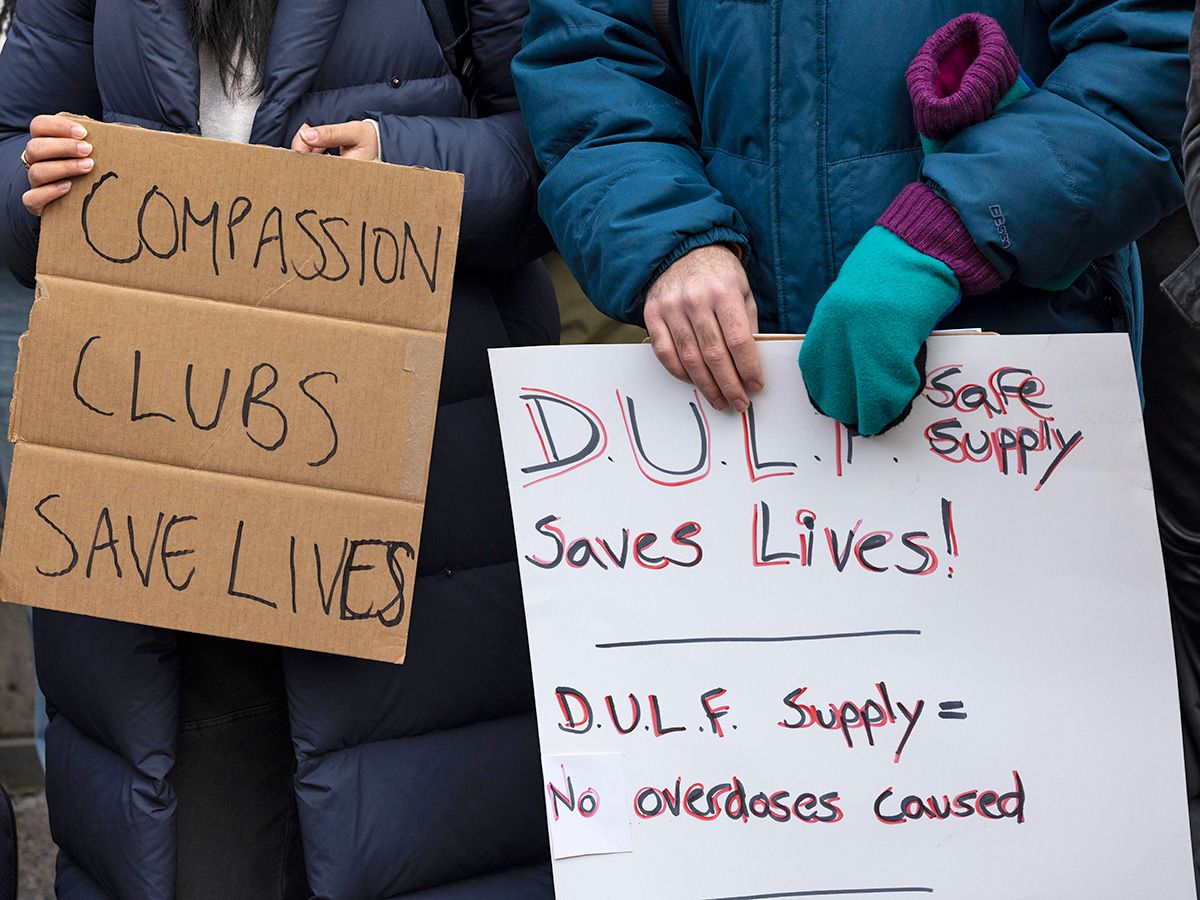
On Tuesday, British Columbia Supreme Court Justice Catherine Murray ruled that parts of Canada’s Controlled Drugs and Substances Act are unconstitutional, tossing out drug trafficking convictions against Jeremy Kalicum and Eris Nyx. Kalicum and Nyx founded the Drug User Liberation Front (DULF) in 2022 to test illicit drugs for purity and sell them at cost to reduce drug-related harms. After police raided their operation in Vancouver in 2023, they were charged under federal law but argued that forcing drug users to rely on unregulated street drugs violated the Canadian Charter of Rights and Freedoms. Murray agreed that Section 5(2) of the Act infringes on sections 7 and 15 of the Charter by denying people a safer alternative to toxic illicit drugs, thereby staying their convictions while suspending her ruling for six months.

Written for “Drug Trafficking Convictions Overturned” on 2026-10-05, grounded in this article and the 6 other(s) covering the same event.

Signals How these are calculated →

Claims extracted
57
claim-shaped sentences
Uncertain
11%
6 of 57 hedged
Leaning
Leans right
of the writing, not the subject · beta estimate
Correction & hedging signals
59.6
corrections and hedging in what we collected; not a measure of accuracy
Outlets on this story
7
Crime & Law
Narrative spread
1
articles carrying this framing
Analyzed 2026-10-01 · how these are computed

Story

📰 Drug Trafficking Convictions Overturned
Crime & Law · 7 article(s) covering the same event. See how they differ ↓

How this is being covered How these are calculated →

Article leaning vs. publisher reliability
Source leaning vs. consistency

Compared with similar articles

This article reads leans right and hedges 11% of its claims. Each row says how that neighbour differs.
The Globe and Mail
⚖️ Leans strongly left further left than this 🔴 0% hedged 0 of 10 📰 publisher trust 51
“Both articles describe Justice Catherine Murray's ruling in favour of Jeremy Kalicum and Eris Nyx, who challenged Canada’s drug laws on constitutional grounds.”
CBC News
⚖️ Leans left further left than this 🔴 0% hedged 0 of 12 📰 publisher trust 77
“Both articles discuss the same court ruling by Justice Catherine Murray regarding the convictions of Jeremy Kalicum and Eris Nyx for drug trafficking, which was overturned due to a constitutional challenge.”
Toronto Star
⚖️ Leans left further left than this 🔴 0% hedged 0 of 2 📰 publisher trust 63
“Both articles discuss the same British Columbia Supreme Court ruling by Justice Catherine Murray that declared certain sections of the Controlled Drugs and Substances Act unconstitutional, leading to the dismissal of drug trafficking convictions against Jeremy Kalicum and Eris Nyx.”
National Post
⚖️ Leans strongly right further right than this 🔴 3% hedged 1 of 39 📰 publisher trust 60
“Both articles discuss Justice Catherine Murray's ruling in favor of vigilante drug dealers associated with the Drug Users Liberation Front (DULF), indicating they are reporting on the same specific court case and decision.”
Global News
⚖️ leaning not scored 🔴 0% hedged 0 of 10 📰 publisher trust 64
“While both articles refer to Justice Catherine Murray's ruling on a constitutional challenge involving Jeremy Kalicum and Eris Nyx, Article A discusses the upcoming ruling on Tuesday, while Article B comments on the same judge's decision after it has already been made.”
Toronto Star
⚖️ Leans strongly left further left than this 🔴 3% hedged 1 of 30 📰 publisher trust 63
“The articles discuss related topics but describe different aspects of the events, one focusing on an opinion about court decisions while the other provides context and analysis.”

Publisher

National Post · 658 article(s) · 2 correction(s) detected
Running correction rate · 2 correction(s)
2026-09-29
Chris Selley: If we’d prefer drug-free prisons to ‘safe snorting,’ we need a system rethink
2026-09-27
Corrections Canada to distribute items for ‘safe snorting’ in federal prisons

Who wrote this

Jamie Sarkonak
16 article(s) here · 1 carrying a prediction
🔮 “I should have understood that supporting people who come forward about sexual violence does not require, and cannot justify, acting in ways that may lead others to conclude that unproven allegations are true or failing to give the person accused a fair opportunity to be heard and considered.”
🔮 No one is questioning historical inquiry, but using public money to draw a line from “colonial land policies” to today’s private landowners and business operators amounts to a political campaign that will have consequences.
🔮 Which, if you think about it, might as well strike out the entire Criminal Code.
🔮 If passed, the bill would make numerous changes to federal laws that determine whether or not infrastructure gets built.
🔮 Altogether, the judge found that the woman’s moral culpability was reduced to the point of deserving a “culturally grounded, rehabilitative disposition rather than a lengthy penitentiary term that would only deepen the dislocation of a young Māori mother far from her child and her community.”
🔮 I will issue a dividend to every adult citizen in the United States of America for $5,000.”
🔮 “What we are looking and will begin discussion for is a unique alliance with the European Union, between Canada and the European Union.”
🔮 The impact was so brutal that Desjardins couldn’t survive her injuries; Nepoose, however, lived.
🔮 For political observers, the Toronto mayoral election has been going on for months.
🔮 “Maybe that is too high a penalty, but, you know, I was a kid who grew up in the ’70s when we had a do-not-litter campaign, and I still, if I’m on a walk and see litter, will pick it up and put it in the garbage can.”
Also by Jamie Sarkonak
Nothing else under this byline is closely related to this article, so these are simply their most recent.
All 16 articles by Jamie Sarkonak →

Topics

Aboriginal B.C. Charter Nyx the “Drug Users Liberation Front

Subjects

Murray PERSON · 9× Kalicum PERSON · 4× Nyx ORG · 4× DULF ORG · 3× Aboriginal NORP · 1× B.C. GPE · 1× Catherine Murray PERSON · 1× Eris Nyx PERSON · 1× Jeremy Kalicum PERSON · 1× the “Drug Users Liberation Front ORG · 1×

Narrative

One, totally decriminalize drug trafficking; two, write an exception into the law that allows “benevolent” dealers to buy from criminal suppliers; and three, allow pharmaceutical suppliers to sell hard drugs to “benevolent” dealers. Murray isn’t entirely to blame here: the Crown didn’t bring much of a case, and the Supreme Court’s Kanyinda ruling on discrimination guaranteed more Charter overreach.
framing: assertive · carried by 1 article(s) · first seen 2026-10-01
🔮 Which, if you think about it, might as well strike out the entire Criminal Code.

Claims (57 extracted, 6 hedged)

B.C.’s courts have brought us the Charter right to smoke drugs near playgrounds, the Charter right to erect a homeless encampment, and the Aboriginal right to claim title to someone else’s land. uncertain
courts → bring → land
It’s a hard list to top, but on Tuesday, Justice Catherine Murray managed it by inventing a Charter right to deal drugs. asserted
Murray → ’ → drugs
Murray had been responsible for judging the case of vigilante dealers Jeremy Kalicum and Eris Nyx, who created an addicts’ rights group called the “Drug Users Liberation Front” (DULF). asserted
who → judge → group
Among the group’s ventures was a cross between drug brokerage and charity shop: it bought supposedly pure quantities of heroin, cocaine and more, and sold them at a low price to people on the street. asserted
it → buy → street
The world’s media noticed — and then so did police, who busted the operation. asserted
who → notice → operation
Kalicum and Nyx were charged for violating the Controlled Drugs and Substances Act, and Murray convicted them last year. asserted
Murray → charge → them
But Kalicum and Nyx still had a constitutional challenge up their sleeves. asserted
Kalicum → have → sleeves
It was underway at the time of their conviction, and Murray finally arrived at her answer this week: the Canadian ban on trafficking drugs violates the Charter right to life, liberty and security, as well as the right to equality under the law. asserted
ban → arrive → law
In Murray’s view, the prohibition on drug trafficking imposed discriminatory hardship upon drug addicts, whose addiction she considered a disability. asserted
she → impose → addiction
Which, if you think about it, might as well strike out the entire Criminal Code. uncertain
you → think → Code
What rules don’t disproportionately affect drug users? asserted
rules → affect → users
While the arguments of Kalicum and Nyx were far-fetched, Murray bought them wholeheartedly. asserted
Murray → buy → them
The challengers’ case was premised on the idea that addicts need access to “non-medicalized safer supply” as a matter of personal security. asserted
addicts → premise → security
While there existed medical services providing scientifically dubious but at least legal “safer supply” drugs to addicts who wanted them, they required prescriptions and diagnoses, gatekept by medical and pharmacy professionals. asserted
they → exist → professionals
Murray took issue with this medical monopoly on dispensing “safe supply” — which, I note, is already a flawed system because the legal supply ends up being diverted to the street anyway. asserted
supply → take → street
“The reality is that many PWUD (people who use drugs) do not feel comfortable accessing the medical system,” she wrote. asserted
she → use → system
“That is in large part due to social and structural stigma that keeps people silent about their drug use. asserted
that → keep → use
That includes a stigma about accessing health care.” asserted
That → include → care
This same logic could be used to undermine any professional licencing system because it unfairly discriminates against populations who don’t trust institutions, which is a problem on its own. uncertain
which → use → own
If you can Charter your way into drug dealing, you can Charter your way into unlicenced engineering, lawyering, trucking, embalming and so much more. asserted
you → charter → engineering
Murray further accepted the evidence of the parade of activist-academics marched in by Kalicum and Nyx, feeble as it was. asserted
it → accept → Kalicum
A major piece was a study on DULF’s ability to save lives, which had a small sample size and a brief control group that was folded into the treatment group, which could have also benefited from DULF’s drug-checking services. uncertain
which → save → services
It was scientifically flawed, but Murray accepted it on the grounds of “common sense.” asserted
Murray → flaw → sense
“That DULF reduced the risk of harm caused by the toxic drug crisis accords with common sense,” she wrote. asserted
she → reduce → sense
The toxic drug crisis is caused by the unpredictability of the street supply which puts PWUD at risk of overdose every time they use. asserted
they → cause → overdose
It is logical that providing them with drugs of known composition and strength, achieved by testing the drugs beforehand, reduces their exposure to that supply and the dangers associated with it.” asserted
providing → provide → it
Murray also downplayed that DULF’s own data suggested that over half of its clients reported giving or selling the drugs they purchased from the collective to other people, and the fact that DULF was likely getting its own supply from organized crime. uncertain
DULF → downplay → crime
Without much more thought, she concluded that DULF “did not negatively impact the community or public safety.” asserted
DULF → conclude → community
And so, Murray considered the Charter. asserted
Murray → consider → Charter
One grave injustice, in her eyes, was the fact that DULF’s services to the public depended on purchasing drugs from illegal suppliers, which made them criminals as well. asserted
them → depend → suppliers
This ran contrary to the Charter because it criminalized “life-saving conduct” and was thus “grossly disproportionate to the goal of protecting public health and maintaining public safety.” asserted
it → run → safety
Then, Murray applied the law of equal rights. asserted
Murray → apply → rights
She relied on the Supreme Court of Canada’s latest iteration setting out what constitutes unlawful discrimination under the Charter, Quebec (Attorney General) v. Kanyinda, which gave unvetted asylum claimants in Quebec the right to subsidized daycare. asserted
which → rely → daycare
That case embraced the philosophy of intersectionality, holding that a rule that could be said to disproportionately disadvantage any segment of people within a “protected group” population runs contrary to the Charter. uncertain
that → embrace → Charter
Murray found this easily applied to DULF by counting drug addiction and the pain of withdrawal as a disability. asserted
this → find → disability
Murray ultimately declared the ban on drug trafficking invalid, but suspended her declaration for six months “to give Parliament time to implement a scheme that would allow for a non-medicalized safer supply program to operate without contravening the (legislation).” asserted
program → declare → legislation
There appear to be three obvious ways for the government to comply. asserted
government → appear → ?
One, totally decriminalize drug trafficking; two, write an exception into the law that allows “benevolent” dealers to buy from criminal suppliers; and three, allow pharmaceutical suppliers to sell hard drugs to “benevolent” dealers. Murray isn’t entirely to blame here: the Crown didn’t bring much of a case, and the Supreme Court’s Kanyinda ruling on discrimination guaranteed more Charter overreach. asserted
ruling → decriminalize → overreach
But she didn’t do herself any favours by demonstrating bias in favour of the drug-decriminalization cause: instead of neutral “drug users” or “drug addicts,” Murray went with the progressive neologism of “PWUD” — people who use drugs, signalling a preference for the activists by using their terms. asserted
who → do → terms
Worse, in the actual hearing, she stated her approval for “benevolent” drug trafficking on the court record. asserted
she → state → record
…and 17 more, not listed.

💬Give feedback
🕘History 🎫Support