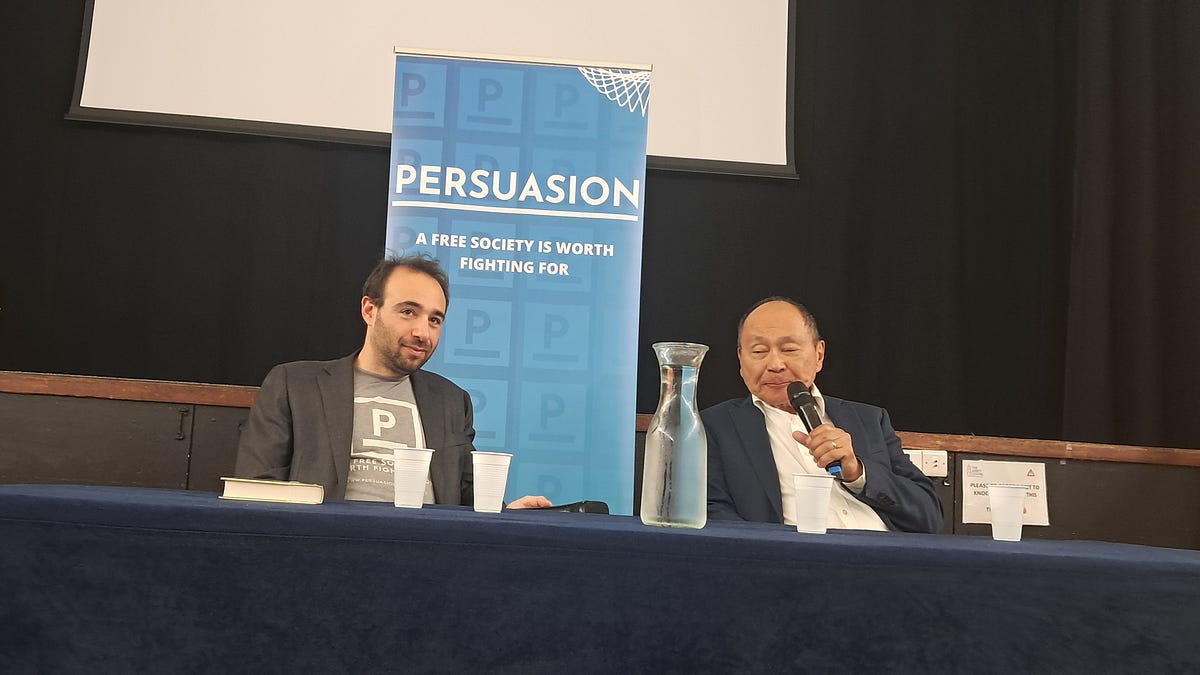
Join Yascha Mounk and Dan Williams for this live recording of The Good Fight podcast at the Halycon International School as they discuss whether AI will doom us all!
asserted
AI → join → us
Please note that you must reserve a ticket in order to attend.
asserted
you → note → ticket
Please email events@persuasion.community if you have any questions.
asserted
you → email → questions
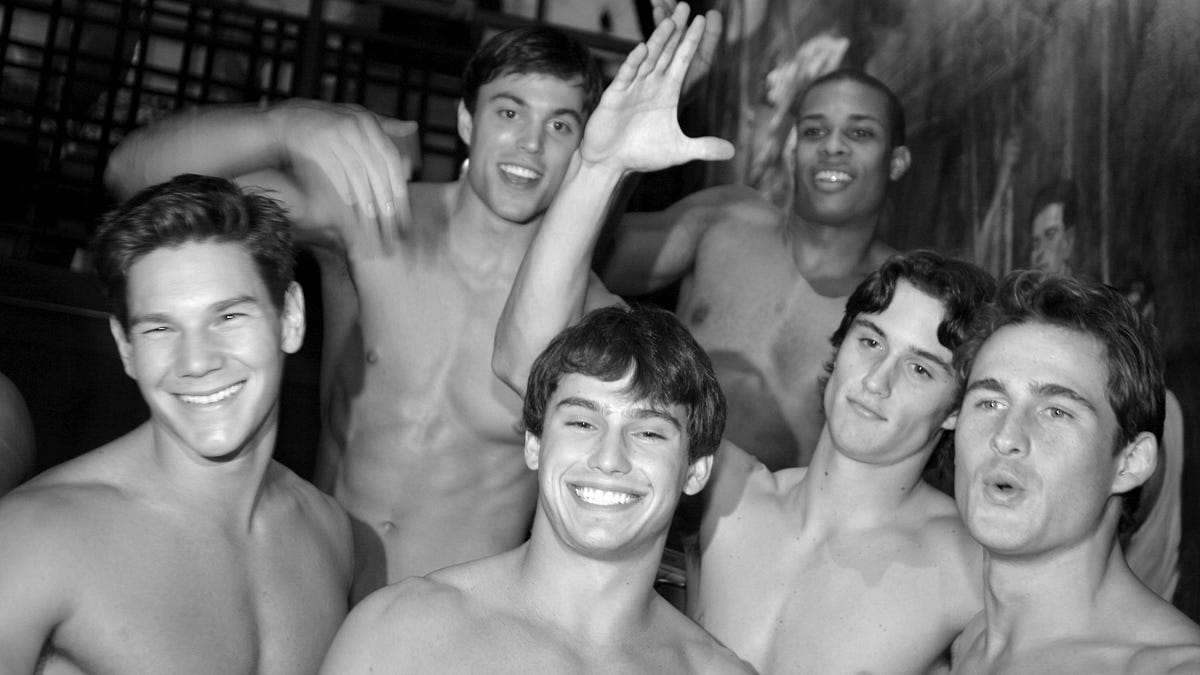
Gen Z men are sadder and lonelier than any generation before them—but damn, they look good while doing it.
asserted
they → look → it
While previously men turned to drink, drugs, or ill-advised sex to cope with the pressures of being young, today men in their 20s are heading to the gym more than any previous generation.
asserted
men → turn → generation
A 2025 survey showed that Gen Z and Millennials account for over forty percent of wellness spending, with Gen Z consumers counting a “better appearance” in their top three wellness concerns after sleep and health.
asserted
consumers → show → sleep
As with any interest in this day and age, the concern with appearance is expressed as much through consuming as by doing.
asserted
concern → express → appearance
Gen Z consumers show a keen interest in wellness products such as health-tracking devices, mindfulness apps, and massage tools.
asserted
consumers → show → devices
What in the 1990s would be described as “metrosexual”—a man interested in his appearance, with a certain personal style and a passion for skincare—has transformed into a new pressure on men to strive to be their best physical selves.
asserted
described → describe → men
Men’s health and wellness have gone mainstream, with the market projected to double by 2030 to nearly $3 trillion.
asserted
market → go → trillion
Gen Z men are also encountering beauty products differently: while previous generations tended to buy products in response to obvious needs such as shaving or requiring deodorant, today young men begin their beauty journey with general skincare.
asserted
men → encounter → skincare
Men are also increasingly searching for particular brands online, suggesting active decision-making rather than grabbing the first vaguely suitable product they find in the grocery store.
asserted
they → search → store
In 2025, adults aged 18-24 accounted for 54% of all new gym memberships, with men making up a higher proportion.
asserted
men → age → proportion
With the well-documented decline of “third places” such as malls or bars for young people to hang out in, the gym offers a place to spend time outside of home, work, or study.
asserted
gym → document → home
This interest in fitness has been enhanced by the trend for wearable devices, from smartwatches to smart rings, making it easier than ever to track results.
asserted
it → enhance → results
Who doesn’t want to be healthy?
asserted
Who → want → ?
Developing habits such as gym-going and a balanced diet in your 20s sets you up well for later in life.
asserted
Developing → develop → life
While women are expected to be as thin and as smooth as if they were wearing a real-life Instagram filter, men are pushed to be athletic and chiseled, with angular features and defined abs.
asserted
men → expect → features
Which perhaps helps explain why Gen Z are unhappier than ever.
asserted
Z → help → ?
Part of why they recognize the importance of mental health is because they struggle so much with it.
asserted
they → recognize → it
40% of Gen Z report that they feel “almost always stressed.”
asserted
they → report → Z
This is exacerbated by high levels of screen time, leading to constant reminders that others’ lives are going better than theirs, compounded by a fear of missing out (FOMO).
asserted
lives → exacerbate → fear
Just as many women have already discovered, the hyperfocus on appearance, far from providing a sense of accomplishment and satisfaction at having achieved the “ideal” body, is making men unhappier.
asserted
men → discover → body
Male beauty standards saw a huge shift around 2021.
asserted
standards → see → 2021
Male spending on self-care took off in the spring of that year.
asserted
spending → take → year
For those stuck at home with nothing to do except doomscroll and buy products online, self-improvement became an easy hobby.
asserted
improvement → stick → products
This trend has continued: 19% of men report caring more about beauty now than they did ten years ago.
asserted
they → continue → beauty
This trend is in part driven by the market: at the same time as women were embracing the viral “clean girl” aesthetic, which required fewer (but not zero) products, the beauty industry moved to meet men’s needs, too.
asserted
industry → drive → needs
COVID saw a rise in sales of skincare products, as these were not only a distraction but made skin feel healthy at a time when consumers wanted to decrease stress and look well.
asserted
consumers → see → stress
Skincare is an easier sell to male consumers than makeup, which allowed this trend to cross the gender barrier.
asserted
trend → allow → barrier
But the biggest driver of changing male beauty standards by far is social media and influencer culture—particularly trends such as “looksmaxxing,” a subculture within the manosphere in which young men and boys encourage each other online to maximize their looks to an extreme degree.
asserted
men → change → degree
According to proponents, there are two types of looksmaxxing: softmaxxing, which can include skincare, diet, and a healthy gym routine, and hardmaxxing, which is much more extreme.
uncertain
which → accord → skincare
As with anything, softmaxxing can be healthy in moderation—though making an identity out of the pursuit of perfection is likely to fail, regardless of how healthy the activities are.
asserted
activities → make → perfection
Hardmaxxing, on the other hand, involves dangerous or invasive procedures to get extreme results.
asserted
Hardmaxxing → involve → results
This could mean steroids, plastic surgery—or worse.
uncertain
This → mean → steroids
One of the most famous influencers is Clavicular (real name Braden Peters), who chronicles his attempts to achieve the “perfect” face for his 1.2 million subscribers on TikTok and another 437,000 on Kick, mostly young men.
asserted
who → chronicle → Kick
The 20-year-old has said that his mother confiscated his hammer as he kept using it to smash his face into a more preferable shape.
asserted
he → say → shape
He also claims to have injected himself with so much testosterone that he is now infertile.
uncertain
he → claim → testosterone
His videos, and those of other hardmaxx influencers, hyperfixate on small details about the face such as chin measurements and ratios, desperately trying to fix every perceived flaw.
asserted
videos → hyperfixate → flaw
Looksmaxxing has its origins in online incel, “black pill,” and alt-right communities that have grown more mainstream since the pandemic.
asserted
that → have → pandemic
…and 17 more, not listed.
 The Aporia