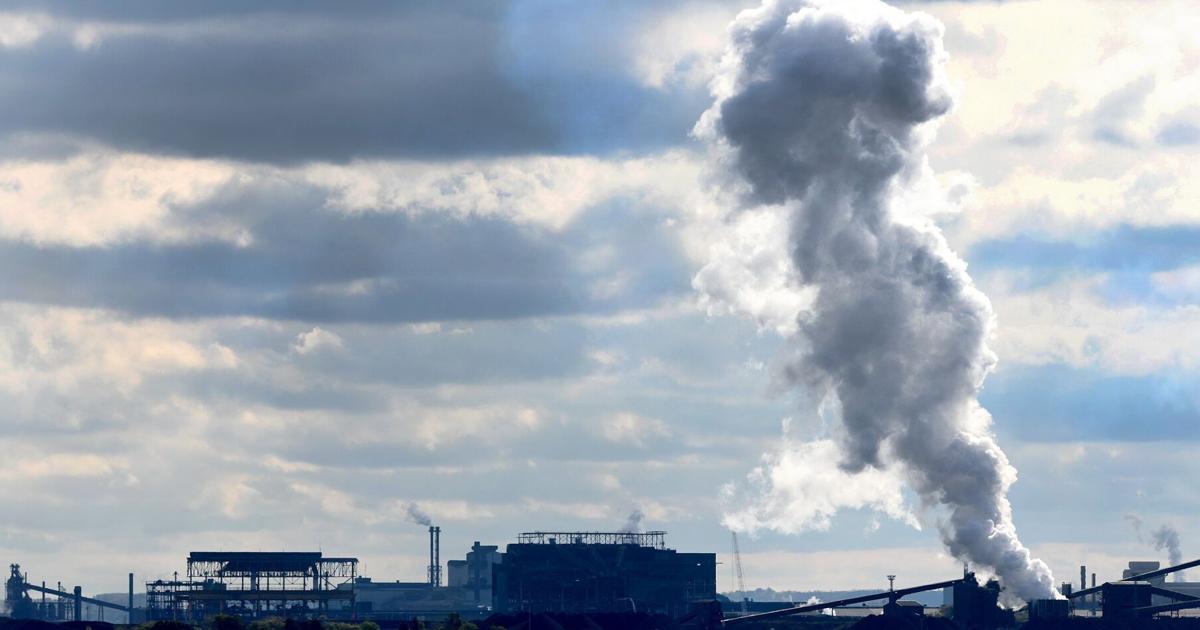
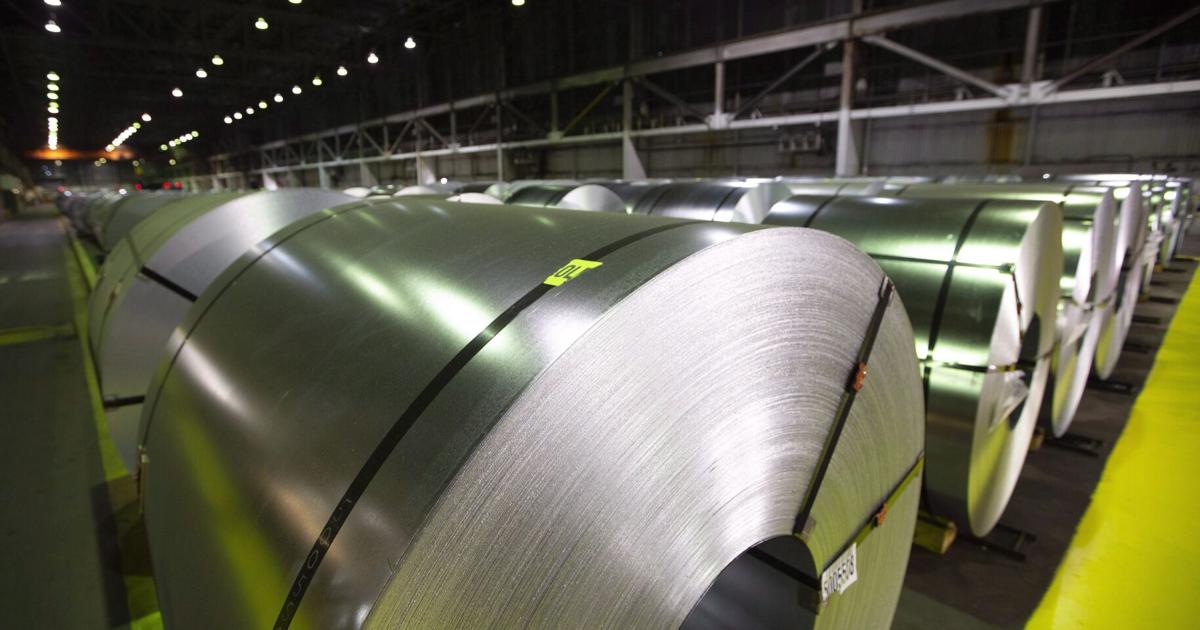
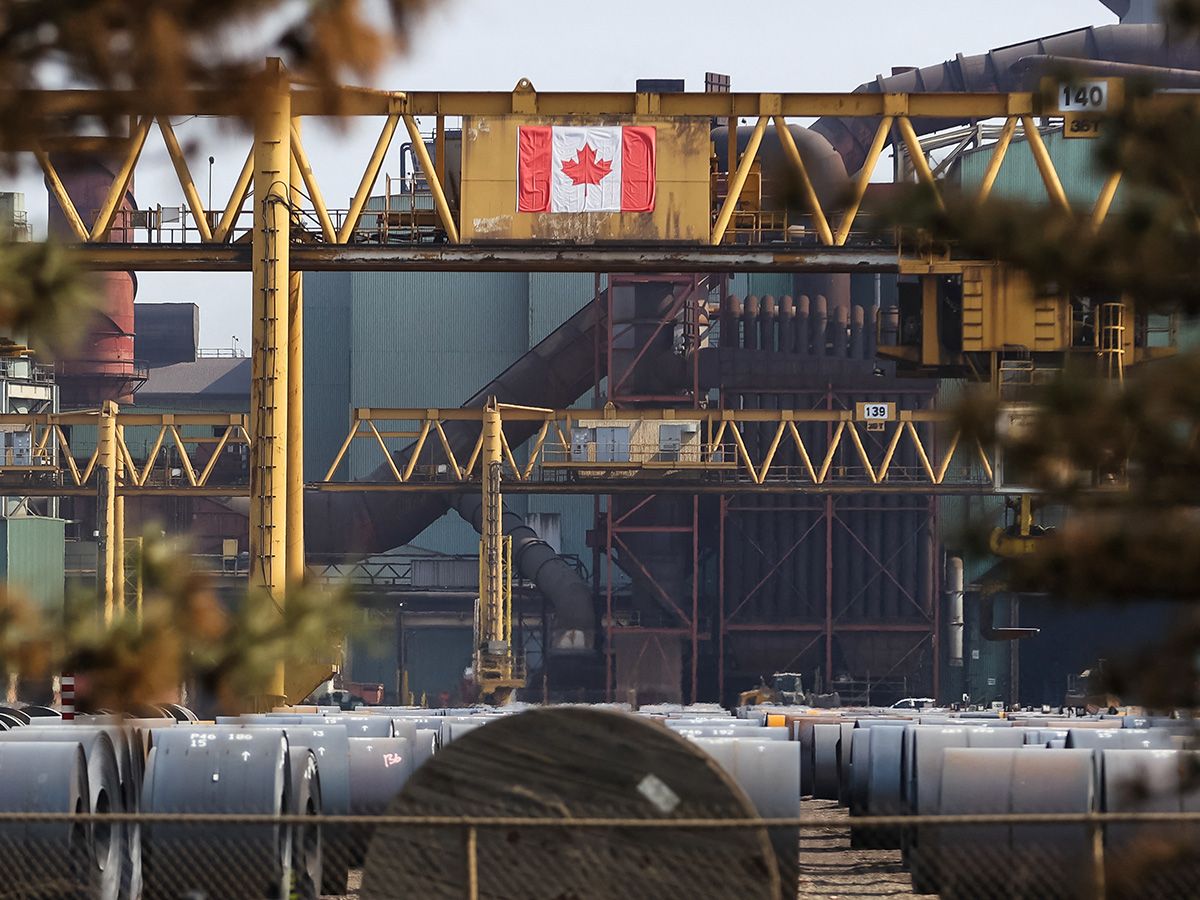
With U.S. tariffs, cheap Chinese steel flooding global markets, hundreds of layoffs, and a $15 billion new steel plant planned in Iowa, is there still a future for the Canadian steel industry?
asserted
steel → flood → industry
Despite Canada’s reliance on the U.S. for most of its steel exports amid punishing 50 per cent tariffs, experts still see a glimmer of hope for the beleaguered industry — domestically.
asserted
experts → punish → industry
This week, parent company Cleveland-Cliffs announced it was idling Stelco’s cold mill and coating lines in Hamilton effective Oct. 9, leaving up to 500 workers facing layoffs.
asserted
it → announce → layoffs
The company cited market conditions — including 50 per cent U.S. tariffs and falling global steel prices — for the indefinite pause.
asserted
company → cite → pause
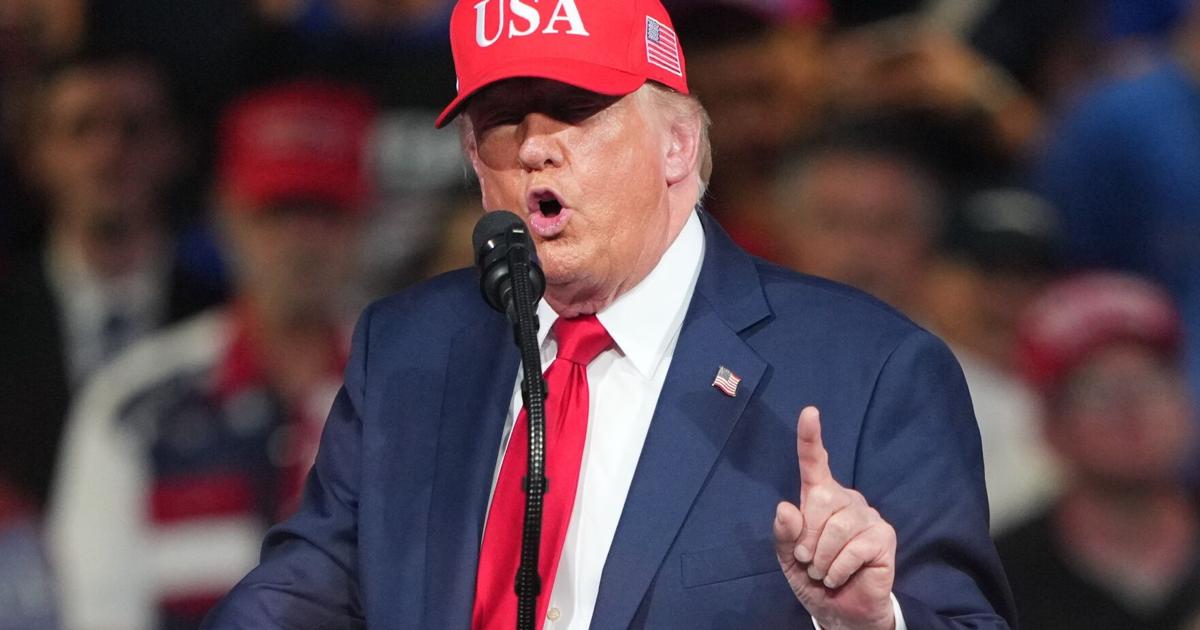
Also this week, U.S. President Donald Trump announced a massive new steel facility being planned for Iowa.
asserted
Trump → announce → Iowa
The plant is scheduled to begin production in 2030, and is being built by a Minnesota-based company controlled by India’s Essar Group.
asserted
plant → schedule → Group
While the news might seem grim at the moment, there’s still a future here for an industry which has been present in Canada for over a century, said long-time industry analyst Peter Warrian.
uncertain
Warrian → seem → century
The question is how we manage the transition,” said Warrian, a distinguished research fellow at the University of Toronto’s Munk School of Global Affairs and Public Policy.
asserted
Warrian → manage → Affairs
The key, said Warrian, is growth in the domestic market, whether it’s in infrastructure projects, or in high-tech manufacturing.
asserted
it → say → manufacturing
“The growth would be in domestic demand, primarily,” said Warrian.
asserted
Warrian → say → demand
Why the domestic market is Canada’s best hope
The domestic market is vital partly because the international market has been flooded with cheap steel from China, he said.
asserted
he → flood → China
But the U.S. market, which has traditionally taken more than 70 per cent of the steel produced in this country, could be difficult even once Trump’s term in office ends.
uncertain
term → take → office
It would be a mistake, said Warrian, to assume that if Democrats sweep congressional elections this November, and also win the 2028 presidential election, that they’d immediately wipe out all of Trump’s trade policies.
asserted
they → say → policies
“On protectionism, don’t get your hopes up on the Democrats doing something qualitatively different,” Warrian said.
asserted
Warrian → get → something
Still, he added, some specialized types of steel required in military or advanced manufacturing applications simply aren’t made in Canada right now.
asserted
types → add → Canada
That’s the kind of gap, he argues, that needs to be filled to make sure the steel industry’s future here is bright.
asserted
future → ’ → gap
The head of the union representing Canadian steel workers agreed that the domestic market is vital to the industry’s health, but warned that using Canadian steel here could mean altering some of the trade deals Mark Carney has signed in an attempt to diversify overall export markets.
“I know it sounds like a Trump thing to do, but some of these agreements might need to change,” said Marty Warren, head of the Canadian branch of U.S.-based United Steel Workers.
uncertain
Warren → represent → Workers
Just 30 per cent of steel used in Canada is produced here, Warren said, while some of the rest is from cheaper imports from China or countries and regions which have struck free trade deals with Canada.
asserted
which → use → Canada
“We get a lot of galvanized and cold rolled steel out of Germany and South Korea,” Warren said.
asserted
Warren → get → Germany
Cheaper steel flooding international markets makes the domestic market even more crucial for Canadian steel, Warren argued.
asserted
Warren → flood → steel
“You just can’t compete outside of North America.
asserted
You → compete → America
All that overproduction has flooded the global market,” Warren said.
asserted
Warren → flood → market
“If you don’t protect your domestic market, we won’t have a domestic industry.”
asserted
we → protect → industry
Last July, the federal government announced a multi-pronged aid package for the industry, including caps on imported steel, stiff tariffs if those caps are exceeded, and prioritizing the use of Canadian steel in government procurement.
asserted
caps → announce → procurement
The problem, said Warren, is that those caps are too high.
asserted
caps → say → ?
Countries with an existing free trade agreement with Canada can send as much as 75 per cent of their 2024 export volume to Canada before hitting the cap.
asserted
Countries → exist → cap
“That’s way too high,” Warren said.
asserted
Warren → ’ → ?
“The next immediate step is to drive those quotas from 75 to 20.”
asserted
step → drive → 20
A spokesperson for federal industry minister Melanie Joly said the government is helping Canadian companies and workers with a variety of programs, including targeted loans and procurement policies.
asserted
government → say → loans
“We are providing the supports businesses need to remain competitive in a changing global trade environment,” said Joly spokesperson Gabrielle Landry.
asserted
Landry → provide → environment
“We are also moving forward with new initiatives to further limit foreign steel imports, helping ensure that Canadian steel producers have better access to the domestic market while strengthening protections for Canadian workers affected by global trade challenges.”
As for the Iowa plant, there’s still no guarantee it will actually happen, said Joseph McDermid, director of the Steel Research Centre at McMaster University.
asserted
McDermid → move → University
“I would caution that ground has yet to be broken on this project, which will not be operating or even completely built when Mr. Trump leaves office in January 2029,” McDernid said.
asserted
McDernid → caution → January
“Much can change over the intervening months and years.”
asserted
Much → change → months
For now, he added, there’s plenty of steel being produced in Canada — even by Stelco.
asserted
he → add → Stelco
Keeping it that way, said USW’s Warren, is vital not just for the Canadian steel industry and broader economy, but for the country’s sovereignty.
asserted
Warren → keep → sovereignty
“A nation without a steel industry,” Warren said, “is giving up a lot of its independence.”
asserted
Warren → say → independence
 The Aporia