- Published
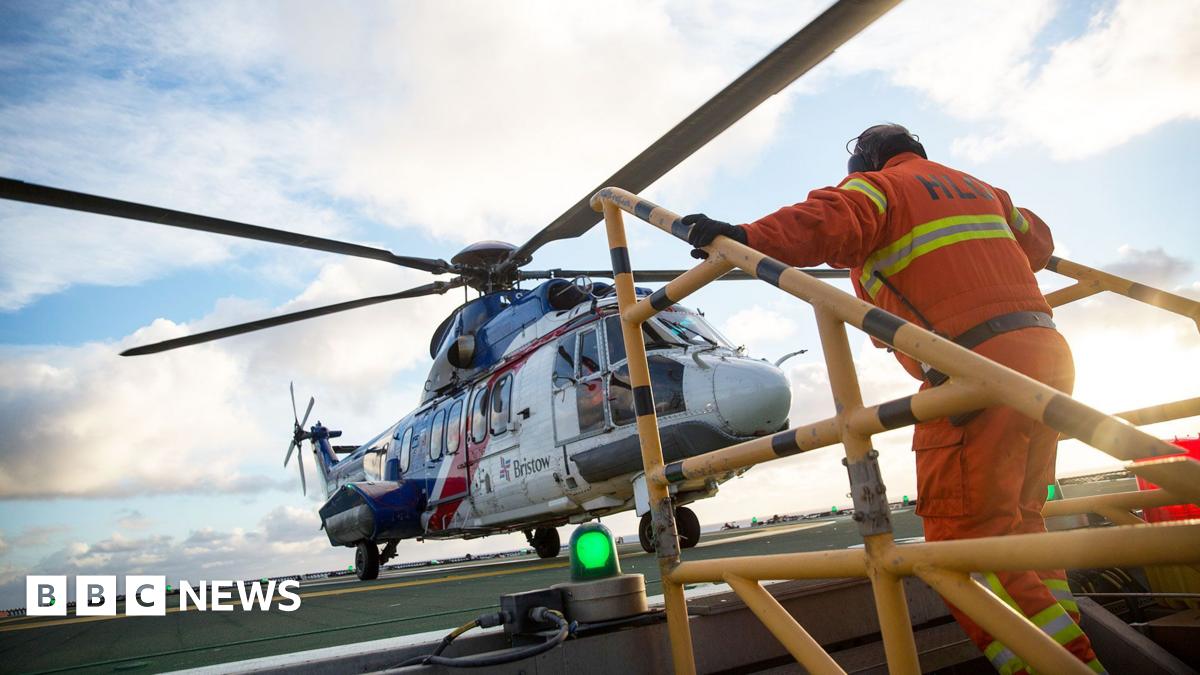
Hundreds of North Sea workers are still too heavy for offshore helicopter travel less than two months before new rules come into force, BBC Scotland has learned.
asserted
Scotland → publish → force
From November they should weigh no more than 19st 7Ib (124kg) in their clothing and footwear, so they can be winched to safety in an emergency.
asserted
they → weigh → emergency
When the plans were announced by industry body Offshore Energies UK (OEUK) last year, they said more than 2,200 workers were above that limit.
asserted
workers → announce → limit
New figures suggest up to 800 still exceed it.
asserted
800 → suggest → it
Jobs could be lost as a result, and an occupational health expert said some had left the offshore industry rather than lose the weight.
uncertain
some → lose → weight
However an employment law specialist said alternative onshore roles could also be explored by companies.
uncertain
roles → say → companies
The new safe weight limit policy, external came after the Maritime and Coastguard Agency (MCA) warned that rescue winches - which are critical during offshore emergencies - cannot safely lift heavier people.
asserted
which → come → people
The 39st (249kg) maximum Coastguard rescue helicopter winch load is made up of the maximum clothed weight plus the average 14st (90.3kg) weight of a rescue worker, a 4st 7Ib (29kg) stretcher, and the 7Ib (5kg) kit.
asserted
load → make → worker
OEUK said the average weight of offshore workers had risen by almost 1st 7Ib (10kg) since 2008.
asserted
weight → say → 2008
Its definition of clothed weight is measured "according to the industry travel clothing policy for the relevant season, including shoes".
uncertain
definition → measure → shoes
The decision to implement a safe weight limit for offshore workers followed a lengthy review by industry experts.
asserted
decision → implement → experts
Rules about shoulder size were previously introduced for workers travelling to and from offshore installations by helicopter.
asserted
Rules → introduce → helicopter
Passengers with a shoulder width of 22in (56cm) or more were classed as "extra broad" and had to sit next to a similarly large helicopter window, so they could escape.
uncertain
they → class → window
Updated figures from the industry body show about 3.4% of offshore workers weigh more than 124kg.
asserted
% → update → kg
That is down from the estimated 4.7% in 2022.
asserted
That → estimate → 2022
The latest figures are based on more than 35,000 offshore traveller records collected between April and August.
asserted
figures → base → April
They suggest hundreds have moved below the threshold - but hundreds also still remain above it.
asserted
hundreds → suggest → it
OEUK said it was working to maintain the downward trend, but those still over the new guidelines only now have a limited window left.
asserted
those → say → window
Aberdeen-based occupational health physician Dr Niyi Adeleke assesses the fitness of people for offshore work.
asserted
Adeleke → base → work
The said the new rules had been a "big talking topic" among workers since the announcement last year.
asserted
rules → say → announcement
Anyone above the weight limit will not get the necessary medical certificate.
asserted
Anyone → get → certificate
"The reaction has been varied, some people are really stressed, 'what can I do?'," he told BBC Scotland News.
asserted
he → do → News
"We ask them about their eating habits and what they can change."
asserted
they → ask → what
He said some were looking for measures such as weight loss injections.
"
asserted
some → say → injections
We have others who have decided to walk away, saying this is no longer what they would like to do if they have to lose that amount of weight.
asserted
they → have → weight
"There are people who work out in the gym regularly and say they are not going to trade this for a job."
asserted
they → be → job
However he said that was only a small number in his experience, and others were also transferring abroad, or switching to onshore roles.
asserted
others → say → roles
He said most were working to lose the weight.
asserted
most → say → weight
However he explained some were losing weight too quickly by fasting for long periods which was not sustainable.
asserted
which → explain → periods
"There are solutions which are sustainable," he said.
asserted
he → be → ?
Could jobs be lost?
uncertain
jobs → lose → ?
Will Rollinson, an employment specialist with law firm Brodies, said companies were aware of what needed to be done about supporting staff.
asserted
what → say → staff
He said several things would have to be considered before someone was dismissed because of their weight.
asserted
someone → say → weight
Employers would need to know what efforts the worker had made to get under the limit, why they did not manage, and what further help could be offered.
uncertain
help → need → limit
Rollinson said alternative roles could be explored, rather than having to work offshore.
uncertain
roles → say → ?
"Ultimately though, if an employee whose role is offshore is unable to get below the safe weight limit, and an employer has followed a process, it may be that (job) termination is a possibility," he said.
uncertain
he → get → process
He said some operators would have much more scope for offering alternative roles.
asserted
operators → say → roles
He stressed there was still a two-month window for companies and employees to act.
asserted
companies → stress → ?
Graham Skinner, the health, safety and security manager at OEUK, said the affected workforce was trying hard to reach the new limit.
asserted
workforce → say → limit
He said with eight weeks to go there were "between 500 and 800" workers who still had weight to lose.
asserted
who → say → weight
…and 8 more, not listed.
 The Aporia