MI5 China alert will send chill through UK’s cash-strapped universities

Read the original at The Guardian ↗
The Guardian · collected 2026-09-30 · by Amy Hawkins Senior China correspondent

Quick Summary

MI5 issued a security alert warning British researchers and academics to avoid working with the China Academy of General Technology (CAGT), alleging that it is a front for China’s Ministry of State Security and engages in espionage by funding research in sensitive areas like artificial intelligence and cybersecurity. This warning comes at a time when UK universities are increasingly relying on Chinese partnerships and funding, raising concerns about national security risks while also potentially impacting the £600 million annual revenue generated from Chinese students studying in the UK.
Written locally by qwen2.5:14b on 2026-09-30, using this article's own text rather than the other coverage of the same event (that is the story summary below).

AI analysis runs on qwen2.5:14b, locally

Story summary

MI5 issued an unprecedented security alert in late April, warning British universities to sever ties with the China Academy of General Technology (CAGT), also known as the China General Technology Research Institute (CGTRI). MI5 described CGTRI as a "significant threat" and accused it of funding academic research in sensitive fields like artificial intelligence and cybersecurity to improve China’s Ministry of State Security's (MSS) espionage capabilities. The alert affects over 100 UK-based academics who have worked on projects funded by CGTRI, which MI5 believes is a front for Beijing's intelligence efforts. Universities are now instructed to cut ties or risk prosecution under the National Security Act 2023, with potential sentences of up to 14 years. This move comes amid growing concerns about Chinese influence in UK academia and follows China’s education ministry announcement of 219 new transnational education partnerships, including more than a fifth with British universities.

Written for “China Spy Threat UK Universities” on 2026-10-09, grounded in this article and the 3 other(s) covering the same event.

Signals How these are calculated →

Claims extracted
28
claim-shaped sentences
Uncertain
7%
2 of 28 hedged
Leaning
Leans right
of the writing, not the subject · beta estimate
Correction & hedging signals
68.4
corrections and hedging in what we collected; not a measure of accuracy
Outlets on this story
4
Politics
Narrative spread
1
articles carrying this framing
Analyzed 2026-09-30 · how these are computed

Story

📰 China Spy Threat UK Universities
Politics · 4 article(s) covering the same event. See how they differ ↓

How this is being covered How these are calculated →

Article leaning vs. publisher reliability
Source leaning vs. consistency

Compared with similar articles

This article reads leans right and hedges 7% of its claims. Each row says how that neighbour differs.
The Guardian · 0.91 cosine similarity
⚖️ leaning not scored 🔴 6% hedged 2 of 36 📰 publisher trust 68
“Both articles describe MI5 issuing an alert on the same day regarding the China Academy of General Technology (CAGT) and its activities in UK universities.”
South China Morning Post · 0.91 cosine similarity
⚖️ leaning not scored 🔴 0% hedged 0 of 6 📰 publisher trust 67
“Both articles describe MI5 issuing an alert on September 30, 2026, warning UK researchers and academics to cease work with a Chinese organization due to espionage concerns.”
Semafor
⚖️ Leans right 🔴 0% hedged 0 of 5 📰 publisher trust 95
“The articles discuss different aspects of Chinese influence and competition in technology and academia, but do not describe the same specific incident.”
Daily Mail · 0.88 cosine similarity
⚖️ Leans strongly right further right than this 🔴 14% hedged 3 of 22 📰 publisher trust 64
“While both articles discuss an MI5 alert regarding Chinese influence and espionage in UK universities, they describe different aspects of the warning. Article A focuses on a specific organization (CAGT) while Article B mentions funding from China's Ministry of State Security for research areas like AI and cybersecurity.”

Publisher

The Guardian · 1526 article(s) · 4 correction(s) detected
Running correction rate · 4 correction(s)
2026-10-03
Tennessee’s top prison official resigning after botched execution of Christa Pike
2026-10-01
Tennessee governor suspends all executions after Christa Pike’s lethal injections fail
2026-09-28
Extra 1,000 prison beds announced in NSW as union warns against arresting ‘our way out of domestic violence’
2026-09-05
Australia’s housing prices are trending down. See which suburbs have had the biggest falls

Who wrote this

Amy Hawkins Senior China correspondent
2 article(s) here · 1 carrying a prediction
🔮 In May, China’s education ministry announced 219 new transnational education partnerships, with more than a fifth of the approvals being with British universities.
🔮 Evergrande’s troubles began in 2020 when the Chinese government introduced regulations limiting the amount of debt that property companies could hold.
Also by Amy Hawkins Senior China correspondent
Nothing else under this byline is closely related to this article, so these are simply their most recent.

Topics

British China Chinese MI5 MSS

Subjects

China GPE · 12× Chinese NORP · 8× MI5 ORG · 4× MSS ORG · 3× Beijing GPE · 2× British NORP · 2× CAGT ORG · 2× Ministry of State Security ORG · 1× the China Academy of General Technology ORG · 1× the China General Technology Research Institute ORG · 1×

Narrative

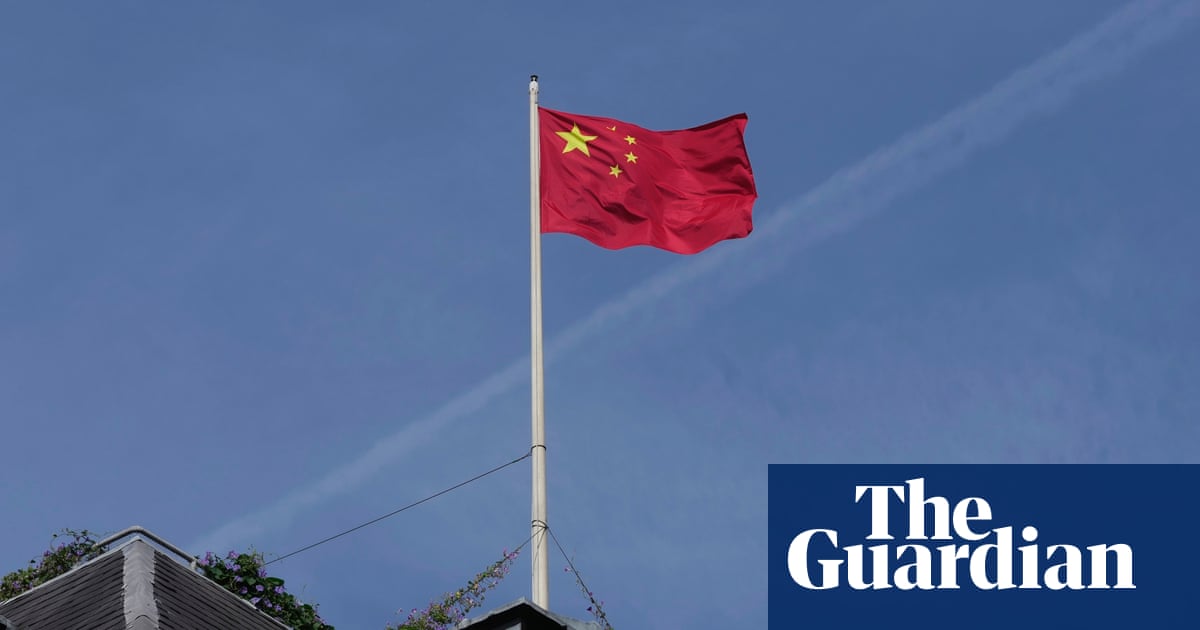
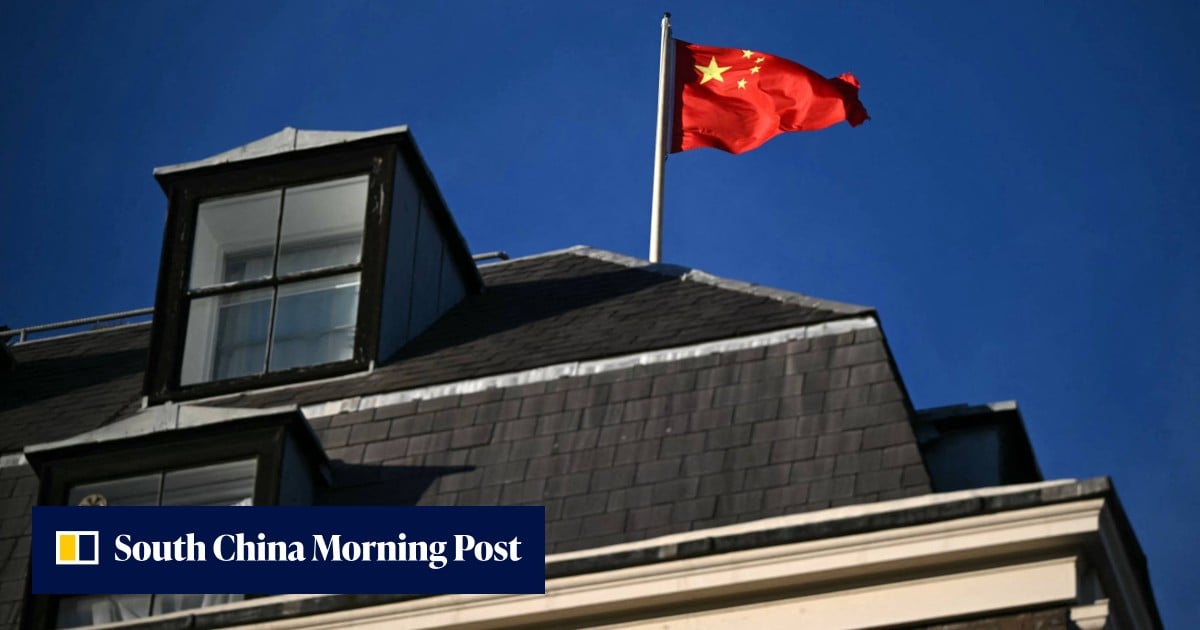
The security alert issued by MI5 regarding a Chinese state-owned conglomerate accused of conducting espionage in the UK reveals the extent to which British intelligence remains concerned about Beijing’s influence, and risks casting a shadow over UK-China cooperation at a time when the bilateral relationship is enjoying a revival. The UK’s domestic security service on Wednesday warned researchers and academics to cease work with the China Academy of General Technology (CAGT), an organisation MI5 described as a “significant threat”. The CAGT, which is also known as the China General Technology Research Institute, is accused of paying UK academics working in sensitive fields such as artificial intelligence and cybersecurity for “research that directly improves MSS technical capability for espionage”.
framing: assertive · carried by 1 article(s) · first seen 2026-09-30
🔮 In May, China’s education ministry announced 219 new transnational education partnerships, with more than a fifth of the approvals being with British universities.
2026-09-30 · The Guardian
MI5 China alert will send chill through UK’s cash-strapped universities · assertive framing

Claims (28 extracted, 2 hedged)

The security alert issued by MI5 regarding a Chinese state-owned conglomerate accused of conducting espionage in the UK reveals the extent to which British intelligence remains concerned about Beijing’s influence, and risks casting a shadow over UK-China cooperation at a time when the bilateral relationship is enjoying a revival. The UK’s domestic security service on Wednesday warned researchers and academics to cease work with the China Academy of General Technology (CAGT), an organisation MI5 described as a “significant threat”. The CAGT, which is also known as the China General Technology Research Institute, is accused of paying UK academics working in sensitive fields such as artificial intelligence and cybersecurity for “research that directly improves MSS technical capability for espionage”. asserted
that → issue → espionage
China’s approach to intelligence gathering involves hoovering up vast amounts of data, often from unsuspecting individuals who believe they are participating in normal research or consultancy work. asserted
they → involve → work
This year the UK’s National Cyber Security Centre warned businesses about Beijing-backed attempts to hack into everyday devices such as wifi routers. asserted
Centre → warn → routers
Last year, MI5 issued another China-related security alert, warning parliamentarians about approaches from two LinkedIn profiles thought to be linked to Chinese intelligence. asserted
MI5 → issue → intelligence
Wednesday’s alert said academic institutions or researchers should be aware of the 2023 National Security Act, which makes it an offence to engage in conduct that is likely to materially assist a foreign intelligence agency. asserted
that → say → agency
The warning is likely to send a chill through the UK’s cash-strapped higher education institutions, which have for years turned to China for funding and collaboration opportunities. asserted
which → send → opportunities
The UK is one of the leading countries to partner with China’s higher education sector. asserted
UK → lead → sector
In May, China’s education ministry announced 219 new transnational education partnerships, with more than a fifth of the approvals being with British universities. uncertain
fifth → announce → universities
That puts the UK at the top of the list of partner countries, ahead of Russia, France and Italy. asserted
That → put → Russia
Chinese students are also the largest group of non-EU international students in the UK, generating about £600m a year for the higher education sector. asserted
students → generate → sector
There has been growing concern in the UK that partnerships with China pose a risk to national security. asserted
partnerships → grow → security
The 2023 Intelligence and Security Committee report on China said UK academic institutions “provide a rich feeding ground for China to achieve both political influence and economic advantage” and flagged the risk of China “directing or stealing UK academic research. asserted
China → say → research
In this case, MI5 said that more than 100 academics linked to the UK had contributed to projects funded by the MSS via the front company. asserted
academics → say → company
The areas of interest were AI, cybersecurity and steganography, the embedding of hidden data in pictures online. asserted
areas → hide → pictures
Sam Goodman, senior policy director at the China Strategic Risks Institute, said UK academics were “between a rock and a hard place” when trying to navigate areas of advanced interest that could be of interest to Chinese intelligence. uncertain
that → say → intelligence
It isn’t particularly clear on AI at this juncture what levels of collaboration we can have with the Chinese,” Goodman said. asserted
Goodman → have → Chinese
Analysts say the UK should do more to highlight which areas are of potentially dual-use interest to Chinese intelligence and provide more guidance to universities and academics. asserted
areas → say → universities
“It’s all very well issuing these warnings,” says Charles Parton, a senior fellow at the Royal United Services Institute. asserted
Parton → ’ → Institute
“Actually far more important, surely, is a consideration of which technologies can be cooperated with China, and which can’t.” asserted
which → cooperate → China
He said naming specific Chinese companies as a risk would not help UK researchers to do due diligence on every potential partnership. asserted
researchers → say → partnership
If they want to hide the origin of someone, they’ll do it,” Parton said. asserted
Parton → want → it
Meia Nouwens, a senior fellow at the International Institute for Strategic Studies, said more clarity was needed on the UK side to help guide researchers working in sensitive fields. asserted
clarity → say → fields
Nouwens said: “A problem has been that in the past there hasn’t been a great deal of discussion of what areas of research constitute a national security risk. asserted
areas → say → risk
Without understanding the limits are of what the UK seeks to protect, it is impossible to have a conversation about managing risk.” asserted
it → understand → risk
The MI5 alert specifically accused the CAGT of being a front for China’s intelligence. asserted
alert → accuse → intelligence
But any research institution in China is ultimately controlled by the Chinese Communist party. asserted
institution → control → party
“Research institutes that are conducting research on areas of strategic interest for China such as technology will have oversight from the party-state,” Nouwens notes. asserted
Nouwens → conduct → state
That does not mean any collaboration with Chinese educational institutions is inherently dangerous, but it does mean UK academics working in sensitive fields will feel increasingly uneasy about working with a country that has financially underpinned the UK’s higher education sector for decades. asserted
that → mean → decades

💬Give feedback
🕘History 🎫Support