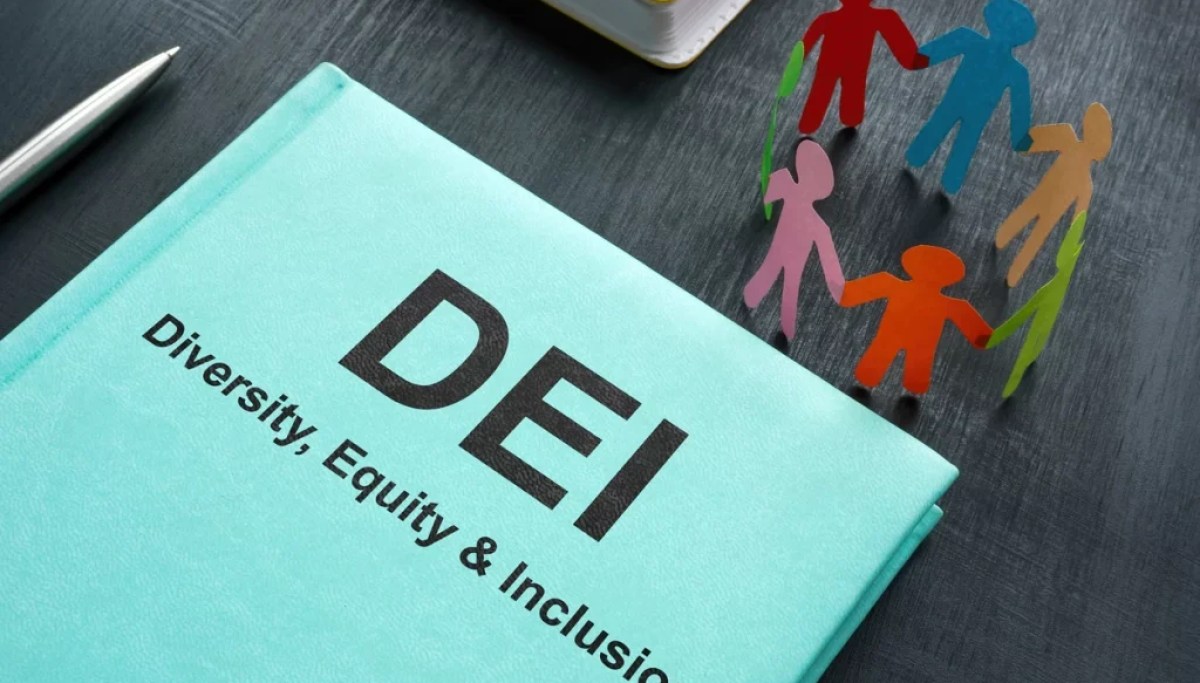
A federal appeals court has allowed a white employee's lawsuit against Seattle’s diversity, equity, and inclusion (DEI) policies to proceed to trial. The ruling, made by a unanimous three-judge panel including Judge Mary Murguia appointed by President Obama, determined that the plaintiff, Joshua Diemert, can argue in front of a jury whether the city’s DEI initiatives created a racially hostile work environment for him. The court did not address broader constitutional issues but focused on whether federal anti-discrimination law protects workers from racial hostility caused by workplace training and policies.
Written locally by qwen2.5:14b on 2026-09-30,
using this article's own text rather than the other coverage of the
same event (that is the story summary below).
A unanimous federal appeals court ruled Monday that a jury should decide whether Seattle's DEI initiatives created a racially hostile work environment for a white employee, while emphasizing that federal anti-discrimination law protects workers regardless of race.
asserted
law → rule → race
The three-judge panel did not rule on whether Seattle's DEI programs violated the Constitution or federal anti-discrimination law.
asserted
programs → rule → Constitution
Instead, it found that the allegations were enough to let a jury decide whether the way the city carried out those initiatives created a racially hostile work environment.
asserted
city → find → environment
The ruling leaves the larger constitutional questions about Seattle's race-based programs unanswered.
asserted
ruling → leave → programs
"Workplace training programs designed to address racial barriers are not inherently discriminatory, and nothing in Title VII prohibits employers from either discussing historical and ongoing discrimination against persons of color or seeking to address such discrimination," wrote Judge Mary Murguia, who was appointed by President Barack Obama.
asserted
who → design → Obama
Accordingly, race-conscious training programs may violate Title VII when they create a racially hostile work environment."
uncertain
they → violate → environment
Joshua Diemert, who worked for Seattle's Human Services Department, alleged that over several years he was subjected to repeated race-based comments and workplace incidents, including being asked by supervisors what he could contribute "being a straight white male," being told it was "impossible" to discriminate against white people, and being encouraged to give up a leadership role so a person of color could be promoted.
uncertain
person → work → color
He also attended DEI trainings where speakers allegedly said "white people are cannibals," that racism is in "white people's DNA" and that "white people are like the devil."
uncertain
people → attend → devil
Laura D'Agostino, an attorney with Pacific Legal Foundation who argued the case, said the panel ruled only that Diemert lacked standing and did not decide whether Seattle's race-based affinity groups and training programs were constitutional.
asserted
groups → argue → standing
"This decision does not give government employers a green light to classify employees by race.
asserted
decision → give → race
The Ninth Circuit expressly reiterated that government racial classifications are constitutionally suspect and subject to strict scrutiny," D'Agostino said.
asserted
D'Agostino → reiterate → scrutiny
"It simply concluded that Mr. Diemert had not established the personal injury necessary for the court to reach that constitutional question in his case."
asserted
court → conclude → case
D'Agostino said the ruling shows that Title VII does not give protections to racial-equity training when it becomes the source of harassment.
asserted
it → say → harassment
"Calling something racial-equity training does not place it outside the protections of federal civil rights law.
asserted
Calling → call → law
Employers can address discrimination without creating or tolerating a racially hostile environment for their employees," D'Agostino told Fox News Digital.
asserted
D'Agostino → address → Digital
The court ruled the case wasn't about any one remark or training session.
asserted
case → rule → remark
Instead, it concluded a jury should decide whether the alleged comments, DEI trainings and workplace incidents, taken together over several years, created a racially hostile work environment.
asserted
comments → conclude → environment
"The evidence was sufficiently numerous, frequent, and severe that his hostile work environment claims must be decided at trial," D'Agostino said.
uncertain
D'Agostino → decide → trial
A spokesperson for the city of Seattle said they are reviewing the decision and discussing potential next steps for the City.
asserted
they → say → City
Ilya Shapiro, of the Manhattan Institute, said the decision leaves constitutional challenges to similar DEI programs on the table despite the standing ruling.
asserted
decision → say → ruling
"Although the court affirmed the dismissal of Diemert's equal-protection claim, it did so because he didn't present evidence sufficient to show personal injury, not because equal-protection claims aren't viable," Shapiro told Fox News Digital.
uncertain
Shapiro → affirm → injury
Shapiro said the "race-conscious" programs are standing on "dubious legal ground."
The decision also reinforced that federal anti-discrimination law applies equally to employees regardless of race.
asserted
law → say → race
Citing the Supreme Court's 2025 decision in Ames v. Ohio Department of Youth Services , the panel noted that Title VII "draws no distinctions between majority-group plaintiffs and minority-group plaintiffs.
asserted
VII → cite → plaintiffs
Eric Wessan, Solicitor General for Iowa, said Monday's ruling is a major wake-up call for DEI classes and trainings across the country, arguing that they breed hostile work environments.
"I think the easiest way to think about it is if the same stuff was happening, but he was another race other than white," Wessan told Fox News Digital.
asserted
Wessan → say → Digital
And I think in this case, the answer is, it would have been pretty obvious.
asserted
it → think → case
"I'm not surprised that the hostile environment claim can go forward.
uncertain
claim → go → ?
And that's really important too, because a lot of these DEI policies across the country do create hostile work environments for white employees.
asserted
lot → create → employees
 The Aporia