That is 0 articles you have read today.
The Aporia is free and carries no advertising, so readers are the only
thing paying for it. If you are getting this much out of it, a small
donation is what keeps it independent.
Daily limit reached
You have read 0 articles today.
That is more than the 15 a day The Aporia gives away,
and well past what it can carry on nothing. Your allowance resets at
midnight.
There is no advertising here and nothing about you is sold, so readers
are the only thing paying for it. If the site is worth this much of
your day, it is worth a few dollars.
Everything else stays open: the
maps, the
directory and
search do
not count against this, and neither does re-opening something you have
already read today.
Climate change is rapidly transforming polar oceans, as evidenced in a recent report from Mercator Ocean International’s Copernicus Marine Service. The Arctic has seen a surface temperature increase of 4.2 degrees Celsius between 1982 and 2024, with the Kara Sea north of Siberia experiencing an even more dramatic rise of 6.7 degrees Celsius per decade since 1982. This warming is causing significant ice loss; Arctic sea ice has decreased by nearly half a million square kilometers each decade since 1979, putting coastal communities and wildlife like emperor penguins at risk due to habitat destruction and increased vulnerability to environmental threats.
Written locally by qwen2.5:14b on 2026-09-30,
using this article's own text rather than the other coverage of the
same event (that is the story summary below).
Story summary
PARIS - Climate change is rapidly transforming polar oceans, with Arctic waters warming and sea ice shrinking dramatically. According to the Copernicus Ocean State Report released on September 30, the Arctic's combined sea surface and sea-ice temperature has risen by 4.2 degrees Celsius between 1982 and 2024, which is about 1 degree Celsius per decade, nearly ten times faster than the global average increase of 0.12 degrees Celsius per decade.
Karina von Schuckmann, director of the oceans report, warned that with around 60% of coastal infrastructure now vulnerable to erosion and sea level rise, Arctic coastlines are increasingly exposed to destructive waves due to melting ice habitats. Moreover, predictions suggest that more than 90 percent of emperor penguin colonies could face near-extinction by 2100 if current rates of sea ice loss continue. These changes highlight the urgent need for adaptation and mitigation strategies in coastal communities and infrastructure worldwide.
Written for “Polar Ice Melt Impacts Oceans” on 2026-10-05,
grounded in this article and the 0 other(s) covering the same event.
Polar oceans transformed as warming melts ice habitats: Research
AI generated
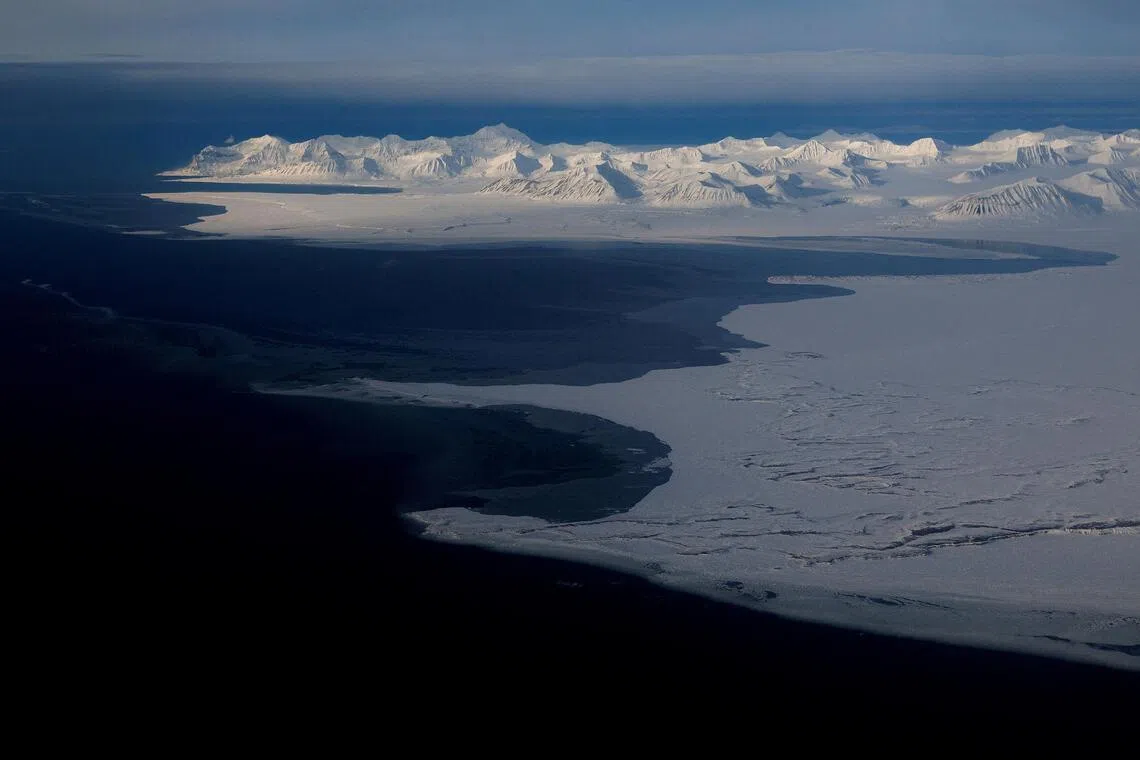
PARIS - Climate change is increasingly reshaping the polar oceans, with Arctic waters warming rapidly, sea ice shrinking and wildlife losing habitat at both ends of the planet, an annual report said on Sept 30.
asserted
report → transform → Sept
The Copernicus Ocean State Report depicts profound changes across the world’s seas, from record-breaking heatwaves in the Mediterranean and Black seas to shifts in marine ecosystems and increasingly acidic waters.
asserted
Report → depict → ecosystems
The ocean is changing rapidly,” said Pierre Bahurel, director general of Mercator Ocean International, which runs the European Union’s Copernicus Marine Service.
asserted
which → change → Service
Some of the more dramatic effects from global warming are taking place in the poles, which occupy around 20 per cent of the global ocean surface.
asserted
which → take → surface
The Arctic’s combined sea surface and sea-ice surface temperature rose 4.2 deg C between 1982 and 2024, or around 1 deg C per decade, according to the 10th annual oceans report.
uncertain
temperature → combine → report
By comparison, global sea surface temperatures have been increasing by 0.12 deg C per decade.
asserted
temperatures → increase → decade
In the Kara Sea north of Siberia, temperatures have climbed by 6.7 deg C since 1982, or 1.68 deg C per decade.
asserted
temperatures → climb → decade
As temperatures rise, Arctic sea ice has shrunk by nearly half a million square kilometres per decade since 1979, equivalent to losing an area the size of Spain every 10 years.
asserted
ice → rise → Spain
The retreating ice exposes Arctic coastlines to waves, worsening coastal erosion and raising risks for coastal communities and infrastructure, the report warned.
“The Arctic sea ice has been declining since the early 80s, leaving around 60 per cent of coastal infrastructure vulnerable to erosion and sea level rise,” Karina von Schuckmann, director of the oceans report, said in a media briefing.
asserted
Schuckmann → retreat → briefing
Ice loss in Antarctica, meanwhile, is threatening penguin populations on the frozen continent.
asserted
loss → threaten → continent
Record-low Antarctic sea ice in 2022 coincided with the first-ever recorded large-scale breeding failure of emperor penguins, the report said.
asserted
report → coincide → penguins
Emperor penguins rely on stable sea ice to live, hunt and breed and their chicks can perish if they fall in freezing water before developing waterproof feathers.
asserted
they → rely → feathers
In April, emperor penguins were upgraded from “near threatened” to “endangered” by the IUCN, the global authority on threatened wildlife.
asserted
penguins → upgrade → wildlife
More than 90 perc ent of emperor penguin colonies could be near-extinct by 2100 if sea ice loss persists at its current rate.
uncertain
loss → persist → rate
 The Aporia