The Guardian
· collected 2026-09-30 · by Tom McIlroy Political editor
The Australian Transport Safety Bureau is investigating safety issues at Sydney airport, which experienced runway incursions and near misses 20% above national averages. Staffing gaps and fatigue risks among air traffic controllers are identified as key factors; four incidents in July and August highlight these concerns, including a near miss where two aircraft came within 120 meters of each other. The ATSB's chief commissioner, Angus Mitchell, notes that Sydney airport’s complexity contributes to the higher incident rates but emphasizes the need for better management of staff fatigue and training.
Written locally by qwen2.5:14b on 2026-09-30,
using this article's own text rather than the other coverage of the
same event (that is the story summary below).
Modelling by Sydney airport’s air traffic control operators predicted elevated fatigue risks for staff at the time of a series of major safety incidents, with a review identifying runway incursions and near misses at 20% above national averages.
asserted
review → predict → averages
Staffing gaps at Sydney airport are being investigated as a key factor in four incidents in July and August this year, according to the investigating authority, the Australian Transport Safety Bureau [ATSB].
uncertain
gaps → investigate → authority
Angus Mitchell, the ATSB chief commissioner, released preliminary investigation reports on Wednesday that confirmed
asserted
that → release → Wednesday
staffing levels had “emerged as a recurring area of enquiry”.
asserted
levels → emerge → enquiry
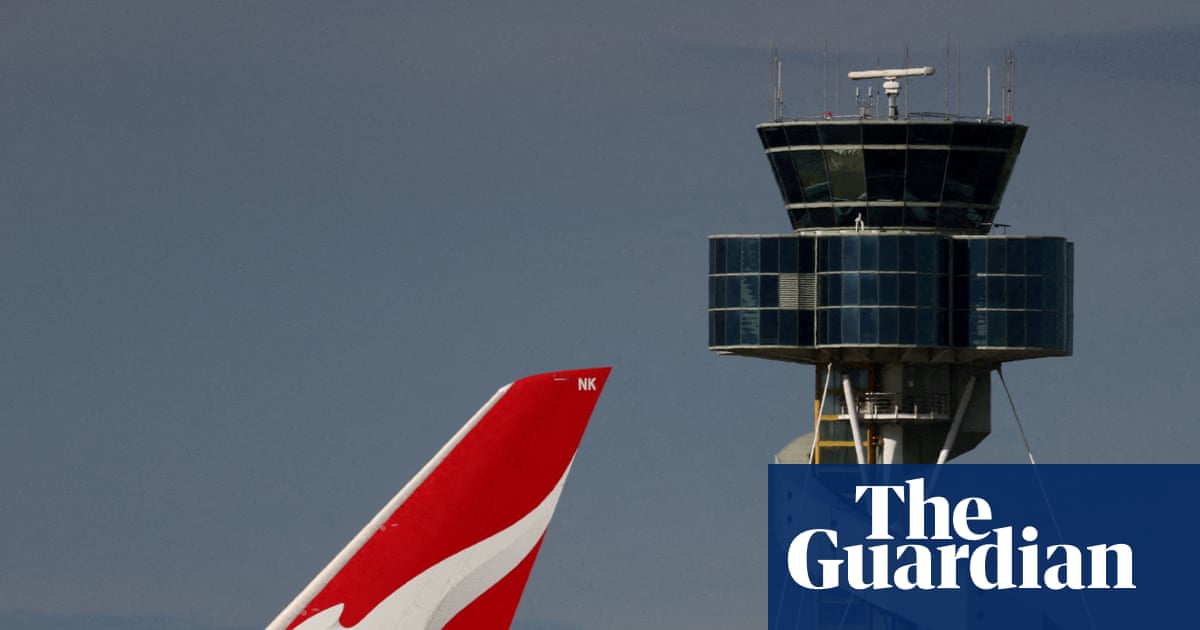
Air Services Australia, which operates the tower, had predicted fatigue risks for staff at the time of the incidents as part of roster modelling processes.
asserted
which → operate → processes
While fatigue risk does not necessarily mean individual air traffic controllers are tired at the time of an incident, the effectiveness of measures to manage any risk is being queried.
asserted
effectiveness → mean → risk
Investigators will consider whether staff combining operational roles contributed to the incidents, along with routine reliance on overtime to fill shifts and training and supervision being conducted alongside normal duties.
asserted
staff → consider → duties
“Nationally, over the decade, reported ground confliction [incident] rates have remained broadly steady,” Mitchell said.
asserted
Mitchell → report → decade
“However, Sydney recorded the highest confliction rate per aircraft movement post-Covid among the major airports, about 20% above the national average.
asserted
Sydney → record → average
“This should be viewed in the context of Sydney airport being the most complex in the country.”
asserted
airport → view → country
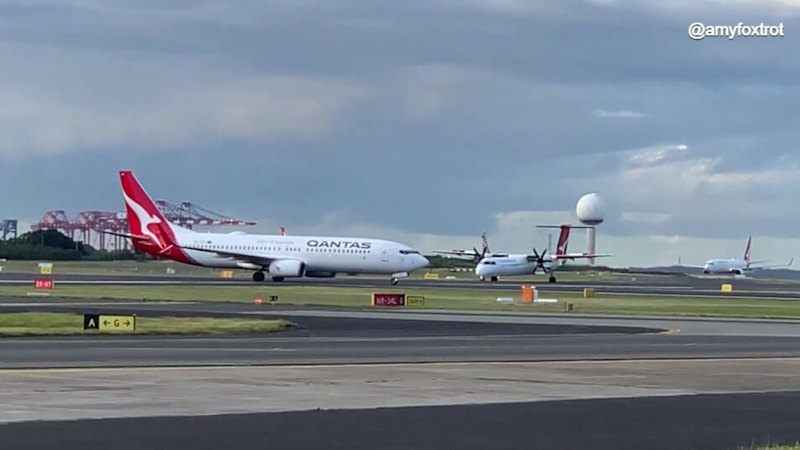
The four incidents include a near miss on 27 July, when a Qantas Boeing 737 was cleared by controllers to cross in front of a Qantaslink Dash 8.
asserted
Boeing → include → Dash
The two aircraft came within 120m of each other at the same time as a controller completed a handover to a colleague in order to take a rest break.
asserted
controller → come → break
The report said the break was required to manage the controller’s predicted fatigue risk level, “which was high for their shift”.
asserted
which → say → shift
The incident was given the most serious safety classification, only the third time the rating has been used since Australian records began.
asserted
records → give → classification
On 9 August, a Jetstar A320 braked abruptly to avoid colliding with a Qatar Boeing 777 which was being towed.
asserted
which → brake → Boeing
A flight attendant onboard the Jetstar plane fell and fractured her wrist.
asserted
attendant → fall → wrist
On the same day, a Qantas Boeing 737 was cleared to cross a runway in front of a Virgin 737 that had been cleared for takeoff.
asserted
that → clear → takeoff
On 18 August, a Qantas A321 had to brake when a Qantas Boeing 737 passed in front of it.
asserted
737 → have → it
Mitchell said in Sydney, ground incidents attributed to air traffic control actions had increased since the Covid period.
asserted
incidents → say → period
“Sydney has also recorded twice the annual average number of information and procedural errors compared to other airports,” he said.
asserted
he → record → airports
“Higher-consequence incidents, including runway incursions, taxiway near-collisions and losses of separation attributed to [air traffic control] have also increased at Sydney post-Covid, driven partly by the July and August peak.”
asserted
incidents → include → peak
The transport minister, Catherine King, said she expected Airservices Australia to cooperate fully with the investigations and fix any problems.
asserted
Australia → say → problems
She announced the creation of a new independent assurance panel for Sydney air traffic control.
asserted
She → announce → control
The regulator, the Civil Aviation Safety Authority [CASA], said it believed none of the incidents presented an “immediate safety risk” and air travel was safe in Australia.
asserted
travel → say → Australia
Final reports from the investigations are expected in 2027.
asserted
reports → expect → 2027
Last month Guardian Australia revealed Sydney air traffic controllers had warned safety regulators of “grave concerns” about changes to airspace rules, likening the situation to the months leading up to a crash in Washington DC in which 67 people died.
asserted
people → reveal → which
 The Aporia