- Published
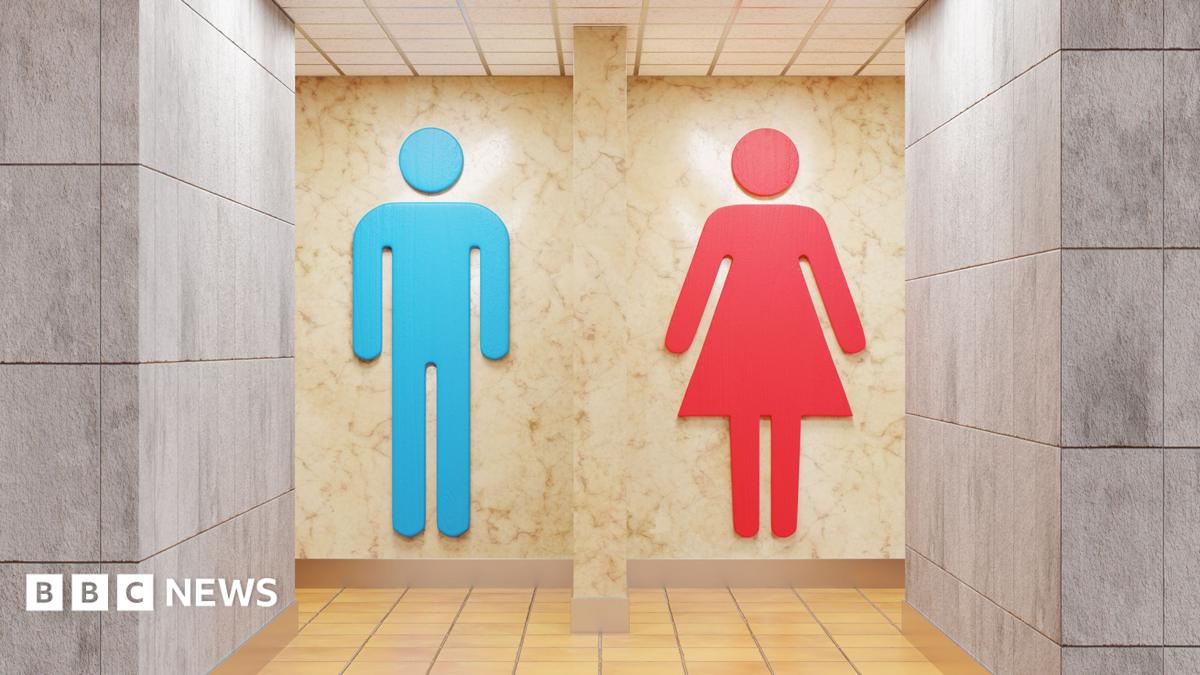
Single-sex spaces open to the public, such as toilets and changing rooms, should be organised based on biological sex, according to official guidance that has come into force.
uncertain
that → publish → force
The code, published by Equality and Human Rights Commission (EHRC), says trans people should use either gender-neutral facilities or the ones that match their biological sex, in places such as gym changing rooms or rape crisis centres.
asserted
that → publish → rooms
The guidance was published in June but is now in place in England, Wales and Scotland - despite opposition among some MPs.
asserted
guidance → publish → MPs
It comes 16 months after the UK Supreme Court ruled "sex" in equality law means "biological sex" rather than the gender someone identifies as.
asserted
someone → come → sex
Trans-rights campaigners have called the guidance unworkable, but groups that campaign for sex-based rights welcome the clarity it brings.
asserted
it → call → clarity
The guidance from the EHRC, the equality watchdog for England, Scotland and Wales, provides practical advice for services, public bodies and associations on how they should interpret the 2010 Equality Act.
asserted
they → provide → Act
It applies to organisations as diverse as cafes, leisure centres, public toilets, domestic violence shelters, bowls clubs and many more.
asserted
It → apply → cafes
The code says where it is proportionate for facilities, such as public toilets and changing rooms, or services like a rape crisis centre, to be single sex then only those of the same biological sex should use them.
asserted
those → say → them
This means, for instance, a trans woman, a person born a biological male who identifies as a woman, should not use women-only facilities.
asserted
who → mean → facilities
And a trans man should not use men only facilities.
asserted
man → use → facilities
But the code also says it could amount to discrimination against a transgender person if they were forced to use services related to their biological sex.
uncertain
they → say → sex
It says gender-neutral spaces are an alternative.
asserted
spaces → say → ?
The Equality Act provides protections for people on the grounds of both biological sex and gender reassignment.
asserted
Act → provide → sex
Transgender people argue they should be able to use services that align with the way they identify and live their life, rather than their biological sex.
asserted
they → argue → sex
In response, campaigners including some women's and gay rights groups say this undermines sex-based protections, particularly for women.
asserted
this → include → women
It is the tension between these two sets of rights that led to both the Supreme Court ruling in April 2025 and the publication of this updated guidance.
asserted
that → lead → guidance
It suggests legal action on how the code is put into practice is likely.
uncertain
code → suggest → practice
Both from trans-rights groups who think the guidance itself is wrong and from sex-based rights groups who will want to challenge any organisations who they believe are not following the code.
asserted
they → think → code
The draft EHRC code was sent to Bridget Phillipson, the equalities minister, to approve in September 2025.
asserted
code → send → September
An amendment was made in June this year.
asserted
amendment → make → June
Once it was approved, MPs and members of the House of Lords had the opportunity to vote for a debate on the code, but despite 167 MPs signing a motion calling for the draft guidelines to be scrapped it was not debated.
asserted
it → approve → motion
Many organisations have already made changes they say comply with the law and are in line with the code, such as the Women's Institute and Girl Guiding, which had already said membership was for females.
asserted
membership → make → females
But the deputy leader of Lambeth Council in London says the authority may refuse to implement the guidance, if advised it's lawful to do so.
uncertain
it → say → guidance
Green Party Councillor Natalie Kane told the Today programme: "For us it's about people accessing services, and we're worried people won't feel they can".
But the chair of the EHRC, Dr Mary Ann Stephenson, says: "You can't ignore the guidance any more than you can ignore the law".
asserted
you → tell → law
She says the Equality Act already has safeguards in place, adding: "trans people are protected against discrimination and harassment, and they shouldn't be left in a position where there aren't services for them".
Trans-rights activists have strongly opposed the code, saying it made trans people's lives more difficult.
Alexandra Parmar-Yee, director at Trans+ Solidarity Alliance, said: "Trans people will be shut out of the services they need, made to feel unwelcome and unsafe in public spaces.
asserted
they → say → spaces
Our lives will feel smaller and more precarious."
asserted
lives → feel → ?
However, gender critical campaign groups argue the code is important in helping organisations comply with the law.
asserted
organisations → argue → law
Maya Forstater, of sex-based rights charity Sex Matters, said: "The law is clear and the code is practical, giving many examples that apply to everyday services.”
asserted
that → base → services
Northern Ireland relies on different equality legislation and is currently considering the impact the Supreme Court ruling has on it.
asserted
ruling → rely → it
 The Aporia