The Sydney Morning Herald
· collected 2026-09-30 · by Melissa Cunningham
Dr Dov Degen, an award-winning nephrologist, recounts his experience with psychosis during medical school after being diagnosed with bipolar disorder at 19. He describes feeling enlightened but also destructive effects from the manic state, including delusions and a loss of reality. Degen was hospitalized in The Alfred hospital's psychiatric unit where he had meaningful conversations with other patients. The article focuses on Degen’s personal narrative about living through psychosis, emphasizing both its allure and devastating impact.
Written locally by qwen2.5:14b on 2026-10-02,
using this article's own text rather than the other coverage of the
same event (that is the story summary below).
It was at the end of his second year of medical school that Dr Dov Degen became convinced he was the incarnation of Jesus.
asserted
he → become → Jesus
Frantically writing a manuscript and barely sleeping, he wandered the streets at night, wide-eyed and flooded with thoughts about how to better mankind.
asserted
he → write → mankind
“I just wanted to help everyone,” the award-winning nephrologist and general physician says.
asserted
nephrologist → want → everyone
“I had this idea of bringing a new Earth to the planet and healing everyone.”
asserted
I → have → everyone
He did not realise it then, but he was in the grips of his first episode of psychosis.
asserted
he → realise → psychosis
Degen was diagnosed with bipolar disorder at 19, less than two years before.
asserted
Degen → diagnose → 19
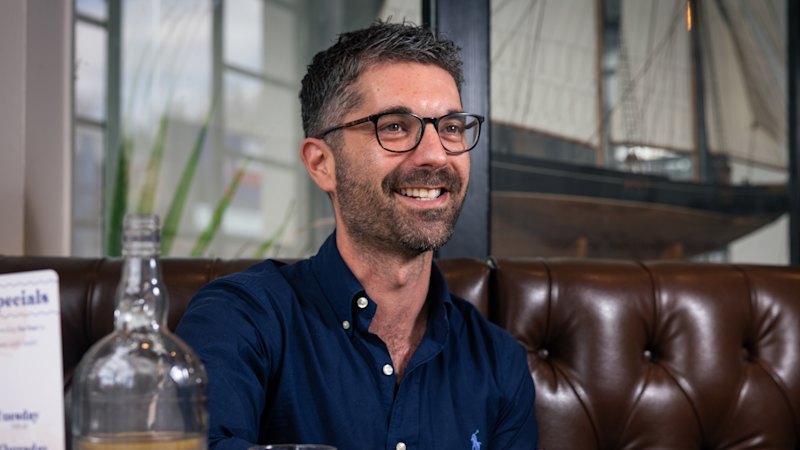
But looking back, a perfect storm was brewing, he says on a sunny late-winter afternoon over lunch at Lady of St Kilda, one of his favourite haunts.
asserted
he → look → haunts
Degen had realised he was gay.
asserted
he → realise → ?
A recent break-up had plunged him into another depressive episode, and he was prescribed antidepressants without mood stabilisers by a psychiatrist, which triggered full-blown mania.
asserted
which → plunge → mania
Then came the psychosis.
asserted
psychosis → come → ?
I am curious about what he remembers of being in this extreme mental state so often marked by its disturbing and uncontrollable symptoms, such as intense delusions, hallucinations, paranoia, grandiosity, bursts of sudden aggression and shattering loss of reality.
asserted
he → remember → reality
Starman by David Bowie hums quietly in the background of the restaurant, a track about a cosmic saviour, with a message of hope for a troubled Earth.
asserted
Starman → hum → Earth
It feels like an uncannily fitting soundtrack.
asserted
It → feel → soundtrack
Degen, 42, pauses and takes a deep breath before continuing.
“Well, I felt happy and high all the time so it’s not a state you want to come out of,” he says.
asserted
he → pause → breath
Psychosis does not feel like disaster at first.
asserted
Psychosis → feel → disaster
It can seem more like enlightenment.
asserted
It → seem → enlightenment
It is intoxicating, like existing in technicolour.
asserted
It → exist → technicolour
Every moment is more vibrant, Degen says, pulsating with excitement, light and beauty.
asserted
Degen → say → excitement
“Life feels meaningful,” he says.
asserted
he → feel → ?
“It accentuates parts of you that are already there.
asserted
that → accentuate → you
You feel spiritual, creative.
asserted
You → feel → ?
It can be a really beautiful state to be in, but I really don’t want to glorify it because it’s so incredibly destructive.
asserted
it → want → it
You’re argumentative.
asserted
You → ’re → ?
You’re living in an alternate reality.
asserted
You → live → reality
You lose relationships.”
asserted
You → lose → relationships
‘When you hit reality, you realise just how catastrophic the whole event is.’Dr
asserted
event → hit → reality
Coming out of psychosis is like waking up from a wild, fever dream, he says.
asserted
he → come → dream
Disjointed memories flickered in his mind, like strange vignettes.
asserted
memories → flicker → vignettes
He describes it as like being left trying to piece together the fragments from a wreckage.
asserted
He → describe → wreckage
“When you hit reality, you realise just how catastrophic the whole event is,” he says.
asserted
he → hit → reality
Degen ended up being admitted to the psychiatric unit at The Alfred hospital in Melbourne.
asserted
Degen → end → Melbourne
“I had some of the best conversations of my life with patients in the psych ward there with schizophrenia and all sorts of labels,” he says.
asserted
he → have → labels
“It was just a different plane of existence and, I mean, who’s to say what’s normal?”
A waiter comes to our table, in a quiet corner of the restaurant, bathed in golden winter light.
asserted
waiter → mean → light
We realise we have been so engrossed in the conversation we are yet to even look at the menu.
asserted
we → realise → menu
We peruse it quickly, ordering freshly baked Za’atar pita and a trio of homemade Mediterranean dips, hummus, tzatziki and spicy vegetable.
asserted
We → peruse → dips
For his main, Degen opts for the baked salmon with sauteed vegetables and lemon.
asserted
Degen → opt → vegetables
I order the Chop Chop: thinly sliced porterhouse steak mixed with garlic and a spicy herb sauce served on a baked sweet potato.
asserted
I → order → potato
I ask what he was like as a child and Degen’s face softens as he breaks into a wide smile.
asserted
he → ask → smile
“Very inquisitive and passionate,” he says.
asserted
he → say → ?
He grew up in a Jewish family in the nearby suburb of Caulfield.
asserted
He → grow → Caulfield
…and 95 more, not listed.
 The Aporia