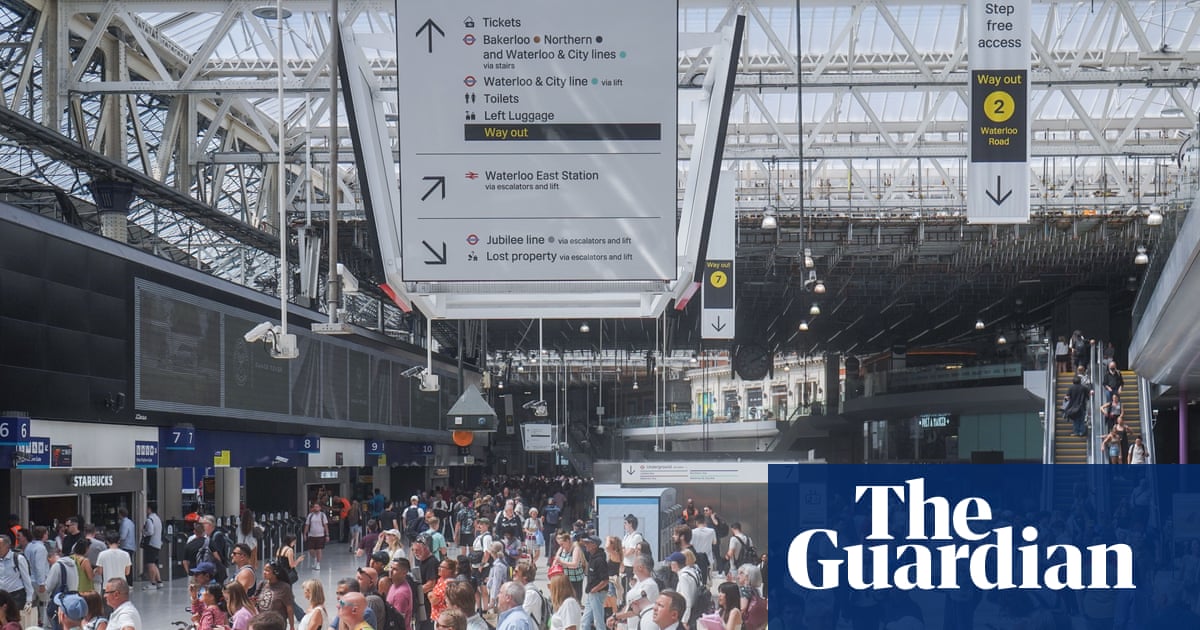
Trial of live facial recognition cameras in London stations ends with one false positive

Read the original at The Guardian ↗
The Guardian · collected 2026-09-29 · by Phoebe Davis, Daniel Boffey

Quick Summary

A six-month trial of live facial recognition (LFR) technology at London railway stations cost over £320,000 but resulted in only one false positive alert among more than half a million scanned faces. No arrests were made during the trial conducted by the British Transport Police from February to July this year. The trial's limited success and high costs raise questions about the technology’s effectiveness and proportionality, as expressed by former biometrics commissioner Fraser Sampson, who emphasizes that police must demonstrate its necessity and appropriateness.
Written locally by qwen2.5:14b on 2026-09-29, using this article's own text rather than the other coverage of the same event (that is the story summary below).

AI analysis runs on qwen2.5:14b, locally

Story summary

A six-month trial of live facial recognition (LFR) technology by the British Transport Police (BTP) at London railway stations ended with one false positive match and no arrests, despite scanning over 500,000 faces. The trial, which cost taxpayers more than £320,786, aimed to help catch offenders and individuals breaching court orders by identifying people on police watchlists at key transport hubs. Despite its high costs and significant deployment time involving almost 100 hours of police officers' work, the technology produced only one false alert during its February to July period in 2026. The BTP has since extended the trial for an additional four months and expanded it to include London Underground stations, prompting debates about the effectiveness and privacy implications of such surveillance technologies.

Written for “London Facial Recognition Trial Results” on 2026-10-13, grounded in this article and the 3 other(s) covering the same event.

Story

📰 London Facial Recognition Trial Results
Technology · 4 article(s) covering the same event. Compare every outlet's account →

Compared with similar articles

This article reads leans strongly left and hedges 7% of its claims. Each row says how that neighbour differs.
Evening Standard · 0.90 cosine similarity
⚖️ leaning not scored 🔴 12% hedged 2 of 16 📰 publisher trust 66
“Both articles describe the exact same six-month trial of live facial recognition technology in London's railway stations, ending with one false positive and no arrests.”
Evening Standard · 0.88 cosine similarity
⚖️ leaning not scored 🔴 12% hedged 2 of 16 📰 publisher trust 66
“Both articles describe the same six-month trial of live facial recognition technology by British Transport Police in London railway stations, with identical details about cost, time, number of faces scanned, and outcome.”
Times of India · 0.94 cosine similarity
⚖️ leaning not scored 🔴 13% hedged 7 of 53 📰 publisher trust 59
“Both articles describe the exact same six-month trial of live facial recognition technology in London's railway stations, detailing the cost, duration, number of faces scanned, and outcome of one false positive alert.”

Cite this article

Davis, P., & Boffey, D. (2026, September 29). Trial of live facial recognition cameras in London stations ends with one false positive. The Guardian. https://www.theguardian.com/technology/2026/sep/29/trial-live-facial-recognition-cameras-london-stations-false-positive

Dated when The Aporia collected the article, usually within hours of publication. Check the original for its exact date and byline.

How this article was measured signals, leaning charts, publisher record, byline, topics and claims

Signals How these are calculated →

Claims extracted
27
sentences that state something as happening or true
Uncertain
7%
2 of 27 hedged ("reportedly", "may", "according to")
Leaning
Leans strongly left
of the writing, not the subject · beta estimate
Publisher signals
69/100
The Guardian's corrections and hedging, across everything collected from it. Not a measure of accuracy.
Outlets on this story
4
Technology
Same framing elsewhere
1
articles that frame the event the way this one does
Analyzed 2026-09-29 · how these are computed

How this is being covered How these are calculated →

Article leaning vs. publisher reliability
Source leaning vs. consistency

Publisher

The Guardian · 1767 article(s) · 4 correction(s) detected
Running correction rate · 4 correction(s)

Who wrote this

Phoebe Davis
1 article(s) here · 1 carrying a prediction
🔮 When Transport for London announced its support for the extension of the trial, it said LFR technology “will target and identify people on police watchlists at key stations chosen for maximum impact” and would “specifically tackle violence against women and girls, whose travel behaviours are shaped by experiences of sexual harassment and sexual offences”.
The only article under this byline in the corpus.
Daniel Boffey
1 article(s) here · 1 carrying a prediction
🔮 When Transport for London announced its support for the extension of the trial, it said LFR technology “will target and identify people on police watchlists at key stations chosen for maximum impact” and would “specifically tackle violence against women and girls, whose travel behaviours are shaped by experiences of sexual harassment and sexual offences”.
The only article under this byline in the corpus.

Topics

BTP British Transport Police Guardian Liberty Investigates London

Subjects

London GPE · 3× BTP ORG · 2× Liberty Investigates ORG · 2× British Transport Police ORG · 1× CCTV ORG · 1× Facewatch ORG · 1× Fraser Sampson PERSON · 1× Guardian ORG · 1× Sampson PERSON · 1× Transport for London ORG · 1×

Narrative

When Transport for London announced its support for the extension of the trial, it said LFR technology “will target and identify people on police watchlists at key stations chosen for maximum impact” and would “specifically tackle violence against women and girls, whose travel behaviours are shaped by experiences of sexual harassment and sexual offences”.
framing: assertive · carried by 1 article(s) · first seen 2026-09-29
🔮 When Transport for London announced its support for the extension of the trial, it said LFR technology “will target and identify people on police watchlists at key stations chosen for maximum impact” and would “specifically tackle violence against women and girls, whose travel behaviours are shaped by experiences of sexual harassment and sexual offences”.

Claims (27 extracted, 2 hedged)

A six-month trial of live facial recognition (LFR) technology in London’s railway stations that cost more than £320,000 and almost 100 hours of police officers’ time ended in one false match against a watchlist of suspects and no arrests. asserted
that → cost → suspects
More than half a million faces were scanned between February and July this year in some of the capital’s busiest transport hubs during the British Transport Police (BTP) trial of the surveillance technology, which aimed to help catch offenders and people breaching court orders. asserted
which → scan → orders
A freedom of information document obtained by Liberty Investigates and shared with the Guardian shows that equipment hire and police staffing for the 18 deployments across the trial cost the taxpayer £320,786 and led to only one alert on a watchlist, which turned out to be an incorrect identification, also known as a false positive. asserted
which → obtain → positive
Last month BTP announced it was extending the trial for a further four months and expanding the deployments to include London Underground stations. asserted
it → announce → stations
When Transport for London announced its support for the extension of the trial, it said LFR technology “will target and identify people on police watchlists at key stations chosen for maximum impact” and would “specifically tackle violence against women and girls, whose travel behaviours are shaped by experiences of sexual harassment and sexual offences”. asserted
behaviours → announce → harassment
Fraser Sampson, a former biometrics and surveillance camera commissioner for the UK, said the police needed to show that the use of the technology was proportionate. asserted
use → say → technology
“There many variables and all need to align: the choice of location, times of day, make up of the watchlist and likelihood of people being present and many more.” asserted
people → align → watchlist
Sampson, who is now a non-executive director of Facewatch, a company that operates facial recognition systems in shops, added: “We know the technology works, but using it in supermarkets to deter shoplifters and prevent attacks on staff is very different from deploying it to catch people on a public transport network. asserted
using → operate → network
“Success in a shop means no such people coming in. asserted
people → mean → shop
Success for the police trying to catch people means people being caught. asserted
people → try → people
In that respect the trial doesn’t appear to have been very fruitful. asserted
trial → appear → respect
“Everything depends on the police watchlists; if you’re not on a watchlist, the live FRT cameras do not ‘see’ you and they don’t retain your image in the same way as CCTV cameras. asserted
they → depend → cameras
“However, they are processing special category personal data and the technology must be used in a way that is appropriate, proportionate and necessary. asserted
that → process → way
It’s for the police to show how any deployment meets those criteria and – as the ICO [information commissioner’s office] has recently reported – for their oversight boards to hold them firmly to account in doing so. asserted
boards → ’ → account
More than half of police forces in England and Wales have now deployed LFR on British streets, according to an analysis by Liberty Investigates. uncertain
half → deploy → Investigates
The Metropolitan police and London mayor’s office announced this summer that fixed LFR cameras would be installed in the capital’s West End. asserted
cameras → announce → End
Sadiq Khan, the mayor of London, has since confirmed the technology will be used on the newly pedestrianised Oxford Street. asserted
technology → confirm → Street
A recent report from parliament’s joint committee on human rights, which called on the government to introduce a law to address the threat of artificial intelligence to human rights, identified the rollout of live facial recognition technology as a “particularly clear example of risk”. asserted
which → call → risk
Bell Ribeiro-Addy, the Labour MP for Clapham and Brixton Hill, said: “Live facial recognition technologies are a serious invasion of our privacy. asserted
technologies → say → privacy
The government should be suspending their rollout until there are stronger safeguards in place, including a proper legal framework.” asserted
government → suspend → framework
A BTP spokesperson said it had launched the LFR pilot to “to understand how the technology could most effectively support the identification of wanted offenders and individuals who may pose a risk to passengers and staff”. uncertain
who → say → passengers
They added: “During these deployments, officers have made a number of associated arrests, including for assault, theft, possession of an offensive weapon, breach of a criminal behaviour order and public order offences, as well as locating individuals wanted by the courts and other police forces. asserted
officers → add → courts
As these arrests did not result directly from an LFR alert, they are not included within LFR performance data. asserted
they → result → data
“Throughout the pilot, we have continued to refine how the capability is deployed within the railway environment. asserted
capability → continue → environment
This has included developments to deployment locations, operating procedures, equipment and watchlist construction. asserted
This → include → locations
“A particularly important point is that watchlist growth has been deliberate, controlled and aligned to BTP policy. asserted
growth → control → policy
We began with a more limited watchlist whilst ensuring data quality, governance and safeguarding arrangements were robust.” asserted
arrangements → begin → watchlist

💬Give feedback
🕘History 🎫Support