That is 0 articles you have read today.
The Aporia is free and carries no advertising, so readers are the only
thing paying for it. If you are getting this much out of it, a small
donation is what keeps it independent.
Daily limit reached
You have read 0 articles today.
That is more than the 15 a day The Aporia gives away,
and well past what it can carry on nothing. Your allowance resets at
midnight.
There is no advertising here and nothing about you is sold, so readers
are the only thing paying for it. If the site is worth this much of
your day, it is worth a few dollars.
Everything else stays open: the
maps, the
directory and
search do
not count against this, and neither does re-opening something you have
already read today.
Millions of Australians in New South Wales, Victoria, Tasmania, South Australia, and the ACT will lose an hour of sleep this weekend as daylight saving begins at 2 AM on October 4, moving their time forward by one hour. Queensland, Western Australia, and the Northern Territory do not observe daylight saving and thus their clocks remain unchanged. The change coincides with the NRL grand final, affecting fans of teams like Newcastle who will have less sleep before the match. Daylight saving aims to extend evening daylight for energy savings and outdoor activities but requires manual clock adjustments for older devices.
Written locally by qwen2.5:14b on 2026-09-29,
using this article's own text rather than the other coverage of the
same event (that is the story summary below).
Story summary
Residents in NSW, Victoria, Tasmania, South Australia, and the ACT will lose an hour of sleep on Sunday, October 4, as clocks move forward from 2am to 3am for daylight saving. This change does not affect residents in Queensland, Western Australia, or the Northern Territory who do not observe daylight savings time. The shift aims to extend evening daylight and encourage outdoor activities but can be disruptive, particularly for businesses near state borders like those in Tweed Heads and Coolangatta where patrons from Queensland may arrive late due to the time difference.
Written for “Daylight Saving Time Returns” on 2026-10-05,
grounded in this article and the 1 other(s) covering the same event.
- See more Daily Mail on Google - save us as a Preferred Source
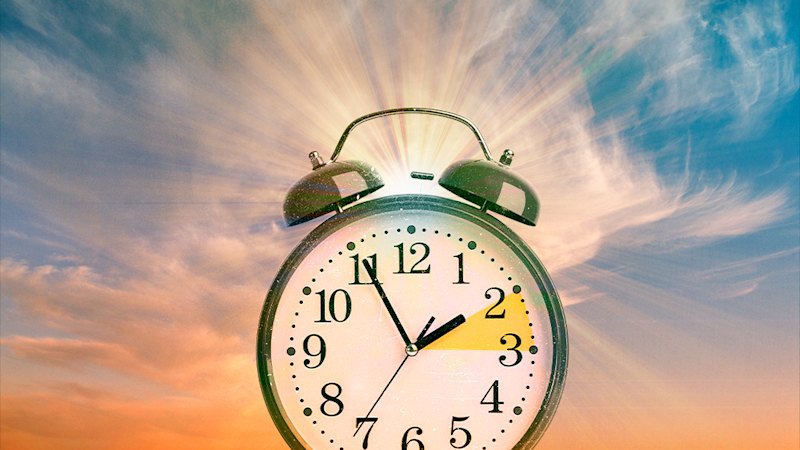
Millions of Aussies will lose an hour of sleep this weekend when daylight saving begins in parts of the country.
asserted
saving → see → country
Residents in NSW, Victoria, Tasmania, South Australia and the ACT will move their clocks forward from 2am to 3am on Sunday, October 4.
asserted
Residents → move → Sunday
Meanwhile those in Queensland, Western Australia and the Northern Territory do not observe daylight saving, so their clocks will remain unchanged.
asserted
clocks → observe → saving
The time change coincides with the NRL grand final every year, meaning some Knights and Roosters fans will be watching the decider on an hour less sleep.
asserted
fans → coincide → sleep
However, Newcastle supporters may struggle to get much shut-eye regardless as they eagerly await the club's first grand final appearance since 2001.
uncertain
they → struggle → 2001
Fortunately, many will still be able to catch up on sleep thanks to the Labour Day public holiday on Monday in NSW, the ACT and SA.
asserted
many → catch → NSW
The purpose of daylight saving is to extend daylight further into the evening, allowing more time for outdoor activities after work or school.
asserted
purpose → extend → work
Historically, it was promoted as an energy-saving measure because longer evening daylight could reduce demand for artificial lighting.
uncertain
daylight → promote → lighting
Millions of Aussies will lose an hour of sleep this weekend when daylight saving begins in five parts of the country (stock Image)
asserted
saving → lose → country
The time change coincides with the NRL grand final every year, meaning some Knights and Roosters fans will be watching the decider on an hour less sleep
Historically, daylight saving was promoted as an energy-saving measure because longer evening daylight could reduce demand for artificial lighting (stock image)
While many devices automatically adjust for daylight saving, such as smartphones, TVs and computers, some older or manual clocks will need to be changed by hand.
uncertain
clocks → coincide → hand
NSW, VIC, TAS and the ACT will switch from Australian Eastern Standard Time (AEST) to Australian Eastern Daylight Time (AEDT) when clocks jump forward on Sunday.
asserted
clocks → switch → Sunday
SA will also move its clocks forward, shifting from Australian Central Standard Time (ACST) to Australian Central Daylight Time (ACDT) while remaining 30 minutes behind the eastern states.
QLD will stay on AEST, while the NT and WA will remain on their current time zones.
asserted
NT → move → zones
As a result, Western Australia will be three hours behind the eastern daylight-saving states over summer.
asserted
Australia → save → summer
Daylight saving was first introduced nationally as a temporary wartime measure in 1916 during World War I.
Tasmania became the first state to reintroduce daylight saving after World War II when it adopted the measure in 1968.
asserted
it → introduce → 1968
Daylight saving will end on Sunday, April 4, 2027, when clocks are moved back from 3am to 2am.
asserted
clocks → end → am
 The Aporia