Photo via Toronto Star

Asian stocks mostly fall after Wall Street losses and oil prices rise

Read the original at Toronto Star ↗
Cite

Ho-him, C. (2026, September 29). Asian stocks mostly fall after Wall Street losses and oil prices rise. Toronto Star. https://www.thestar.com/news/world/asian-stocks-mostly-fall-after-wall-street-losses-and-oil-prices-rise/article_d248ba99-9e52-5147-a67c-42ca45b5b98b.html

Dated when The Aporia collected the article, usually within hours of publication. Check the original for its exact date and byline.

Toronto Star · collected 2026-09-29 · by Chan Ho-him

Quick Summary

Asian stock markets declined for the most part on Tuesday, reflecting the previous day's negative performance on Wall Street. Additionally, U.S. Treasury yields had temporarily stabilized following a surge to levels not seen in nearly two decades.
Written by AI on 2026-09-29, from this article's own text only (the story summary below draws on all the coverage).

AI analysis

Story summary

On Tuesday, Asian stock markets experienced a decline for the most part, influenced by negative trends from Wall Street. Concurrently, U.S. Treasury bond yields saw a brief pause in their upward trend after hitting levels not seen in nearly two decades. The shift in financial markets comes as investors navigate economic uncertainties and adjust to changes in global monetary policies.

Written for “Asian Stocks Fall After US Losses” on 2026-11-18, grounded in this article and the 0 other(s) covering the same event.

Compared with similar articles

This article reads unscored and hedges 0% of its claims. Each row says how that neighbour differs.
Toronto Star
Hedges 0 of 5 claims Outlet record 64/100
“The articles describe different days of trading and mixed market movements, indicating distinct events.”
Toronto Star
Hedges 3 of 24 claims Outlet record 64/100
“The articles describe market movements on different days with distinct economic and geopolitical contexts.”

Story

Asian Stocks Fall After US Losses
Economy/Business · 1 article(s) covering the same event.
How this article was measured signals, leaning charts, publisher record, byline, topics and claims

Signals How these are calculated →

Claims extracted
2
sentences that state something as happening or true
Uncertain
0%
0 of 2 hedged ("reportedly", "may", "according to")
Leaning
not political
takes no side on a contested political question
Publisher signals
64/100
Toronto Star's corrections and hedging, across everything collected from it. Not a measure of accuracy.
Outlets on this story
1
Economy/Business
Same framing elsewhere
1
articles that frame the event the way this one does
Analyzed 2026-09-29 · how these are computed

How this is being covered How these are calculated →

Article leaning vs. publisher reliability
Source leaning vs. consistency

Publisher

Toronto Star · 15734 article(s) · 31 correction(s) detected
Running correction rate · 31 correction(s)
2026-11-17
Correction
2026-10-26
Correction
2026-10-24
Correction
2026-10-07
Correction
2026-09-24
Correction

Who wrote this

Chan Ho-him
23 article(s) here · 0 carrying a prediction
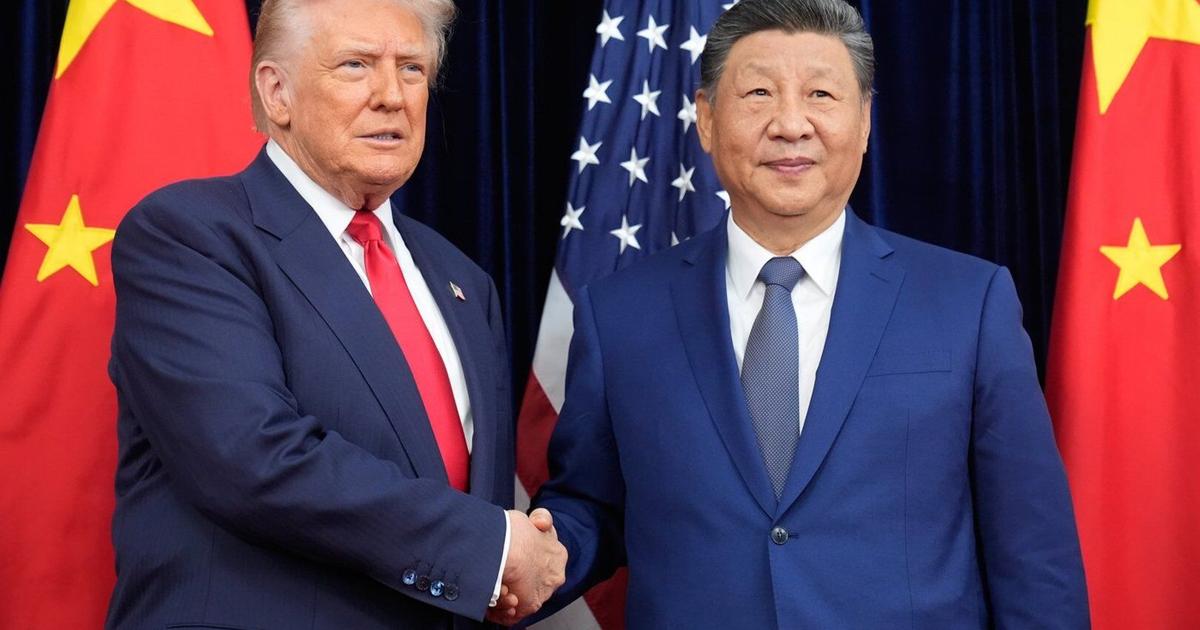
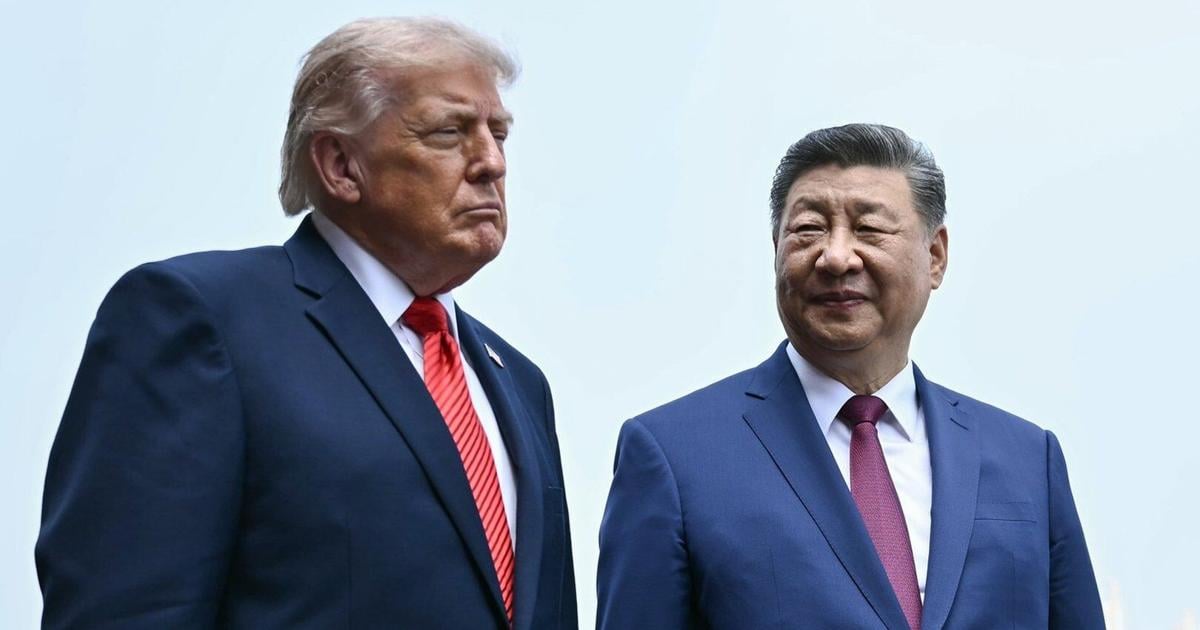
The leaders of the world’s two leading economies are set to meet Wednesday and Thursday in Shenzhen, China — the third time this year that President Donald Trump and Chinese leader Xi Jinping have had the chance to take each other’s measure.
Huang has been one of the biggest advocates for AI and his downfall triggered questions over how the global AI boom could be impacted.
Yuan said what he called “China hawks” in Congress — who have been bullish on oversight and stronger export controls long before this incident — will now have “a story with a name and a face” to support their argument. “I don’t think anybody in Washington wants to be seen as loosening the controls on chip exports to China right now,” he added.
The company said it did not have any indication that the outage was caused by malicious activity and would treat the incident “with urgency and priority until full resolution.”
With the resignation of Jensen Huang, who co-founded the company and had been a key architect of Nvidia’s AI strategy and the broader global AI boom, new questions are being raised as to how his departure could impact the development of the technology.
“They could have been mentioned,” he said.
As the rivalry intensifies, experts say the window for countries to be able to choose freely between the two AI superpowers may be narrowing, forcing them to at one point pick between the U.S.-led Pax Silica and the China-inspired World AI Cooperation Organization.
Earlier this month, the International Monetary Fund trimmed its forecast for China’s 2026 economic growth to 4.5%, just meeting the lower end of Beijing’s goal.
Index provider MSCI warned it would downgrade Indonesia from its “emerging market” status, triggering growing concerns of a capital flight.
Despite the seeming European unity this week, it remains unclear what the EU can or is willing to do.
Also by Chan Ho-him
Nothing else under this byline is closely related to this article, so these are simply their most recent.
All 23 articles by Chan Ho-him →

Topics

Asian HONG KONG The Associated Press U.S. Treasury

Subjects

Asian NORP · 2× HONG KONG GPE · 2× U.S. Treasury ORG · 2× The Associated Press ORG · 1×

Narrative

HONG KONG (AP) — Asian shares mostly fell on Tuesday following Wall Street losses, while U.S. Treasury yields paused their runup after reaching their highest level in roughly two decades.
framing: assertive · carried by 1 article(s) · first seen 2026-09-29
2026-09-29 · Toronto Star
Asian stocks mostly fall after Wall Street losses and oil prices rise · assertive framing

Claims (2 extracted, 0 hedged)

HONG KONG (AP) — Asian shares mostly fell on Tuesday following Wall Street losses, while U.S. Treasury yields paused their runup after reaching their highest level in roughly two decades. asserted
yields → fall → decades
HONG KONG (AP) — Asian shares mostly fell on Tuesday following Wall Street losses, while U.S. Treasury yields paused their runup after reaching their highest level in roughly two decades. asserted
yields → fall → decades
Give feedback · no sign-in needed

No sign-in needed for now. Your note is sent without a name, so it cannot be answered.

History Support