That is 0 articles you have read today.
The Aporia is free and carries no advertising, so readers are the only
thing paying for it. If you are getting this much out of it, a small
donation is what keeps it independent.
Daily limit reached
You have read 0 articles today.
That is more than the 15 a day The Aporia gives away,
and well past what it can carry on nothing. Your allowance resets at
midnight.
There is no advertising here and nothing about you is sold, so readers
are the only thing paying for it. If the site is worth this much of
your day, it is worth a few dollars.
Everything else stays open: the
maps, the
directory and
search do
not count against this, and neither does re-opening something you have
already read today.
Apollo chief economist Torsten Sløk warns that artificial intelligence agents like Meta’s Muse might trigger a new kind of bank run by automatically moving consumers' cash from low-interest checking and savings accounts to higher-yield alternatives. This shift would deprive banks of the cheap deposits they need for lending, potentially destabilizing the financial system. While Muse was launched on September 8 with capabilities beyond answering questions, it is currently unclear if it can facilitate direct money transfers between accounts. Sløk’s prediction assumes widespread adoption of such AI tools, though experts like Shama Hyder caution that large-scale implementation and trust in these technologies are not yet at that stage.
Written locally by qwen2.5:14b on 2026-09-28,
using this article's own text rather than the other coverage of the
same event (that is the story summary below).
Story summary
Torsten Sløk, chief economist at Apollo, warned that artificial intelligence (AI) agents like Meta’s Muse could trigger bank runs by automatically transferring consumers' money from low-interest checking accounts to higher-yield investments. This prediction is part of a growing trend of pessimistic views on AI's impact on the financial system. Sløk explained that if every household uses AI to optimize their cash balances, banks could lose significant amounts of cheap deposits they rely on for lending activities. For instance, $10,000 earning 0.1% interest annually generates only about $10 in interest, compared to roughly $500 at a 5% rate. The Federal Deposit Insurance Corporation (FDIC) reported national averages of 0.4% for savings accounts and just 0.1% for checking accounts as of recent data. Shama Hyder, a professor from the Link School of Business in Miami, agreed with Sløk's concerns but argued that the timing might be premature since AI technology isn't yet advanced enough to cause such mass financial movements.
Written for “AI and Banking Risk” on 2026-10-05,
grounded in this article and the 0 other(s) covering the same event.
AI agents could spark a new kind of bank run by automatically yanking consumers’ cash out of low-paying checking accounts and chasing higher yields, Apollo chief economist Torsten Sløk warned — the latest dire prediction about artificial intelligence in a wave of doomerism.
uncertain
prediction → spark → doomerism
The threat to banks could emerge as personal AI agents such as Meta’s newly launched Muse gain access to users’ financial information while taking on a growing range of tasks on their behalf, the egghead explained.
“If every household used AI agents to optimize the return on their cash balances, banks could lose a large share of the cheap deposits they rely on to make loans, which would be a problem for the entire financial system,” Sløk wrote in a Sundaynote.
uncertain
Sløk → emerge → Sundaynote
For consumers, the incentive seems obvious: a $10,000 balance earning 0.1% generates about $10 a year in interest, while the same amount at 5% would earn roughly $500.
asserted
amount → seem → 500
By comparison, the FDIC national averages cited in the note were 0.4% for savings accounts and just 0.1% for checking.
asserted
averages → cite → checking
But a potential windfall for savers could become a headache for banks if AI agents make it easier for customers to move cash out of low-paying accounts en masse — depriving lenders of the cheap deposits they rely on to fund loans.
uncertain
they → become → loans
Banks benefit when customers leave cash in low-yield accounts, allowing lenders to pay depositors relatively little while lending that money out at higher rates.
asserted
lenders → benefit → rates
AI agents could threaten that model by making it easier for consumers to identify higher-yielding alternatives and shift their cash, Sløk noted.
uncertain
Sløk → threaten → cash
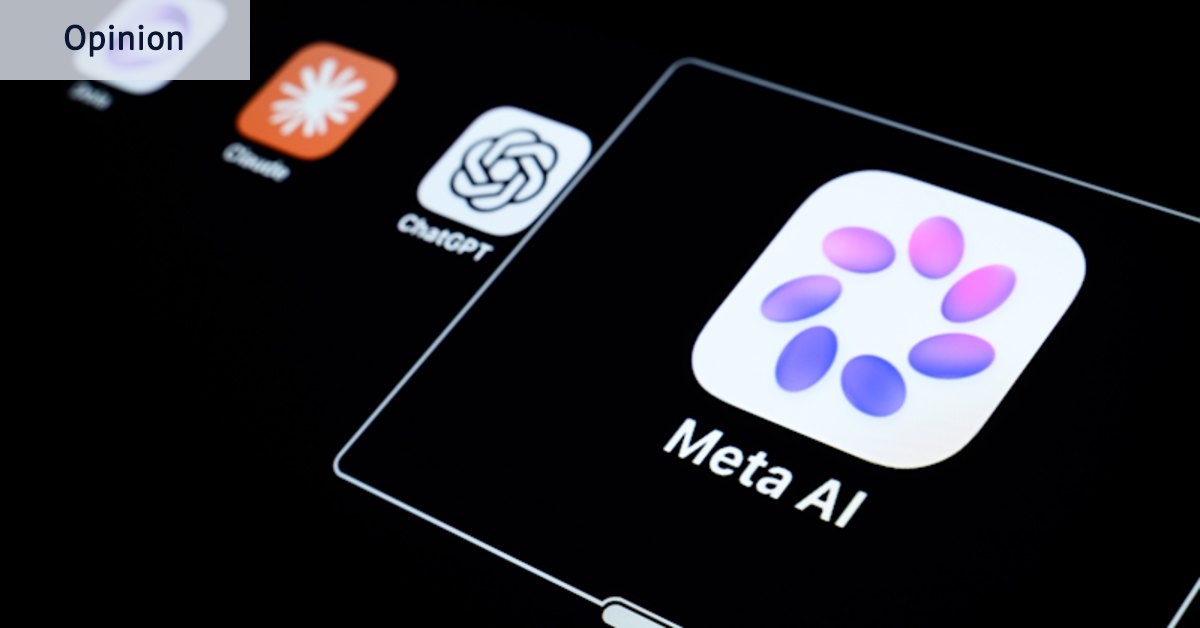
Meta launched Muse on Sept. 8, trumpeting its ability to carry out tasks for users instead of just answering questions like your run-of-the-mill AI bot.
asserted
Meta → launch → bot
Financial services company Plaid says its network gives Muse access to user-authorized data from more than 12,000 US financial institutions and apps, including balances, transactions, investments and mortgage details.
asserted
network → say → balances
Plaid has not specified whether Muse can actually transfer money between accounts.
asserted
Muse → specify → accounts
Sløk framed automatic cash sweeps as something that “could soon” happen, rather than a capability Muse currently possesses.
uncertain
Muse → frame → something
His warning also rests on the technology being adopted on a massive scale.
asserted
warning → rest → scale
Sløk shied away from estimating how much money could ultimately move out of traditional bank accounts — or how quickly that could happen.
uncertain
that → shy → accounts
Shama Hyder, a professor of practice at the Link School of Business in Miami, told The Post that Sløk is right about the broader threat AI poses to banks, but said the technology is not yet close to triggering a mass flight of deposits.
“Where I’d pump the brakes is the timing.
asserted
timing → tell → brakes
A run-like event needs millions of households to hand an AI agent the keys to their checking account, and they aren’t there yet,” she said.
asserted
she → need → account
“People will use AI tools long before they trust them with the transfer button,” Hyder added.
asserted
Hyder → use → button
Still, the prof said banks that heavily rely on customers leaving money in low-paying accounts could eventually face pressure as AI makes it easier to shop around for better rates.
uncertain
it → say → rates
“A bank that depends on customers not bothering to shop around has a business model built on friction, and AI is very good at removing friction,” Hyder told The Post.
asserted
Hyder → depend → Post
 The Aporia