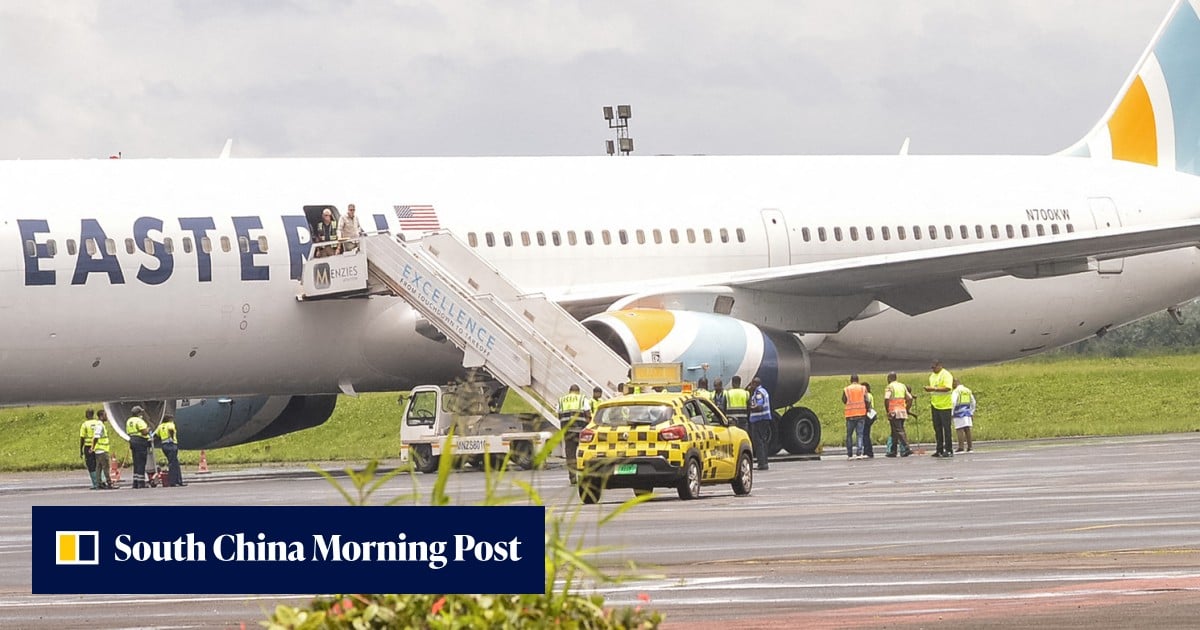
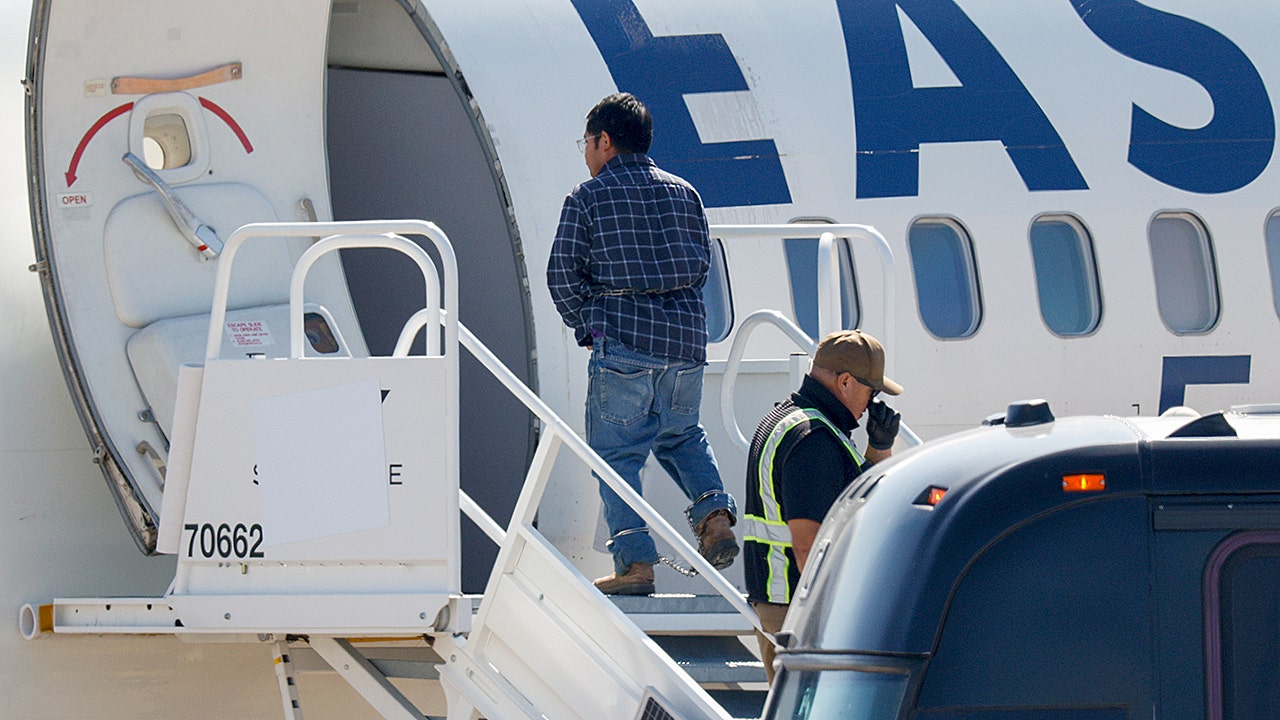
UN experts warn that US deportations to over 35 countries, including some unstable or conflict-ridden nations, are causing a "cascade of human rights violations." Since January 2025, the US has deported more than 23,000 third-country nationals; recent investigations suggest this number exceeds 25,000. The experts highlight risks such as torture, slavery, trafficking, and further violence for deportees in countries where they face discrimination or lack protections.
Written locally by qwen2.5:14b on 2026-09-28,
using this article's own text rather than the other coverage of the
same event (that is the story summary below).
Story summary
UN experts have warned that US deportations to over 35 countries, including Burundi, the Central African Republic, the Democratic Republic of Congo, Libya, and South Sudan, are triggering a “cascade” of human rights violations. Since January 2025, when President Donald Trump took office, these deals have led to more than 23,000 third-country nationals being deported from the US, increasing risks of torture, slavery, trafficking, and other grave abuses. The experts expressed concerns that such agreements breach international law by exposing people to refoulement or further violence based on gender, sexual orientation, or human rights advocacy. They stressed that agencies like the International Organization for Migration must not legitimize arrangements that harm refugees and migrants.
Written for “US Deportation Rights Abuses” on 2026-10-05,
grounded in this article and the 0 other(s) covering the same event.
US deportations triggering ‘cascade’ of rights abuses: UN experts
asserted
deportations → trigger → abuses
GENEVA - US deportations of thousands of people to dozens of countries are “triggering a cascade of human rights violations”, heightening the risk of abuses like torture, slavery and trafficking, UN experts warned on Sept 28.
asserted
experts → trigger → Sept
Since US President Donald Trump took office in January 2025, Washington has been signing deals with developing countries to take migrants who cannot legally be sent home.
asserted
who → take → migrants
More than 20 independent UN experts, including the special rapporteurs on the rights of migrants and on protecting rights and fundamental freedoms while countering terrorism, warned such agreements were “increasing risks of torture and ill-treatment and enforced disappearance”.
asserted
agreements → include → torture
They were also “breaching the customary law principle of non-refoulement in countries around the world that are signing agreements to accept planeloads of migrants and refugees removed from the US”, they cautioned.
asserted
they → breach → US
The experts said the US had signed such deals with more than 35 countries, including Burundi, the Central African Republic, the Democratic Republic of Congo, Libya and South Sudan.
asserted
US → say → Congo
They said at least 23,000 third-country nationals had been deported so far.
asserted
nationals → say → ?
Last week, an investigation by the non-profit group Forbidden Stories and a consortium of international journalists determined the number was already above 25,000 people by the end of August.
asserted
number → determine → August
The experts warned that the deportees were being sent “to countries or territories with which they have no ties”, which could compound harms that pushed them to flee to the US in the first place.
“Others are sent to places where they risk further violence or discrimination based on gender, sexual orientation, gender identity or human rights advocacy.”
uncertain
they → warn → gender
The independent experts, who are mandated by the UN Human Rights Council and do not speak on behalf of the UN, highlighted that those impacted included asylum seekers and migrants at various stages of their immigration process.
asserted
those → mandate → process
They warned the arrangements opened the door to a wide range of violations, including arbitrary detention, slavery and trafficking.
asserted
arrangements → warn → detention
“At gravest risk are children, women, persons with disabilities, victims of trafficking, LGBT persons, human rights defenders, stateless persons and other people in extremely vulnerable situations,” they said.
asserted
they → say → situations
The experts said they had notified the US and all the other governments involved in the agreements.
asserted
they → say → agreements
They pointed out that many of the countries involved have “no asylum processing infrastructure, protective holding facilities or adequate health and medical services or sustainable reintegration options”.
asserted
many → point → infrastructure
“In many cases, these third countries are themselves engulfed in conflict, with their own populations facing displacement, starvation and debilitating poverty,” they said.
asserted
they → engulf → displacement
“All states and territories involved must immediately halt these arrangements.”
asserted
states → involve → arrangements
They also stressed that “cooperation does not dilute responsibility”.
asserted
cooperation → stress → responsibility
“A state that knowingly aids or assists another state in conduct that violates non-refoulement or other human rights obligations may itself incur international responsibility,” they cautioned.
uncertain
they → aid → responsibility
The experts also said they were in contact with UN agencies that assist refugees and migrants, including the International Organization for Migration, to stress that “their engagement must never legitimise arrangements that expose people to refoulement or other grave human rights violations”.
asserted
that → say → refoulement
“Participating in measures that lead to rights violations...may, in some situations, amount to complicity,” they warned.
uncertain
they → participate → complicity
 The Aporia