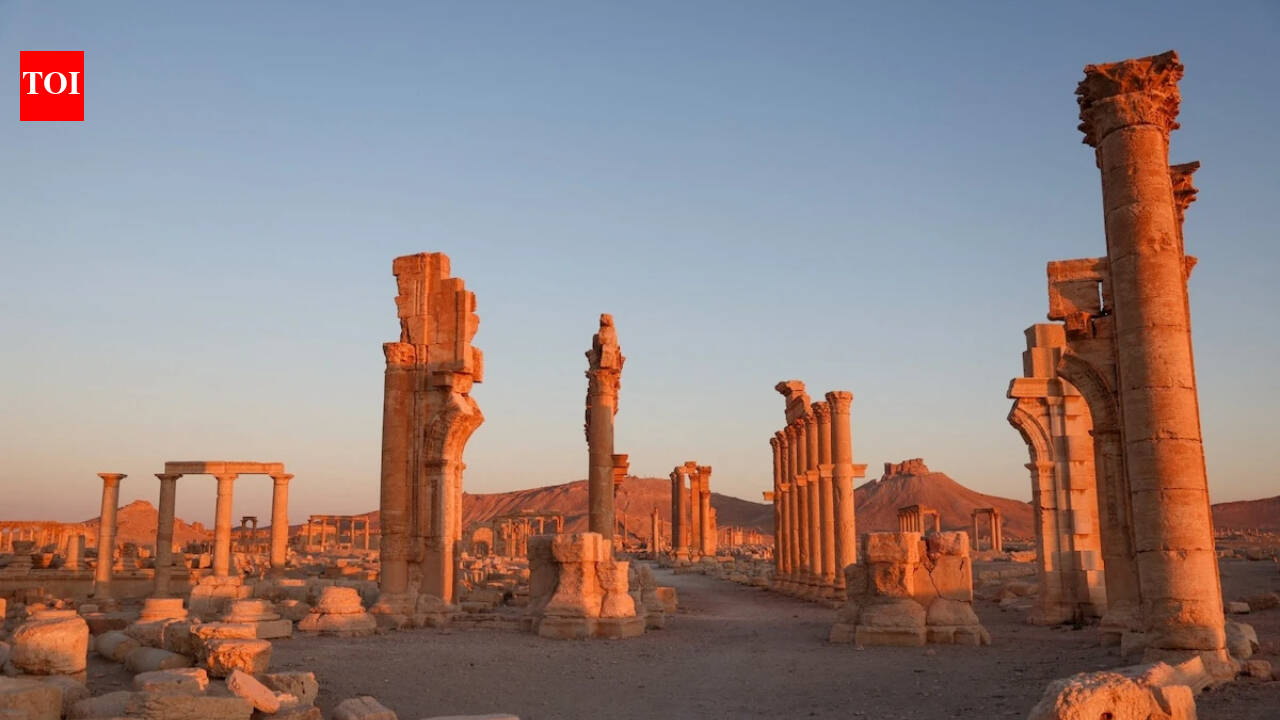
Brave archaeologists risked their lives to save thousands of historic treasures from imminent destruction by Islamic State terrorists.
asserted
archaeologists → risk → terrorists
A new study reveals how they rescued around 30,000 “priceless” artefacts from the Deir ez-Zor Museum as the city faced imminent capture by the Islamic State of Iraq and Syria (ISIS).
asserted
city → reveal → Iraq
Deir ez-Zor is the capital of the province of the same name in Syria, and the region contains key oil and gas fields, making it a fiercely contested battleground during Syria’s 15-year civil war.
asserted
it → contain → war
The Professor of Archaeology and History at the University of Sharjah presents the operation as a case study in protecting cultural heritage during wartime in the new study, published in the journal Museum Management and Curatorship.
asserted
Professor → present → journal
Prof Abdulkarim says it was particularly significant given the damage inflicted on museums and archaeological sites by ISIS, also known as Daesh, across the Middle East.
asserted
it → say → East
He explained that conducting a rescue mission during active hostilities requires more than logistical planning.
asserted
conducting → explain → planning
Prof Abdulkarim said: “It fundamentally involves decision-making, institutional resilience, trust, and the ability to adapt rapidly to changing circumstances.
asserted
It → say → circumstances
“There is rarely a perfect moment to act during an armed conflict; often, delaying a decision in search of greater certainty poses a greater danger than acting under uncertainty.”
asserted
delaying → be → uncertainty
Prof Abdulkarim oversaw the operation as the director-general of Syria’s Directorate-General of Antiquities and Museums (DGAM).
asserted
Abdulkarim → oversee → Antiquities
He said Deir ez-Zor was severely restricted, with the museum connected to the military airport only through a narrow and highly vulnerable corridor, rendering the mission “exceptionally dangerous”.
asserted
mission → say → corridor
Present-day Syria forms part of the broader Mesopotamian cultural sphere, where some of the world’s earliest and most influential civilisations flourished.
asserted
some → form → civilisations
Before the outbreak of the civil war in 2011, Syria was home to 35 archaeological museums spread across the country.
asserted
Syria → spread → country
Although not the largest among them, the Deir ez-Zor Museum ranked among the country’s most valuable institutions.
asserted
Museum → rank → institutions
Many of its priceless collections originated from renowned Mesopotamian sites, including Halaf, Dura-Europos and Mari.
asserted
Many → originate → Halaf
Prof Abdulkarim explained that the period following 2014, when ISIS expanded its control over large parts of Syria and Iraq, represented “an important example of the sort of looting, destruction, and illicit trafficking of sites and museums that took place in this context.”
asserted
that → explain → context
He said: “This period formed a critical juncture, as it coincided with the fall of Mosul in Iraq, the looting of its civilisational museum, and the destruction of antiquities from Nineveh and Assyria.
asserted
it → say → Nineveh
“These occurrences compelled Syrian antiquities authorities to promptly reevaluate protection policies and expedite emergency measures in cities that were at risk of siege or collapse.”
asserted
that → compel → siege
Amid the catastrophic circumstances, Prof Abdulkarim says he came to understand that leadership was not about making easy decisions, but about having the courage to make the necessary decisions at the right moment – even when the personal and professional consequences could be severe.
uncertain
consequences → say → moment
He said: “My foremost priority was the protection of cultural heritage, and I was prepared to bear whatever personal and professional risks and consequences those decisions might entail.”
uncertain
decisions → say → risks
During his tenure as DGAM’s Director-General from 2012 to 2017, around 300,000 museum items were rescued and relocated to secure sites.
asserted
items → rescue → sites
Prof Abdulkarim said: “The artefacts accounted for the overwhelming majority of the country’s museum collections.
asserted
artefacts → say → collections
“This included approximately 30,000 objects from the Deir ez-Zor Museum.”
asserted
This → include → Museum
He says, for him, artefacts are far more than priceless objects – embodying the collective memory and identity of humanity, transcending the borders of the countries in which they are found.
asserted
they → say → which
Prof Abdulkarim said: “We did not rescue 30,000 objects simply to save 30,000 museum pieces.
“We were protecting thousands of years of memory that war threatened to erase.
“
asserted
war → say → that
The 30,000 objects rescued from Deir ez-Zor represent more than just museum pieces; they hold thousands of years of human history and are part of the identity and memory of the communities in the Euphrates region.”
asserted
they → rescue → region
He says timing is often the “decisive factor” in any rescue mission.
asserted
timing → say → mission
Waiting for every uncertainty to be resolved, he warns, can mean missing the critical window for action.
asserted
he → wait → action
Prof Abdulkarim said: “In a cultural emergency, waiting for perfect conditions can become more dangerous than acting under uncertainty.
asserted
waiting → say → uncertainty
“Heritage protection during war is not only about what we save.
asserted
we → save → what
Start your day with all you need to know
Morning Report delivers the latest news, videos, photos and more.
asserted
Report → start → news
“It is also about when we decide to act, whom we trust, and how quickly we are prepared to adapt.
asserted
we → decide → whom
“Sometimes it is trust, the trust between colleagues who can make the right decision when there is no time left for normal procedures.”
asserted
who → make → procedures
Prof Abdulkarim says that risk management should be embedded within everyday heritage management rather than introduced after a crisis has begun.
asserted
crisis → say → management
He added: “The relationships, documentation, professional capacity, and trust required for effective emergency action must be established during periods of stability.
asserted
relationships → add → stability
“They should not wait until a crisis erupts before taking action.
asserted
crisis → wait → action
 The Aporia