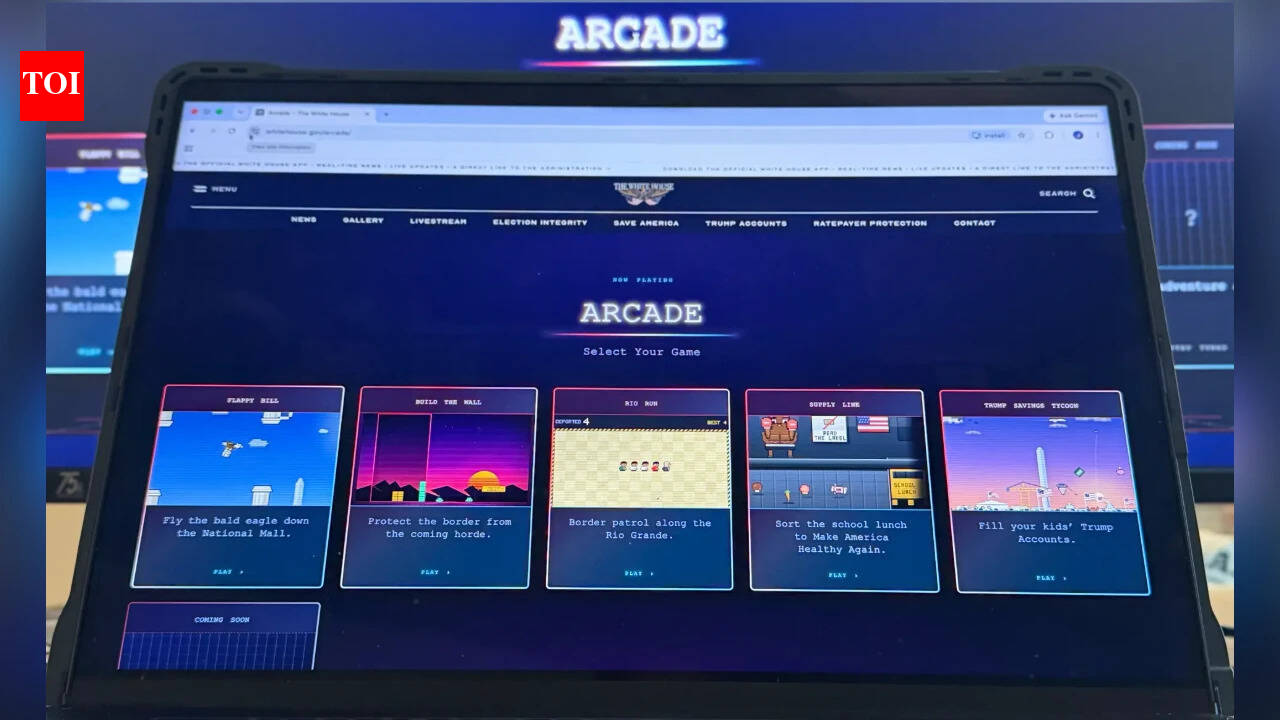
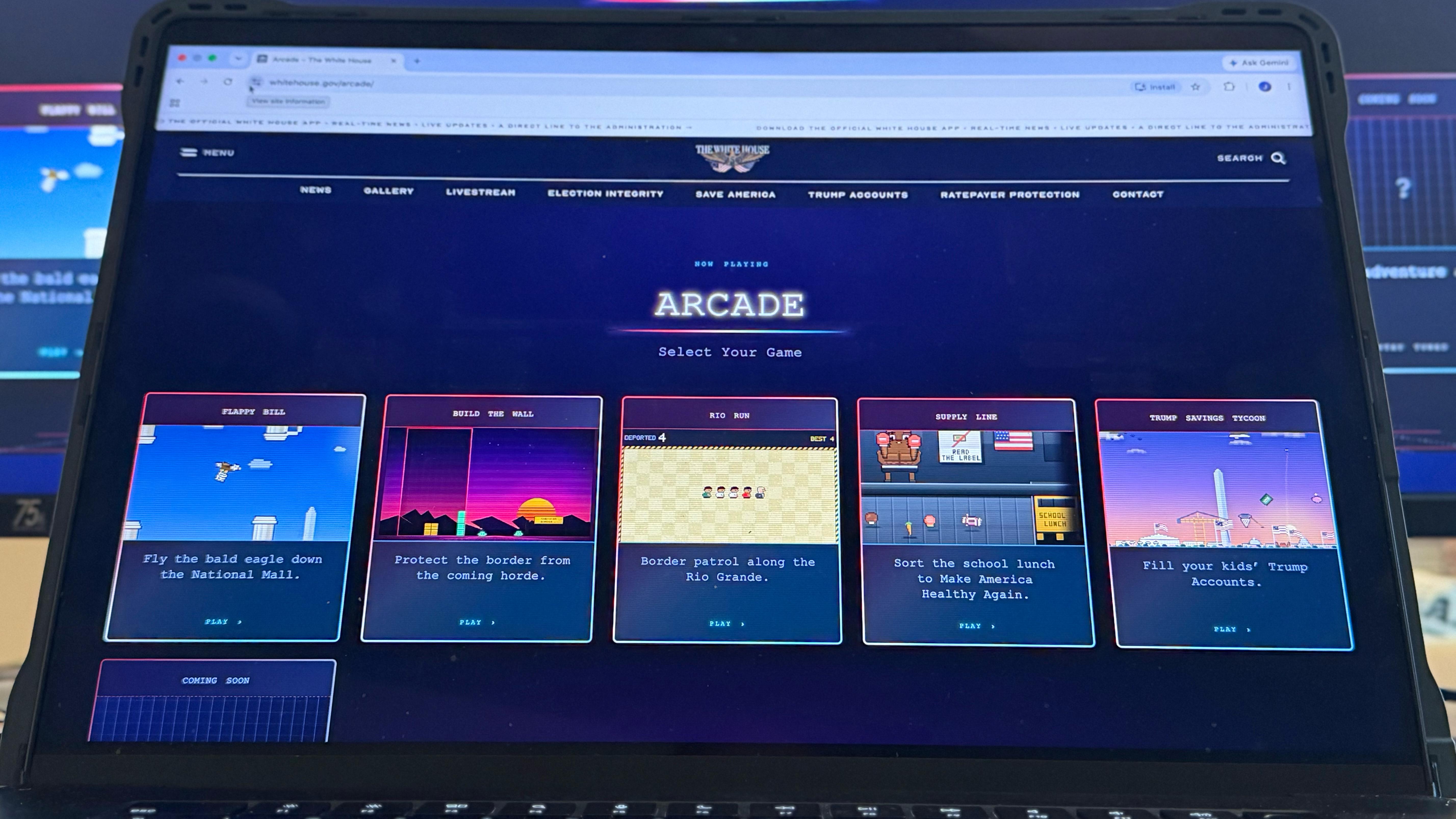
The article reports on a new feature on the official White House website called "arcade," which includes games such as Build the Wall and Rio Run that depict deportation scenes and border control. The games are part of a broader history of gaming being used as propaganda by the US military, with the Pentagon spending hundreds of millions of dollars on recruitment-by-gaming projects. One notable example is America's Army, a free-to-play game launched in 2002 that was found to have more impact on recruits than other forms of advertising. The White House spokesperson claims the arcade games are intended to contrast with the "dark socialist vision" of Democrats.
Written by the local model on 2026-09-04,
using this article's own text rather than the other coverage of the
same event (that is the story summary below).
Story summary
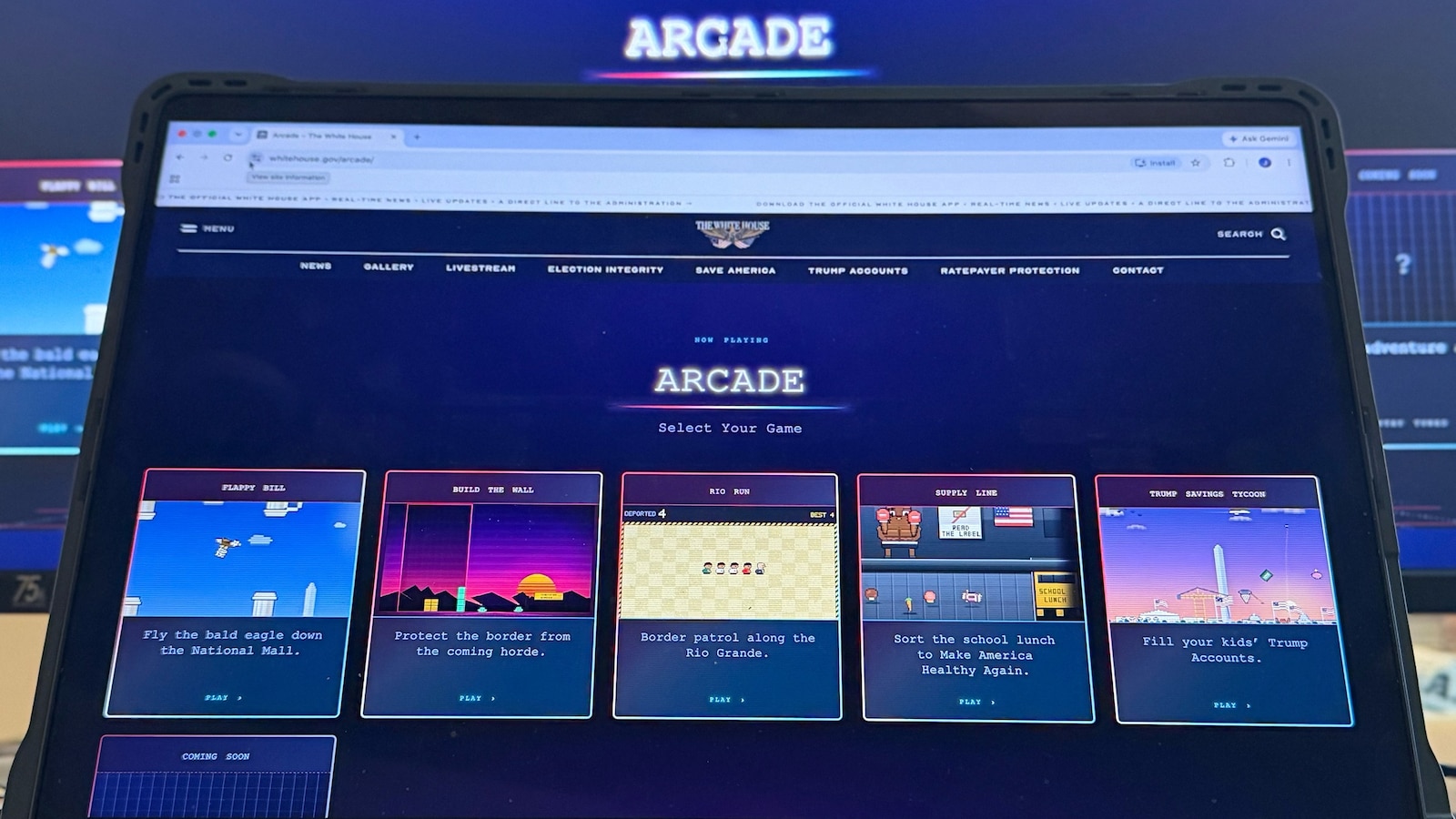
On September 3, the White House launched an online "arcade" featuring five retro-style games that promote President Donald Trump's MAGA agenda. The games include "Build the Wall," a Tetris-like game where players stack wall sections to prevent migrants from entering; "Rio Run," a Snake-like game where players collect and deport migrants along the Rio Grande; "Supply Line," a game where players sort out school lunch items to promote healthy eating; "Flappy Bill," a game where players fly a bald eagle carrying legislation over the National Mall; and "Trump Savings Tycoon," a game where players collect cash and gold bars to fill their kids' Trump Accounts. The games are intended to contrast with what the White House calls the "dark socialist vision" of Democrats, but critics see them as a form of propaganda that perpetuates negative stereotypes about migrants and immigrants. The video games have been criticized for their depiction of migrants and border control, with some comparing them to the real-life scenes of ICE agents forcing immigrants onto deportation planes. The White House has defended the games as an effort to promote a "culture of fun and winning."**
Written for “Trump's Immigrant Deportation Game” on 2026-09-05,
grounded in this article and the 3 other(s) covering the same event.
Why this leaning score
The article's own words the score was based on. Each is quoted
verbatim and was checked against the article text before being
stored, so you can find it in the original.
Leaning score +0.85 for article 3916 (high confidence, 1 verified quote) · logged 2026-09-04
As of September 3, the official White House website features a page titled “arcade,” where users can play games like Rio Run, in which the player—a pixelated, white, and balding Border Patrol agent—collects “border crossers” and adds them to a line of orange-jumpsuited figures trailing behind him.
asserted
player → feature → him
It’s a retro-cutesy version of the nightmarish and very real scenes of ICE agents forcing immigrants, chained in a line, onto deportation planes.
asserted
agents → ’ → planes
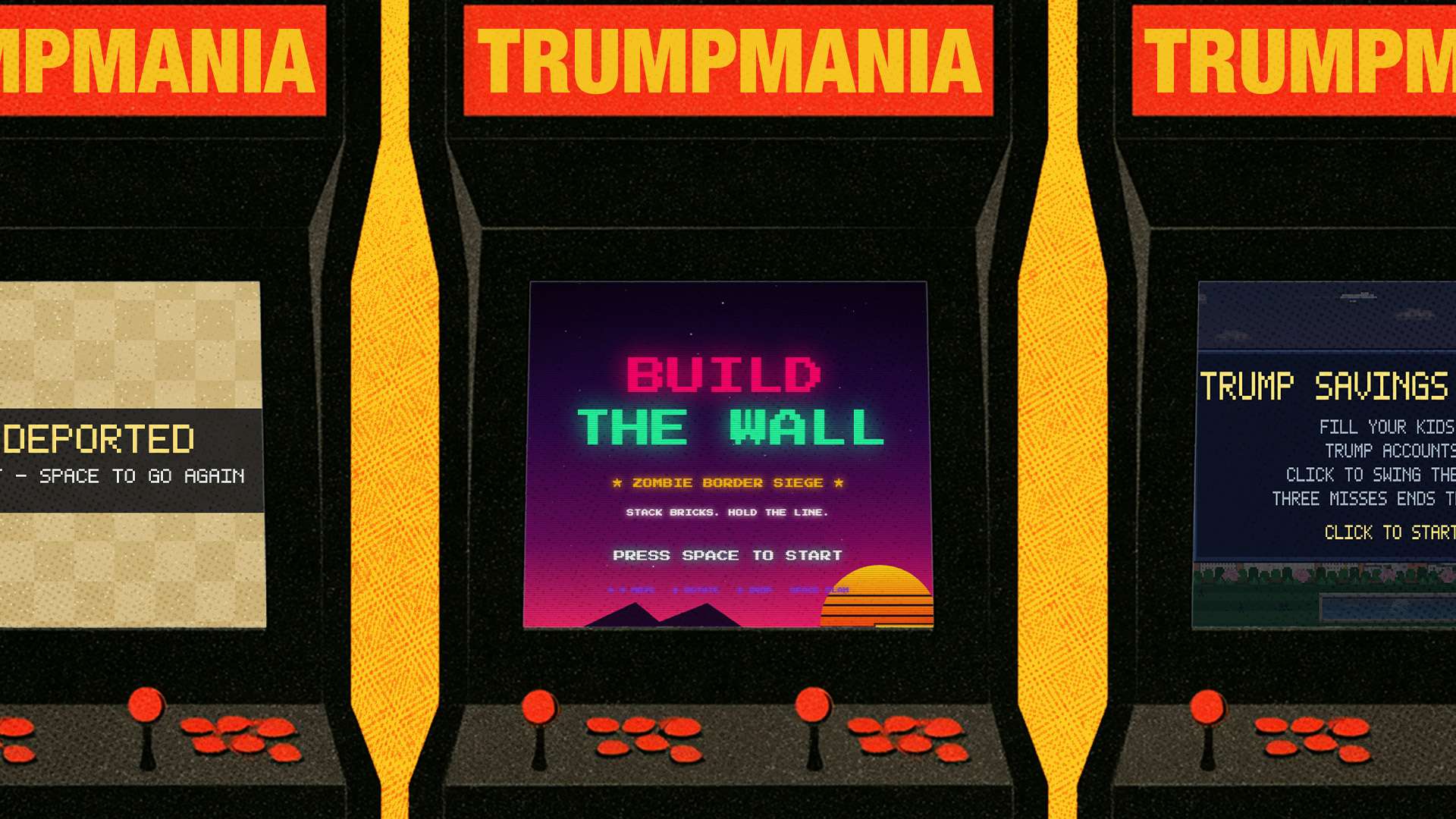
Other games in the “arcade” include Build the Wall, a Tetris rip-off in which the user builds a wall to “protect the border from the coming horde.”
asserted
user → include → horde
(Tetris, in response to Build the Wall, has posted on Instagram that the company takes copyright infringement “very seriously.”)
asserted
company → post → infringement
A White House spokesperson told CNN the arcade is “an effort to further contrast between a culture of fun and winning and the dark socialist vision Democrats have for America.”
asserted
Democrats → tell → America
It’s also part of a long American history of gaming as propaganda.
asserted
It → ’ → propaganda
As Jesse Robertson wrote for the Nation in 2024: “It’s hardly an exaggeration to say that today’s global gaming colossus is the offspring of the Pentagon; by some measures, the nearly $350 billion gaming industry is one of the Defense Department’s most significant innovations since the end of the Cold War.”
asserted
industry → write → War
Recruitment-by-gaming is a project that the Pentagon has spent hundreds of millions of dollars on, and it’s one that has paid big dividends.
asserted
that → spend → dividends
In fact, one of the world’s first video games, Spacewar!—launched in 1962 on punch-tape computers at MIT—was funded by a DOD grant.
asserted
one → fund → grant
In 2002, the US Army launched a free-to-play computer game called, fittingly, America’s Army; a 2008 study found that the game “had more impact on recruits than all other forms of Army advertising combined.”
asserted
forms → launch → advertising
The game proved incredibly popular with US soldiers and wannabe soldiers, who were enamored of its realistic first-person-shooter gameplay.
asserted
who → prove → gameplay
Members of the Army’s brass floated the idea of shipping computers to Afghanistan so enlisted men could play America’s Army while serving in the real American Army.
uncertain
men → float → Army
The game ran for 20 years and reached millions of potential recruits before shutting down in 2022.
asserted
game → run → 2022
“As time has passed and AA has fulfilled its mission, it is time to shift our focus to other new and innovative ways to assist the Army with comms and recruitment,” the game’s developers wrote in a statement at the time.
asserted
developers → pass → time
Today, the ideas behind America’s Army live on through the military’s sponsorship of esports tournaments and Twitch streamers.
asserted
ideas → live → tournaments
Most recently, an Army unit offered soldiers early access to Grand Theft Auto VI as an incentive for re-enlistment.
asserted
unit → offer → enlistment
It’s no surprise, considering the “wartime recruitment” framing of ICE’s current hiring push, that gaming as macho-fantasy agitprop would make its way from the military into the world of militarized immigration enforcement.
asserted
gaming → ’ → enforcement
More games, the White House website says, are coming soon.
asserted
website → say → ?