Divers have captured the first images of what is believed to be the underwater remnants of Shipden, a medieval village in Norfolk, UK, that was swallowed by the North Sea around 700 years ago. During summer dives when conditions were unusually calm, divers from the British Sub-Aqua Club mapped and photographed 25 man-made structures including flint stone foundations and caissons. The team found eight to ten layers of stone still standing despite being underwater for centuries, offering new insights into medieval sea defenses but leaving questions about the fate of St. Peter's Church unresolved.
Written locally by qwen2.5:14b on 2026-09-27,
using this article's own text rather than the other coverage of the
same event (that is the story summary below).
Story summary
Divers recently captured the first-known images of mysterious underwater structures off the coast of Norfolk, United Kingdom, believed to be remnants of a village swallowed by the sea some 700 years ago. These remains are thought to belong to the lost medieval town of Shipden that was consumed by the North Sea in the 14th century. The divers photographed and mapped 25 man-made features, including massive stone structures covered with marine life, made primarily from flint and cut stones. Volunteer divers from the East Anglian branch of the British Sub-Aqua Club (BSAC) surveyed the site as part of the Alfred Savin Project's investigation, aided by unusually calm waters during their summer dives. Researchers are now examining medieval records alongside these physical discoveries to better understand the area’s history, including whether the stone structures known as caissons were part of a 14th-century attempt to hold back the sea.
Written for “Sunken Town Revealed” on 2026-10-05,
grounded in this article and the 0 other(s) covering the same event.
Divers recently captured the first-known images of mysterious underwater structures believed to be remnants of a village swallowed by the sea some 700 years ago.
asserted
Divers → capture → sea
The images and video were recently taken off the coast of Norfolk in the United Kingdom, as news agency Jam Press reported.
asserted
Press → take → Kingdom
The remains are believed to be the lost town of Shipden, a medieval settlement that was eventually consumed by the North Sea in the 14th century.
asserted
that → believe → century
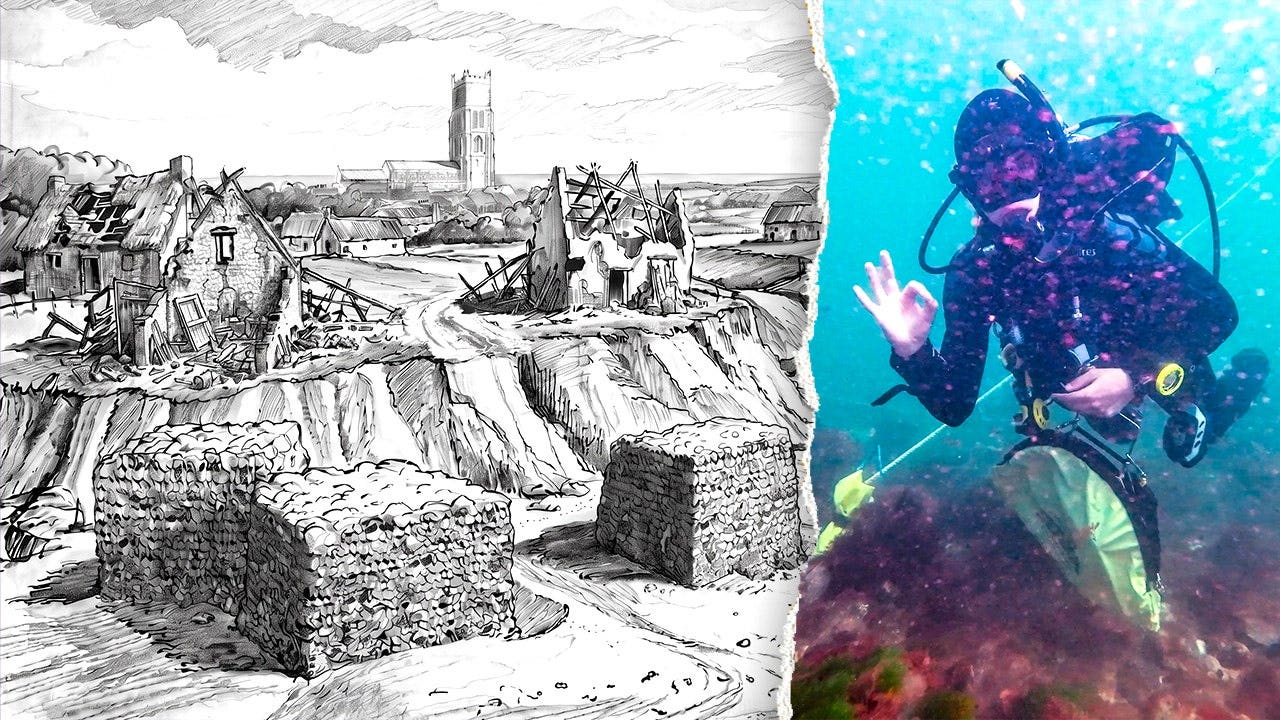
At the site, divers photographed and mapped 25 man-made features.
asserted
divers → photograph → features
Pictures show massive, marine-covered stone structures jutting from the sandy seabed as divers explored the centuries-old site.
asserted
divers → show → site
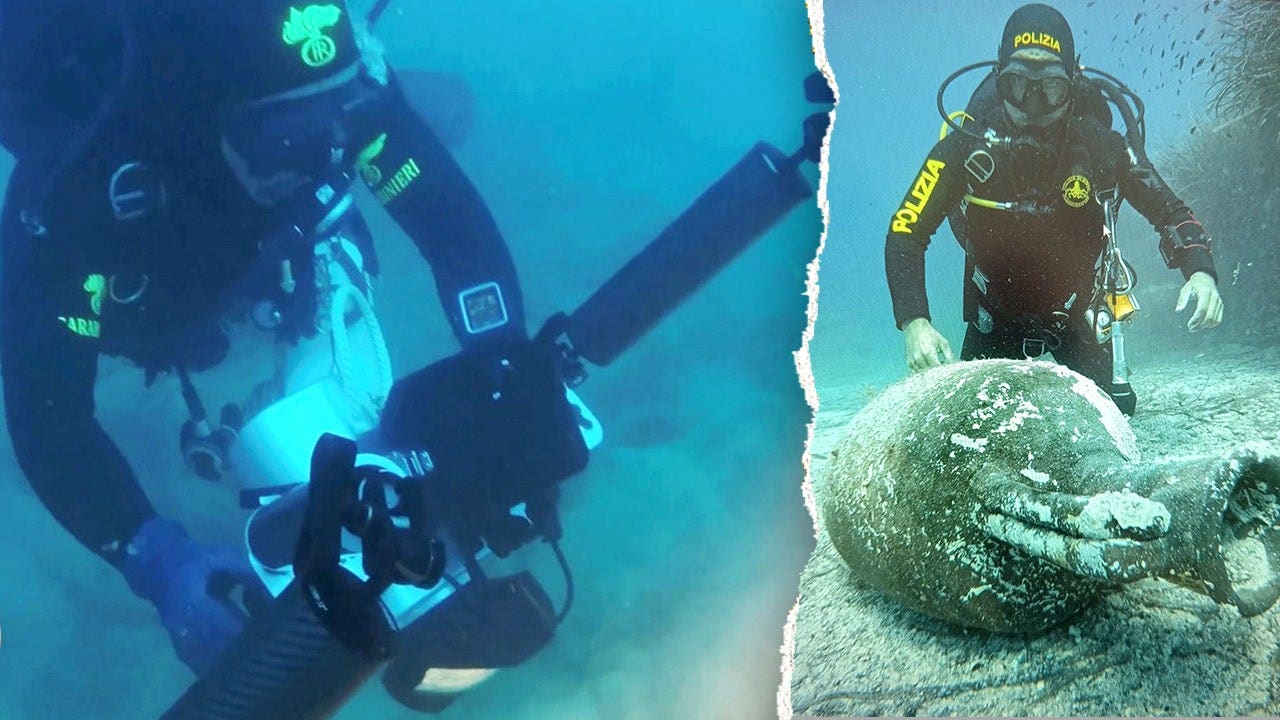
Volunteer divers from the East Anglian branch of the British Sub-Aqua Club (BSAC) helped survey and map the underwater site as part of the Alfred Savin Project's investigation.
asserted
divers → survey → investigation
Despite the North Sea's reputation for rough and dangerous conditions, the water was unusually still during the summer dives — which helped the team photograph and map features on the seabed.
asserted
team → help → seabed
The divers found structures made of flint — a popular building material in medieval Norfolk — as well as other pieces of cut stone and the remains of stone foundation structures known as caissons.
asserted
divers → find → caissons
The caissons may have been part of a 14th-century attempt to hold back the sea, but researchers have yet to determine their exact purpose.
uncertain
researchers → hold → purpose
Some structures remain eight to 10 layers of stone high despite spending centuries underwater.
asserted
structures → remain → centuries
The effort marks the first time the features are believed to have been photographed.
asserted
features → mark → time
Once a thriving village, Shipden was home to a modest population in the High Middle Ages.
asserted
Shipden → thrive → Ages
The Domesday Book — the survey that recorded land and populations across England following the Norman Conquest — noted that Shipden had just 117 residents in 1086.
asserted
Shipden → record → 1086
The town also boasted three acres of meadow, a harbor, two churches and "woodland capable of supporting 36 pigs," Jam Press noted.
asserted
Press → boast → pigs
By the 14th century, its name gradually disappeared from records and the area became known as Cromer.
asserted
area → disappear → Cromer
Historical records confirm that a church was lost to the sea, but divers have yet to find any remains that can be definitively identified as the building.
asserted
that → confirm → building
Legend holds that the tower of St. Peter's Church survived beneath the waves on a formation known as Church Rock.
asserted
tower → hold → Rock
"For the present, we’re putting forward ideas rather than conclusions."
asserted
we → put → ideas
Lead diver Nick Schiller told Jam Press the team initially set out to search for additional remains of the Victoria, a vessel that wrecked on Church Rock in 1888.
asserted
that → tell → 1888
"However, it’s been a bonus to help the Cromer team to take some steps forward in understanding the town of Shipden and the port of Cromer," said Schiller.
asserted
Schiller → help → Cromer
He said the findings suggest that Church Rock, long believed to be connected to the lost church, may instead be the remains of medieval sea defenses.
uncertain
Rock → say → defenses
For now, the location of the church remains a mystery.
asserted
location → remain → church
Looking ahead, Peter Stibbons, chair of the Friends of Cromer Museum and director of the project, said researchers are examining medieval records alongside the physical discoveries to gain a better understanding of the area.
asserted
researchers → look → area
"Those of us brought up in Cromer have always known the story of Church Rock, so it’s a big step to saying the legend may be incorrect," Stibbons told Jam Press.
uncertain
Stibbons → bring → Press
He added, "For the present, we’re putting forward ideas rather than conclusions."
asserted
we → add → ideas
 The Aporia