Story summary
On September 16, the Federal Reserve raised its benchmark interest rate by 25 basis points to a target range of 3.75% to 4%, marking its first hike in over three years. Chairman Kevin Warsh argued that this action was necessary to address inflation, which had been running above the 2% target for more than five years. By August, consumer prices had risen by 3.4% year-over-year, though down from a peak of 4.2% in May. Core inflation, excluding food and energy, stood at 2.5%.
The decision was influenced by significant economic pressures: the Iran conflict shutting the Strait of Hormuz caused an energy price shock, while tariffs announced in 2025 led to retail supply chain delays, pushing apparel prices up by 4.8% and sports equipment prices by 4.2% at their peak. Despite these challenges, the Fed had maintained rates through most of 2026 as inflationary pressures accumulated. The September rate hike reflects the committee's view that further inaction was no longer justifiable.
Critics argue that this timing might exacerbate existing economic issues rather than alleviate them.
Written for “Fed Rate Hike Controversy” on 2026-10-04,
grounded in this article and the 0 other(s) covering the same event.
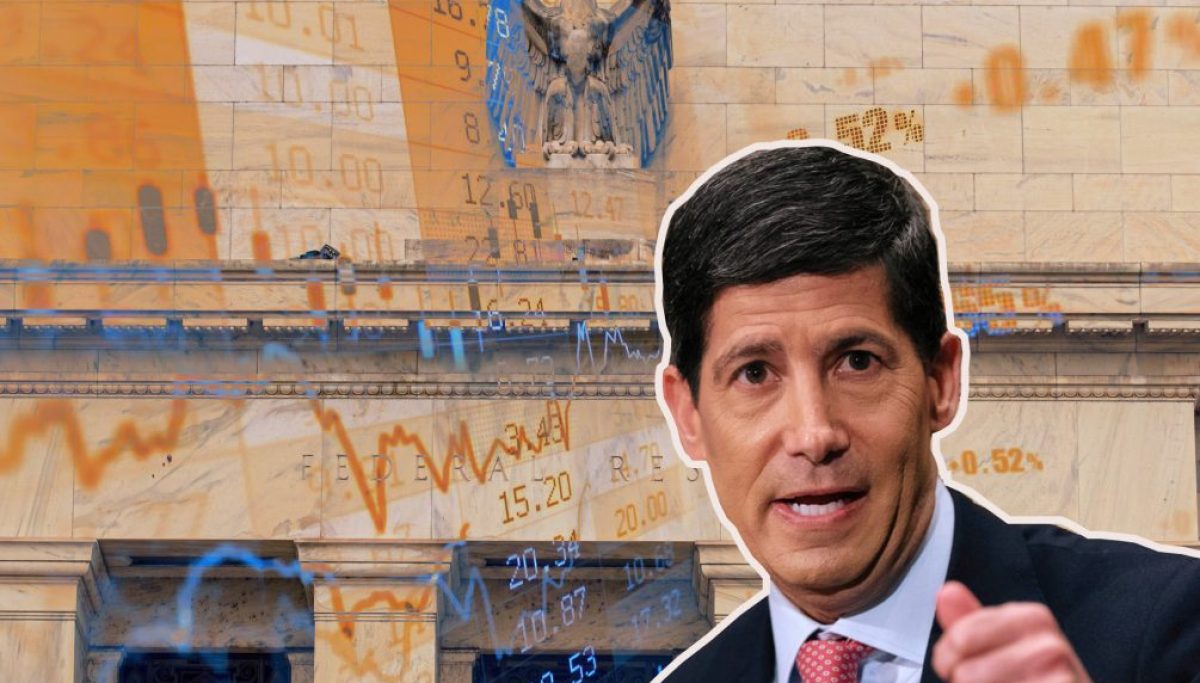
On Sept. 16, the Federal Reserve raised its benchmark interest rate by 25 basis points to a target range of 3.75% to 4% — its first rate hike in more than three years.
asserted
Reserve → raise → years
Chairman Kevin Warsh described the move as essential to restoring the Fed’s credibility on inflation after more than five years of prices running above the 2% target.
asserted
prices → describe → target
He may be applying the solution at the worst possible moment.
uncertain
He → apply → moment
Consumer prices rose 3.4% over the 12 months ending in August — well above target, though down from a peak of 4.2% in May.
uncertain
prices → rise → May
Core inflation, which strips out food and energy, ran at 2.5%.
asserted
which → strip → %
The Iran conflict that shut the Strait of Hormuz in late February triggered a sharp energy price shock, and tariffs that were announced in 2025 began flowing through retail supply chains with their characteristic multimonth lag, pushing apparel prices up 4.8% and sports equipment up 4.2% at the peak.
asserted
equipment → shut → peak
The Fed held rates steady through most of 2026 as these pressures built.
asserted
pressures → hold → 2026
The September hike represents the committee’s judgment that holding further was no longer defensible.
asserted
holding → represent → judgment
A financial controller does not evaluate a rate decision based on the rationale alone.
asserted
controller → evaluate → rationale
He evaluates the timing, the environment into which the policy lands, and what the downstream mechanics look like for the businesses and households on the receiving end.
asserted
mechanics → evaluate → end
On those measures, this hike arrives with significant embedded risk.
asserted
hike → arrive → risk
Real gross domestic product grew at a 2.1% annual rate in the first quarter of 2026.
asserted
product → grow → 2026
By the second quarter, that figure had decelerated to 1.5%.
asserted
figure → decelerate → %
Consumer spending continued to contribute to growth, but the rate of contribution is declining.
asserted
rate → continue → contribution
Real average hourly earnings — wages adjusted for inflation — are up just 0.3% over the year, meaning that most Americans have effectively treaded water in purchasing power even as nominal wages rose 3.5%.
asserted
wages → adjust → power
The job market is functional but moderating: Employers added an average of 80,000 jobs per month this year, well below the pace of prior years, and the unemployment rate stands at 4.1%, with youth unemployment at 9.1%.
Into that environment, the Federal Reserve has now raised the cost of borrowing.
asserted
Reserve → moderate → borrowing
The immediate transmission mechanism is direct and unavoidable: variable-rate debt — credit cards, home equity lines of credit, adjustable-rate mortgages — reprices within one to two billing cycles.
asserted
debt → reprice → cycles
For the 41% of holiday shoppers who, according to recent survey data, plan to rely on credit cards as one of their primary payment methods this season, and the 26% who expect to put a larger share of purchases on credit than last year, the hike is not an abstraction.
uncertain
hike → accord → credit
It is a line-item increase in the cost of the spending that drives the fourth quarter.
asserted
that → drive → quarter
The Fed’s median policymaker projection currently anticipates one additional rate hike before year’s end and two more in 2027.
asserted
projection → anticipate → 2027
Market pricing reflects expectations for three additional hikes by mid-2027.
asserted
pricing → reflect → mid-2027
That trajectory assumes inflation does not cool fast enough, and on current data, that assumption is plausible.
asserted
assumption → assume → data
The Congressional Budget Office’s projection of the fiscal 2026 deficit has already been revised upward to $2.1 trillion in part because the Supreme Court overturned certain tariff authorities, reducing projected customs revenues by $250 billion.
asserted
Court → revise → billion
The fiscal picture is not one that provides a meaningful counterweight to tighter monetary policy.
asserted
that → provide → policy
Federal interest payments on the national debt crossed $1 trillion on an annualized basis in August, now the second-largest category of federal expenditure behind only Social Security.
asserted
payments → cross → Security
The government is itself a significant borrower; higher rates compound the fiscal problem while attempting to solve the inflation one.
asserted
rates → compound → inflation
Neither mandate has been cleanly met: Inflation is above target, and employment growth is slowing.
asserted
growth → meet → target
The September hike is a judgment call made in a genuinely difficult policy environment with no clean options.
asserted
hike → make → options
Warsh described the situation with characteristic precision at his press conference, warning that “too many categories are still posting increases above 3%.”
asserted
categories → describe → %
The consequential question — whether the medicine administered in the fourth quarter of 2026 will cure the disease or extend the patient’s discomfort — is one that the economic data will answer over the next two quarters.
asserted
data → administer → quarters
Controllers do not make predictions.
asserted
Controllers → make → predictions
They read the indicators.
asserted
They → read → indicators
The indicators, at this moment, point to a harder landing than the headline numbers suggest.
asserted
numbers → point → landing
Jose E. Navarro, MBA, is a financial controller and founder of The Navarro Report, a public finance and government accountability publication based in San Diego, California.
asserted
Navarro → base → Diego
 The Aporia