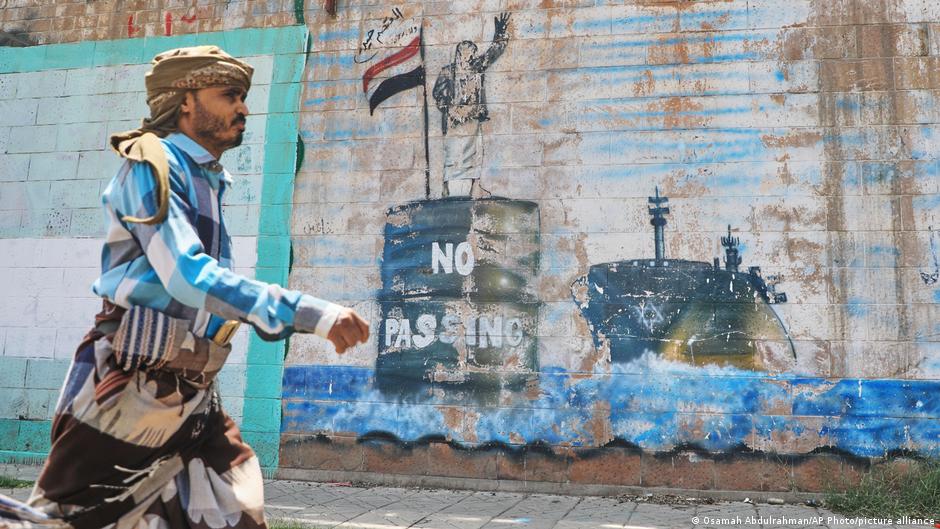
IN July 2026, the Houthis declared a naval blockade against Saudi Arabia, targeting Saudi-linked shipping, and warning commercial vessels of any nationality against calling at Saudi ports.
asserted
Houthis → declare → ports
Vessels deemed to breach the blockade faced attack wherever they entered the Houthis’ operational reach.
asserted
they → deem → reach
Attacks on Saudi tankers and energy infrastructure were followed by traffic through Bab al-Mandeb falling to its lowest level in months.
asserted
traffic → follow → months
By September, Houthi forces had seized strategic islands around Bab al-Mandeb and gained control of Yemen’s Red Sea coast, increasing their capacity to threaten, disrupt and potentially control maritime traffic through the strait.
asserted
forces → seize → strait
The conventional legal position is that naval blockade is a belligerent right associated with international armed conflict (IAC), mainly because it permits interference with neutral commercial shipping.
asserted
it → associate → shipping
As per this view, a non-state armed group engaged solely in a non-international armed conflict does not ordinarily have the authority to impose a blockade that is binding on neutral vessels.
asserted
that → engage → vessels
However, customary international law does not conclusively foreclose blockade in a sufficiently intense NIAC, particularly where an organised armed group exercises extensive territorial and governmental control and can enforce maritime restrictions.
asserted
group → foreclose → restrictions
This question is particularly significant in Yemen, where there is a strong argument that the Houthis function as a de facto governmental authority rather than merely an insurgent movement.
asserted
Houthis → be → authority
They have long controlled Sana’a, govern territory containing a substantial population, and have expanded along the Red Sea coast and around Bab al-Mandeb.
asserted
They → control → Mandeb
Crucially, under the ICRC approach, effective governmental control, rather than global recognition alone, is central to determining de facto governmental authority.
asserted
control → determine → authority
If the Houthis are treated as exercising Yemen’s governmental authority, their external hostilities may be characterised as those of Yemen itself, strengthening the argument that the relevant conflicts are international and that traditional belligerent rights, including blockade, are potentially available.
uncertain
rights → treat → blockade
Even if this characterisation is rejected, other factors point towards possible internationalisation.
asserted
factors → reject → internationalisation
Saudi Arabia is directly engaged alongside the internationally recognised Yemeni authorities against the Houthis, while the latter have repeatedly attacked Saudi territory.
asserted
latter → engage → territory
Saudi intervention by invitation does not, by itself, transform the underlying conflict into an IAC, but it adds an international dimension.
asserted
it → transform → dimension
Israel provides a separate route: it has used force on Yemeni territory in response to Houthi attacks, and under the ICRC’s view, the unconsented use of force by one state against another state’s territory may itself create an IAC between them, even where the immediate target is a non-state armed group.
uncertain
target → provide → them
Israeli strikes on Houthi-held territory could therefore support a parallel Israel-Yemen IAC.
uncertain
strikes → hold → IAC
Do the Houthis, as a non-state armed group, have the legal authority to enforce a naval blockade?
asserted
Houthis → have → blockade
Iranian involvement provides another possible route to internationalisation.
asserted
involvement → provide → internationalisation
Under the International Criminal Tribunal for the former Yugoslavia’s “overall control” test in Tadić, however, the threshold may be met where a state, beyond financing, training or equipping an organised armed group, also participates in planning its military activities; specific instructions for each operation are unnecessary.
uncertain
instructions → meet → operation
The ICJ’s stricter “effective control” test, relevant to attribution of particular conduct, requires proof that the state directed or controlled the specific operation in question.
asserted
state → require → question
Accordingly, if the conflict is international, traditional blockade law is more readily applicable; if the Houthis remain solely a non-state party to an NIAC, their authority to impose blockade obligations on neutral shipping remains controversial.
asserted
authority → remain → shipping
In either case, a declaration alone is insufficient: a blockade must satisfy the requirements of effectiveness, notification, impartiality and applicable humanitarian limitations.
asserted
blockade → satisfy → effectiveness
Regardless of classification, the Houthis are bound by applicable international humanitarian law.
asserted
Houthis → bind → law
In an NIAC, Common Article 3 of the Geneva Conventions and applicable customary IHL apply; in an IAC, the Geneva Conventions apply in full, together with customary IHL.
asserted
Conventions → apply → IHL
In either case, rules governing distinction, military goals, proportionality and precautions constrain the conduct of hostilities.
asserted
rules → govern → hostilities
The law of naval blockade is further governed by the law of armed conflict at sea and customary international law, as elaborated in the San Remo Manual.
asserted
law → govern → Manual
Under paragraphs 93-104, a blockade must be declared and notified to belligerents and neutral states; specify its commencement, duration, location and extent; allow neutral vessels an appropriate period to depart; be effective and impartially applied; and comply with humanitarian restrictions, including those concerning essential civilian supplies.
asserted
blockade → declare → supplies
Importantly, the Houthis have denied seeking to close Bab al-Mandeb to international navigation.
asserted
Houthis → deny → navigation
Their spokesman stated that there was “no closure” of the strait and described the measure as a maritime blockade affecting only the Saudi side.
asserted
spokesman → state → side
The main legal question, therefore, is not whether the Houthis may close Bab al-Mandeb as a coastal authority, but whether they may lawfully impose and enforce a belligerent blockade against Saudi Arabia and shipping falling within its scope.
uncertain
they → close → scope
Military necessity, however, does not independently make commercial shipping a lawful target.
asserted
shipping → make → ?
Article 52(2) of Additional Protocol I, reflecting the customary definition of a military objective, requires an object, by its nature, location, purpose or use, to make an effective contribution to military action and for its destruction, capture or neutralisation to offer a definite military advantage.
asserted
destruction → reflect → advantage
Particular Saudi vessels, ports or assets directly supporting military operations may satisfy that test, but the general contribution of commercial trade to Saudi Arabia’s economy and war capacity does not, by itself, transform every merchant vessel into a military goal.
uncertain
contribution → support → goal
Any attack remains subject to distinction, proportionality and precautions.
asserted
attack → remain → distinction
Neutral vessels do not lose protection merely because they trade with Saudi Arabia or indirectly contribute to its economy.
asserted
they → lose → economy
Whether a vessel may lawfully be intercepted, captured or attacked must be determined under the specific rules governing blockade, neutral shipping and military objectives, rather than through a general invocation of military necessity.
uncertain
intercepted → intercept → necessity
Finally, the simultaneous closure of Hormuz and Bab al-Mandeb would place roughly a quarter of global oil flows and a major share of LNG trade at risk.
asserted
closure → place → risk
Some analysts view pressure on both chokepoints as part of a broader Iranian strategy, working through the Houthis to increase economic pressure on the US and its Gulf partners and create leverage over the wider war.
asserted
analysts → view → war
Pakistan has condemned Houthi attacks on Saudi Arabia while continuing to stress diplomacy and regional de-escalation.
asserted
Pakistan → condemn → diplomacy
It has so far avoided direct military involvement under the Makkah accord, maintaining a cautious approach that limits the risk of Pakistan being drawn into the widening regional conflict.
asserted
Pakistan → avoid → conflict
 The Aporia