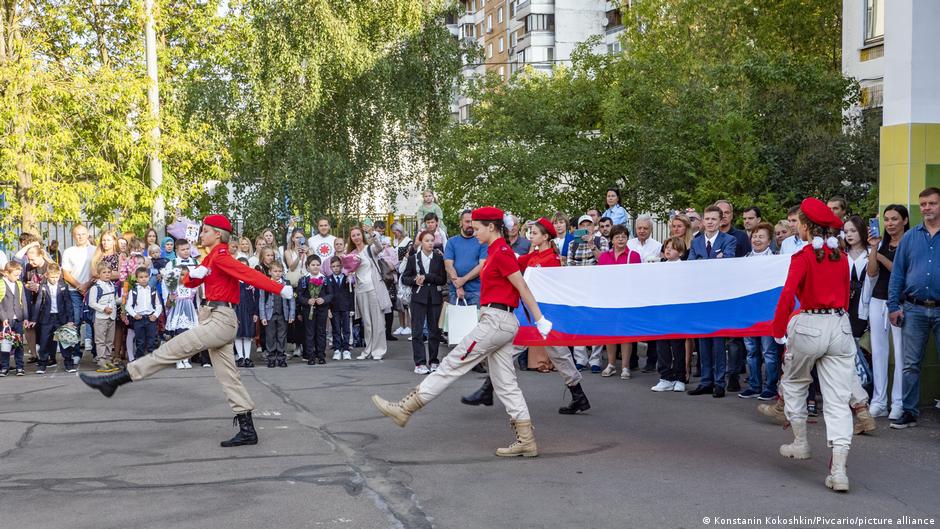
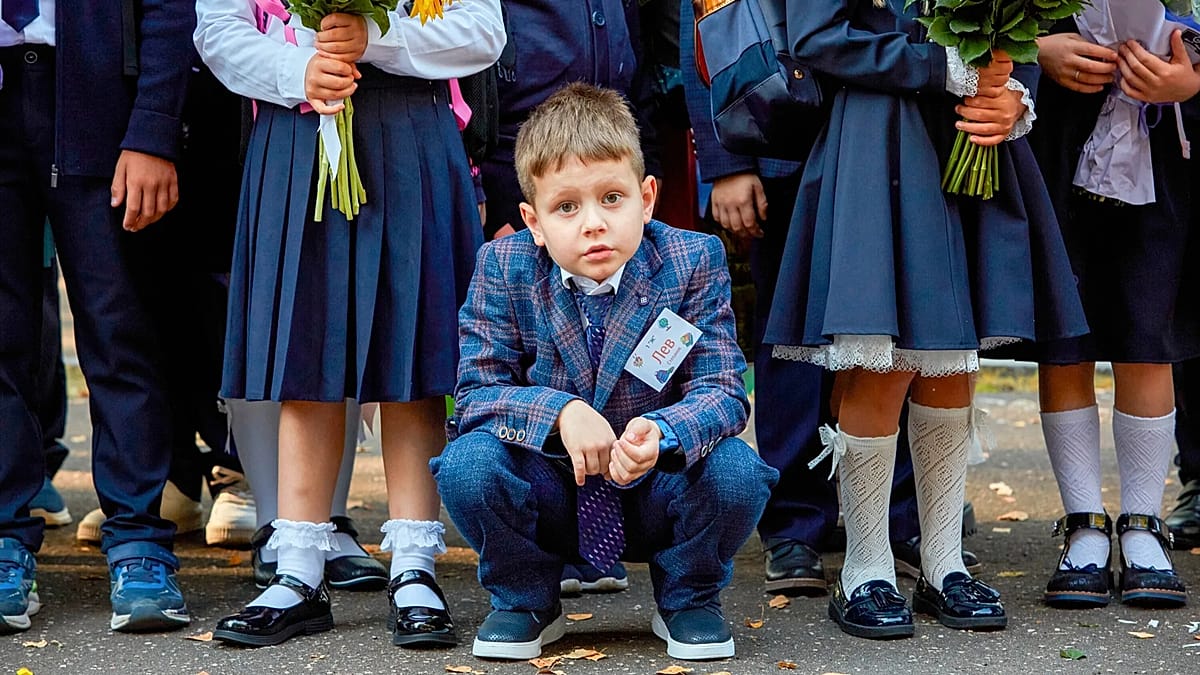
Earlier this year, several schools in Novosibirsk, a city of 1.6 million in southern Siberia, received a textbook on patriotism from the authorities.
asserted
schools → receive → authorities
According to students, with whom DW spoke to on condition of anonymity, in the book the authors urge children to prepare themselves to die for their country.
uncertain
authors → accord → country
Furthermore, they equate homosexuality with pedophilia and Disney cartoons with pornography, and give instructions on how women should use their "charms."
asserted
women → equate → charms
Europeans are described as "thieves, murderers and liars.
asserted
Europeans → describe → thieves
The textbook, which provides "materials for spiritual, moral, and patriotic upbringing" is supposed to be used as part of "patriotism lessons" that have been on the curriculum since 2022.
asserted
that → provide → 2022
Though it is not included on the national list of core curriculum books, the content reflects the Kremlin's intentions to spread propaganda in educational institutions.
asserted
content → include → institutions
'Love always involves sacrifice.'
asserted
Love → involve → sacrifice
One of the main topics of the book is the war in Ukraine and the idea that dying for one's country is a blessing is repeated several times: "Love always involves sacrifice," writes one of the authors.
asserted
one → die → authors
Elsewhere in the book, the authors make constant claims that Russia is better than Western countries.
uncertain
Russia → make → countries
They also say that children are "mentally crippled" because of "computer games, Hollywood action films, pornography and Disney cartoons."
asserted
children → say → games
They argue that European nations that used to be colonial empires legitimized "murder, lies and plunder" through the conquest and subjugation of new territories.
asserted
that → argue → territories
Russia, on the other hand, "never exploited its numerous peoples," they say, but merely improved their living conditions.
asserted
they → exploit → conditions
The book makes no mention of the culture of Indigenous peoples in what is Russia today, or of any religions other than Christianity and "Slavic paganism.
asserted
what → make → Christianity
For Ilya, a 16-year-old student in Novosibirsk who has read the book and whose name has been changed, the idea of dying for his country is anathema.
asserted
idea → read → country
"It's proof that the country wants more cannon fodder," he told DW, adding that "dying for the country" actually meant dying for "the president's interests and ambitions."
asserted
dying → want → interests
He said that a few years ago, he had started watching the videos of Alexei Navalny, the Kremlin critic and opposition leader who died in jail in 2024 "more for fun than for any other reason."
asserted
who → say → reason
He said it was Navalny's 2021 investigation into Russian President Vladimir Putin's Black Sea palace that had first drawn his attention.
asserted
that → say → attention
But it was when the authorities decided to block access to the US platforms YouTube and Discord that he began to oppose the government.
asserted
he → decide → government
He set up a VPN out of "contrariness" he said, looking for information about other opposition figures and reading the independent media.
asserted
he → set → media
As he found out more about the cruelty and senselessness of the war, he criticized the government more strongly.
asserted
he → find → government
He confirmed that propaganda had become an integral part of the curriculum in the past four years.
asserted
propaganda → confirm → years
On top of the "Conversations about Important Things" that take place every Monday morning, there are now also subjects such as "Fundamentals of Homeland Security and Defense."
asserted
that → take → Security
He said that people who have taken part in the war in Ukraine are invited to lessons focusing on students' future and decisions regarding what career path to take.
asserted
who → say → path
Even outside of the classroom, students are encouraged to be "patriotic."
asserted
students → encourage → classroom
Ilya said that a student had been reprimanded by the principal for wearing a sweater with a slogan written in English on it.
asserted
student → say → it
"Young man, do you realize that your sweater has words on it in the language of unfriendly countries?" she reportedly asked him.
uncertain
she → realize → him
"A call to the Federal Security Service will take care of that!"
asserted
call → take → that
Ilya also recalled that a school assembly held to mark May 9, which commemorates the Soviet Union's victory over Nazi Germany in 1945, the principal and her deputy had compared what is known in Russia as the "Great Patriotic War" to the current war in Ukraine.
uncertain
what → recall → Ukraine
They had said that Russia would once again be steadfast and emerge victorious.
asserted
Russia → say → ?
'I love freedom'
asserted
I → love → freedom
Alexei (name changed), another 16-year-old student in Novosibirsk, told DW that many of his classmates avoided going to "patriotic events."
asserted
many → change → events
He too said that the blocking of YouTube had made a difference to him.
asserted
blocking → say → him
"I looked into why it was blocked," he said.
asserted
he → look → ?
"Because nothing happens by chance.
asserted
nothing → happen → chance
And that's how my interest in politics began."
asserted
interest → begin → politics
That's when he realized that the authorities wanted to get rid of inconvenient citizens and suppress free speech.
asserted
authorities → realize → speech
"I love freedom, so it was hard," he said.
asserted
he → love → freedom
Ilya thinks that most students don't take the propaganda seriously.
asserted
students → think → propaganda
"On the one hand, we laugh about it in class, at least my friends do," he said.
asserted
he → laugh → class
"On the other, we don't care.
asserted
we → care → other
…and 8 more, not listed.
 The Aporia