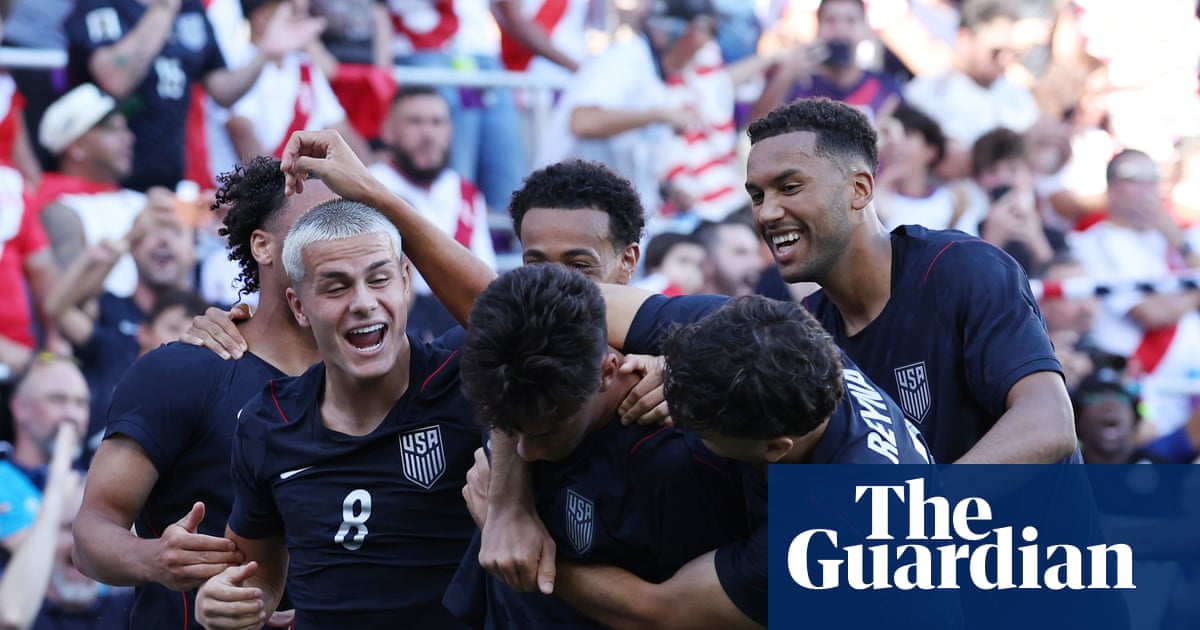
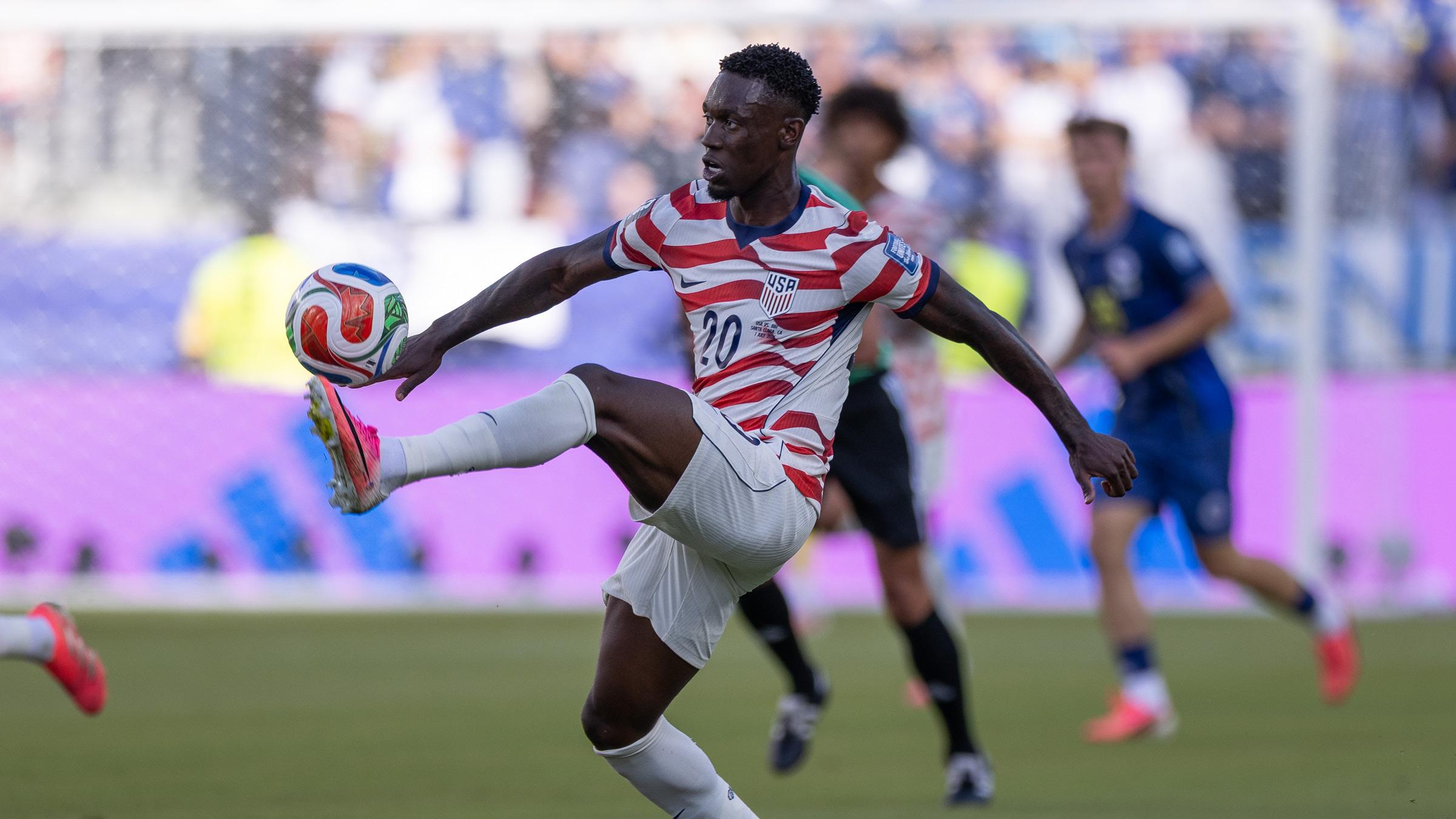
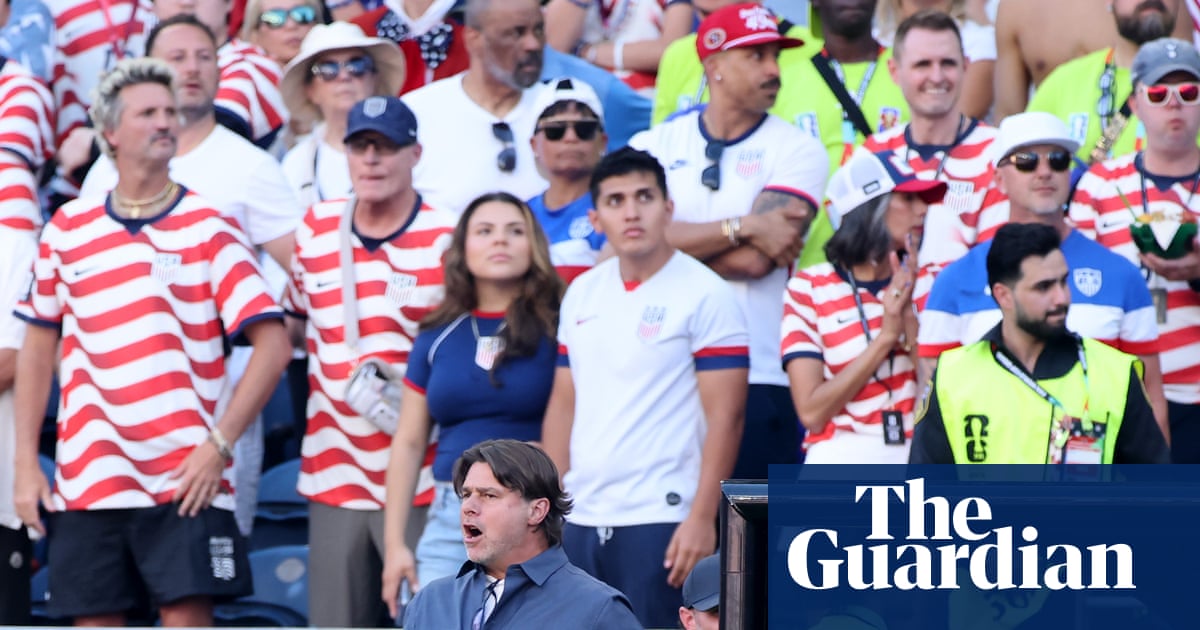
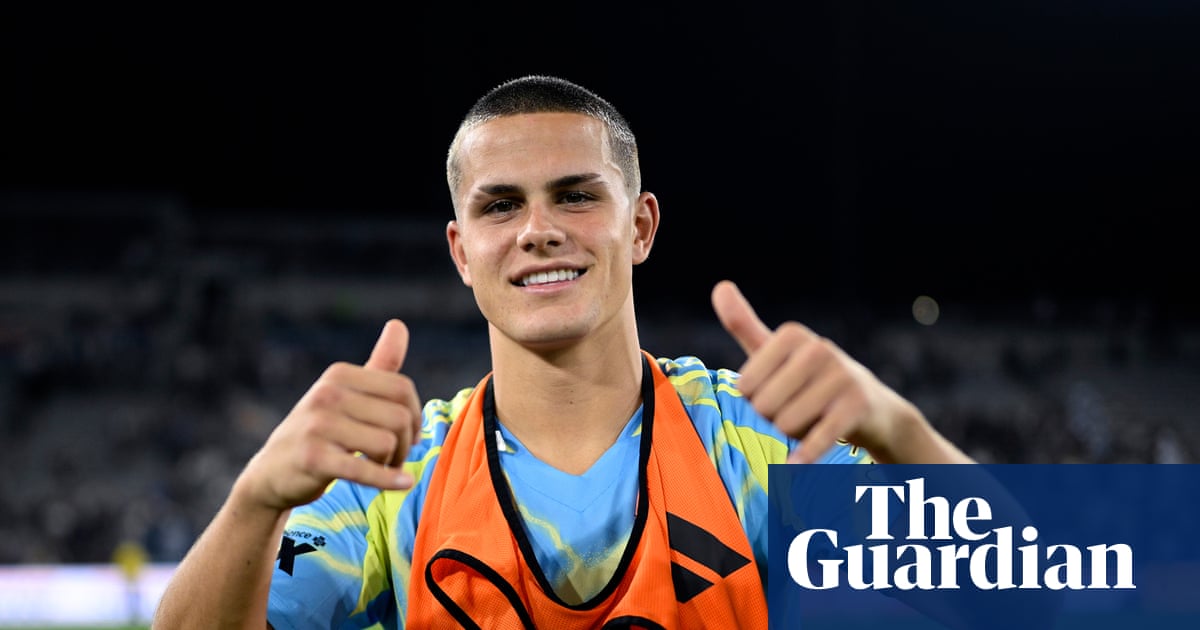
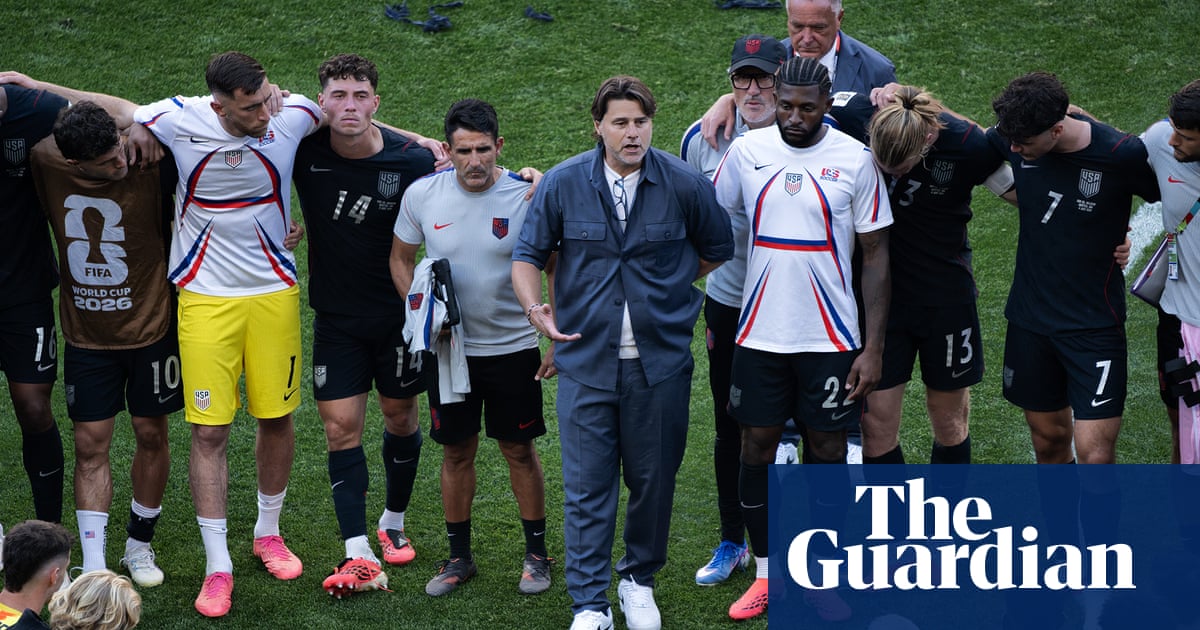
If 16-year-old Cavan Sullivan takes the field for the US men’s national team in the coming days, he will join a list of youngest-ever US players that has no shortage of recognizable names.
asserted
that → take → names
At the top is onetime phenom (turned cautionary tale) Freddy Adu, still the youngest player to ever appear for the US men.
asserted
Adu → turn → men
Names in the top 20 like Eddie Gaven and Bobby Convey will feel familiar to longtime US fans; Christian Pulisic, Yunus Musah and Gio Reyna are all still very much in the picture and may well prove to be Sullivan’s future partners in attack.
uncertain
Pulisic → feel → attack
Just below Adu’s name and above those five mentioned is a trio of names unknown to the vast majority of US fans: Mike Slivinski, Mark Jonas and Nelson Vargas.
asserted
trio → mention → fans
All three players made their debut in a 1991 friendly against Jamaica, with Slivinski and Jonas both younger than Sullivan will be should he appear for the US this window.
asserted
he → make → US
Only Vargas featured for the US again, capped an additional three times between 1991 and 1994.
asserted
Vargas → feature → 1991
The idea of a 16-year-old representing the US at the senior level has been mainstreamed by now, but it was unheard of in the early 1990s, long before the US Soccer Federation pumped millions into youth development and talent identification.
asserted
Federation → represent → development
So much so that when Sullivan received his call-up last week, nobody seemed to even remember the three players who, more than three decades ago, carved their names into the record books.
asserted
who → receive → books
“A buddy of mine sent me an article about [Cavan’s call-up], and it said he’d be the second-youngest player in US history,” says Slivinski, breaking into laughter.
asserted
Slivinski → send → laughter
I don’t think it was a dream, I’m pretty sure I didn’t imagine the one game I played.”
asserted
I → think → game
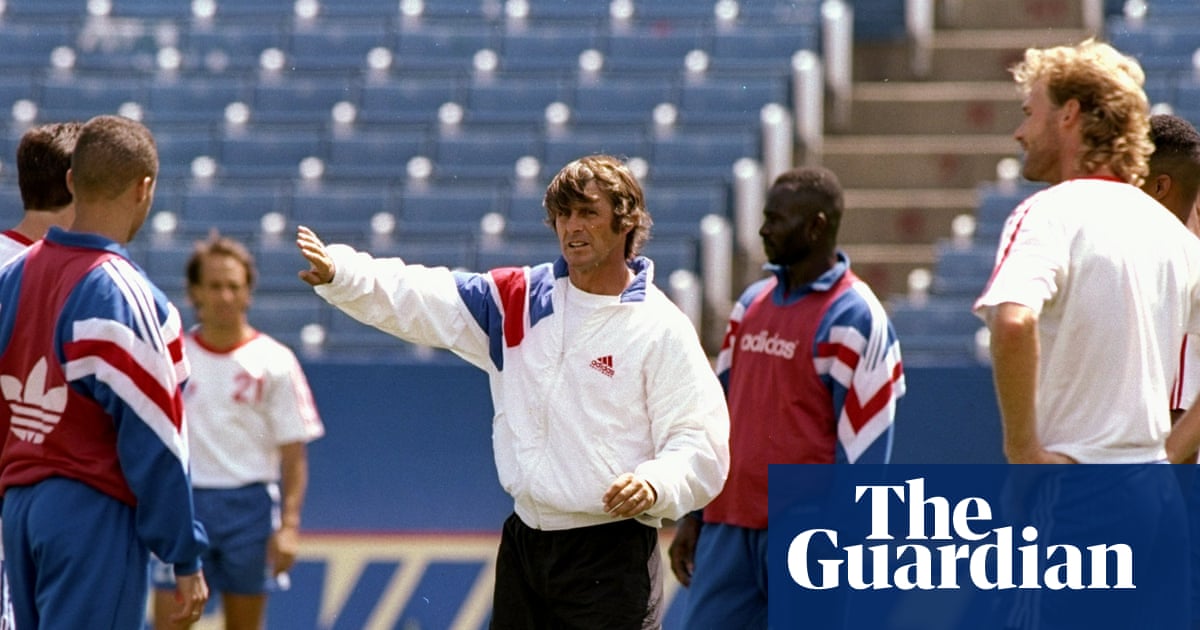
When Bora Milutinovic took the reins as US head coach in 1991, he inherited a program approaching the most pivotal moment in its history.
asserted
he → take → history
A year earlier, the US had appeared in their first World Cup in four decades.
asserted
US → appear → decades
In three years, the country would host the tournament for the first time.
asserted
country → host → time
It was imperative, then, that the USMNT put in a decent showing on home soil.
asserted
USMNT → put → soil
Milutinovic took a long, wandering path to the USMNT, with stops as a player or coach in a dozen or so different countries.
asserted
Milutinovic → take → countries
He led Mexico at the 1986 World Cup and Costa Rica in 1990, guiding both sides to their then-best-ever finishes.
asserted
He → lead → finishes
His reputation as a bit of a miracle worker – a specialist extracting results out of underperforming teams – was a perfect fit for a US side who lacked little in the way of grit but still missed the quality to compete with the world’s best.
asserted
who → extract → world
In short order, Milutinovic set out on a talent identification journey that was unprecedented at the time, calling hundreds of players into varying camps and handing nearly 50 of them their first caps in his three years at the helm.
asserted
that → set → helm
In August 1991, that scouting journey took Milutinovic to the U-17 World Cup in Italy.
asserted
journey → take → Italy
There, an unheralded group of US youngsters bossed an Italy squad featuring Alessandro Del Piero and an Argentina team led by Marcelo Gallardo and Juan Sebastián Verón.
asserted
group → boss → Gallardo
The US would be undone by eventual champions Ghana in the semi-finals, but several players had managed to leave their mark on Milutinovic and his staff.
asserted
players → undo → Milutinovic
Among them was Slivinski, who’d grown up in a trailer park in St Charles, Missouri, across the river from St Louis.
asserted
who → grow → Louis
Long before the era of MLS Next Pro or elite youth travel teams that sometimes resemble professional clubs, Slivinski honed his skills at his local high school, eventually earning a look from US Soccer.
asserted
Slivinski → resemble → Soccer
“Those Italy players from that U-17 World Cup left and went back to training with Fiorentina,” Slivinski says, laughing.
asserted
Slivinski → leave → Fiorentina
“I left that tournament and went right back to training with Francis Howell North [high school].”
asserted
I → leave → North
Slivinski’s partner in midfield, Vargas, also caught Milutinovic’s eye.
asserted
partner → catch → eye
Vargas’s footballing journey in some ways mirrors that of US legend Clint Dempsey, whose skillset and mentality was tempered playing in the Mexican men’s leagues of his home town.
asserted
skillset → mirror → town
Raised by a Colombian father, Vargas was featuring in Miami’s highly-competitive Sunday leagues at age 13, often lining up against ex-professional players twice his age and size.
asserted
Vargas → raise → players
“If you’re good enough,” Vargas says now, “you’re old enough.”
asserted
you → ’re → ?
Like Slivinski, Jonas was 16 at the time and also played for his high school team.
asserted
Jonas → play → team
His profile, though, was greatly boosted by his presence on an elite club side in Maryland, a hotbed that had produced several members of the 1990 World Cup squad.
asserted
that → boost → squad
Jonas was a participant in the federation’s Olympic Developmental Program, at the time the only true pathway for a youth player to stay on the radar of the senior national team.
asserted
player → stay → team
The three arrived in North Carolina three days before the USMNT’s 14 September friendly against Jamaica and joined a mix of other newcomers and regulars.
asserted
three → arrive → newcomers
The three high schoolers joined up with US staples such as Paul Caligiuri, Fernando Clavijo and Hugo Pérez.
asserted
schoolers → join → Caligiuri
“Just being around some of the guys from the full team, it was incredible,” Jonas says.
asserted
Jonas → say → team
I remember Clavijo left a huge impression on me, he was a very hard-nosed player.
asserted
he → remember → me
It was crazy to see how everything translated; I was a kid and that was the first time I had ever played against full-grown men, the speed of everything.”
asserted
I → see → everything
“Time and space,” Vargas says, “becomes a lot harder to manage with grown men, if you’re not used to it.
asserted
you → say → it
Everything happens a lot faster.”
asserted
Everything → happen → ?
There is no video of the match – there never was, as most US friendlies weren’t widely broadcast.
asserted
friendlies → be → match
…and 43 more, not listed.
 The Aporia