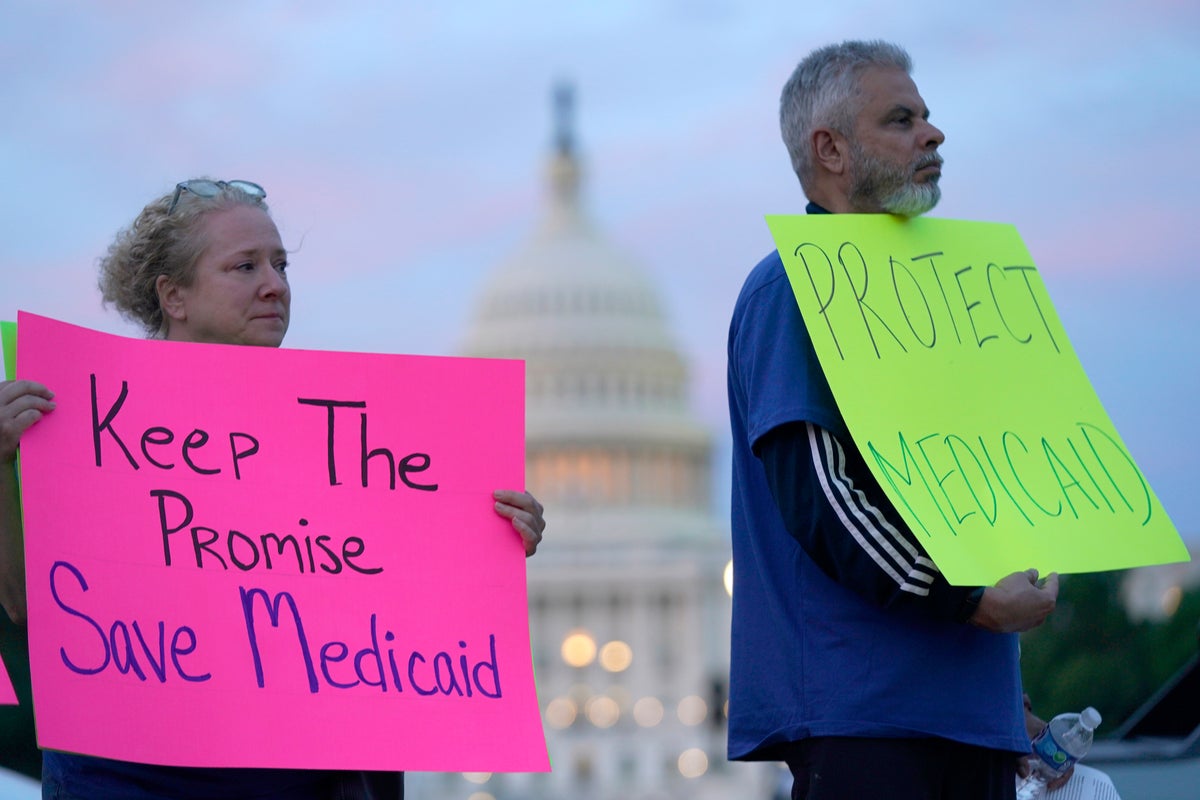
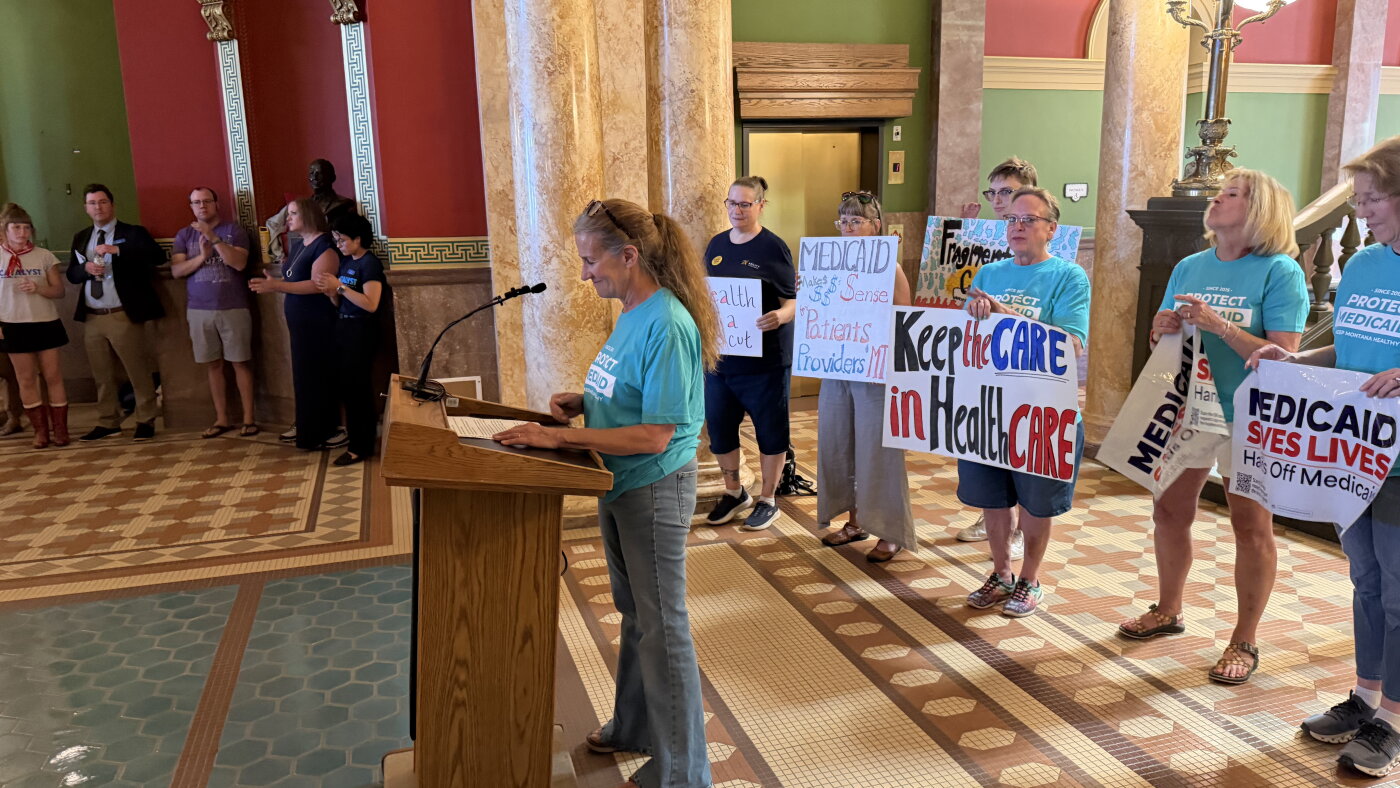
Work requirements for some Medicaid beneficiaries begin across the U.S. in January, the result of President Donald Trump’s big 2025 tax cut and policy law, and a handful of Republican-led states are imposing tougher rules than the law requires.
asserted
law → begin → rules
At issue is how someone can prove they are too medically frail to work.
asserted
they → prove → issue
While federal regulations say the state can take the recipient’s word for it for the first year, at least six states are requiring documentation immediately.
asserted
states → say → documentation
Advocates say that could create problems, especially for new applicants to the joint state-federal health insurance program for lower-income people.
uncertain
that → say → people
“Someone may not be able to work, but they can’t see a doctor because they can’t afford it.
uncertain
they → work → it
So they’re now applying for Medicaid,” said Jennifer Tolbert, director of state health policy and data at the research organization KFF.
asserted
Tolbert → apply → organization
“But Medicaid is saying you need documentation from a provider.”
asserted
you → say → provider
As some Republican-led states take a tougher-than-required approach to implementing the federally mandated changes, Democrats in 25 states are suing and asserting that the rules are too harsh.
asserted
rules → lead → states
Some say documentary evidence is necessary to avoid fraud
The Medicaid changes are projected to save the federal government $887 billion over the next decade and result in 7.5 million fewer people with health insurance, according to the Congressional Budget Office’s 2025 estimate.
The conservative Foundation for Government Accountability has been pushing states not to make it too easy for people to avoid work requirements, saying able-bodied adults are pushing enrollment and costs higher.
uncertain
adults → say → enrollment
Jonathan Ingram, vice president of research and policy at the group, has been encouraging states not to take a beneficiary’s word for it, a process known as self-attestation.
asserted
Ingram → encourage → attestation
“Self-attestation is fraud-by-design,” he said via email.
asserted
he → say → email
“It is a policy developed by bureaucrats to maximize enrollment at the expense of program integrity.”
asserted
It → develop → integrity
Self-attestation comes under penalty of perjury, so people who lie can be subject to criminal charges — though such charges are rare.
asserted
charges → come → charges
Arkansas, Idaho, Indiana, New Hampshire, North Carolina and Ohio all have laws or policies that bar self-attestation to qualify for the work requirement exception starting next year.
asserted
that → have → exception
Republican Missouri state Rep. Darin Chappell said he worked with the Foundation for Government Accountability to craft a proposed amendment that would have enshrined Medicaid work requirements in the state constitution.
asserted
that → say → constitution
It would have required “documentary evidence” of work or reasons for exemptions, specifically prohibiting self-attestation.
asserted
It → require → attestation
The amendment passed the Missouri House but died without a vote in the Senate.
asserted
amendment → pass → Senate
Chappell plans to try again next year.
asserted
Chappell → plan → ?
“If someone has a debilitating physical ailment — or mental ailment for that matter — something that prohibits them from working, that’s totally legitimate,” he said.
asserted
he → have → them
“But we’re not taking anybody’s word for it.
asserted
we → take → it
I don’t mean to shock you none, but people do tend to lie about such things.”
asserted
people → mean → things
Most nondisabled beneficiaries under 65 already work
The new mandate applies to up to 20 million lower-income adults without children at home who are enrolled in Medicaid through an optional expansion in 40 states and the District of Columbia.
asserted
who → work → Columbia
The requirement does not apply in the 10 states, mostly in the South, that did not expand Medicaid.
asserted
that → apply → Medicaid
Beneficiaries will have to work or volunteer at least 80 hours each month or be in school at least half-time to qualify, with exceptions for situations including medical frailty.
asserted
Beneficiaries → have → frailty
The law had said medically frail people include those who have substance use disorders, disabilities or serious medical conditions.
asserted
who → say → disorders
But the Centers for Medicare and Medicaid Services published a rule in June that went further and was stricter than states and providers expected, saying someone’s condition must “significantly impair” their ability to work, volunteer or attend school as required for an exemption.
asserted
condition → publish → exemption
Currently states generally decide once a year whether Medicaid recipients still qualify for benefits.
asserted
recipients → decide → benefits
The new law will require it to happen twice for most enrollees.
asserted
law → require → enrollees
States will be allowed to accept self-attestation just once each time a person enrolls starting in 2028.
asserted
person → allow → 2028
After that, documentation would be required at least every 12 months to verify that they still have the condition and that it still prevents them from being able to work.
asserted
it → require → them
The government expects states to rely increasingly on third-party data — on things such as workers’ compensation claims or prescription information — to help make determinations.
uncertain
states → expect → determinations
For conditions that do not show up in the databases, states can require a doctor’s certification, a disability award letter or other proof.
asserted
states → show → certification
While states have been ramping up the use of this information, the work requirements are still a big change, and many will first have to spend millions of dollars improving their computer systems.
asserted
many → ramp → systems
States are already struggling in some cases to make changes to the Supplemental Nutrition Assistance food program, or SNAP, that are required under Trump’s law, including an expanded work requirement.
asserted
that → struggle → requirement
In Arizona, for example, enrollment plummeted by 55% from April 2025 to April 2026 — the biggest drop in the country — with more than 400,000 fewer people getting benefits now.
asserted
people → plummet → benefits
Last month, the state said that was largely due to difficulties in putting in place new federal requirements that resulted in higher call volumes and additional verification.
asserted
that → say → volumes
Patient advocates worry aid will be denied to qualified people
Ingram said some of the concerns about ending self-attestation are overblown and people can get diagnoses to support their inability to work at many places, including charitable clinics and federally qualified health centers.
asserted
people → worry → clinics
He also noted that Medicaid allows retroactive coverage for doctor visits that happen before enrollment.
asserted
that → note → enrollment
Patient advocates say it’s not that simple.
asserted
it → say → ?
“The added paperwork, the hoops you have to jump through lead to coverage loss,” said Nate Crippes, a lawyer at the Disability Law Center in Utah, where a law allows self-attestation to qualify for the work requirement exception on a provisional basis.
asserted
attestation → add → basis
…and 7 more, not listed.
 The Aporia