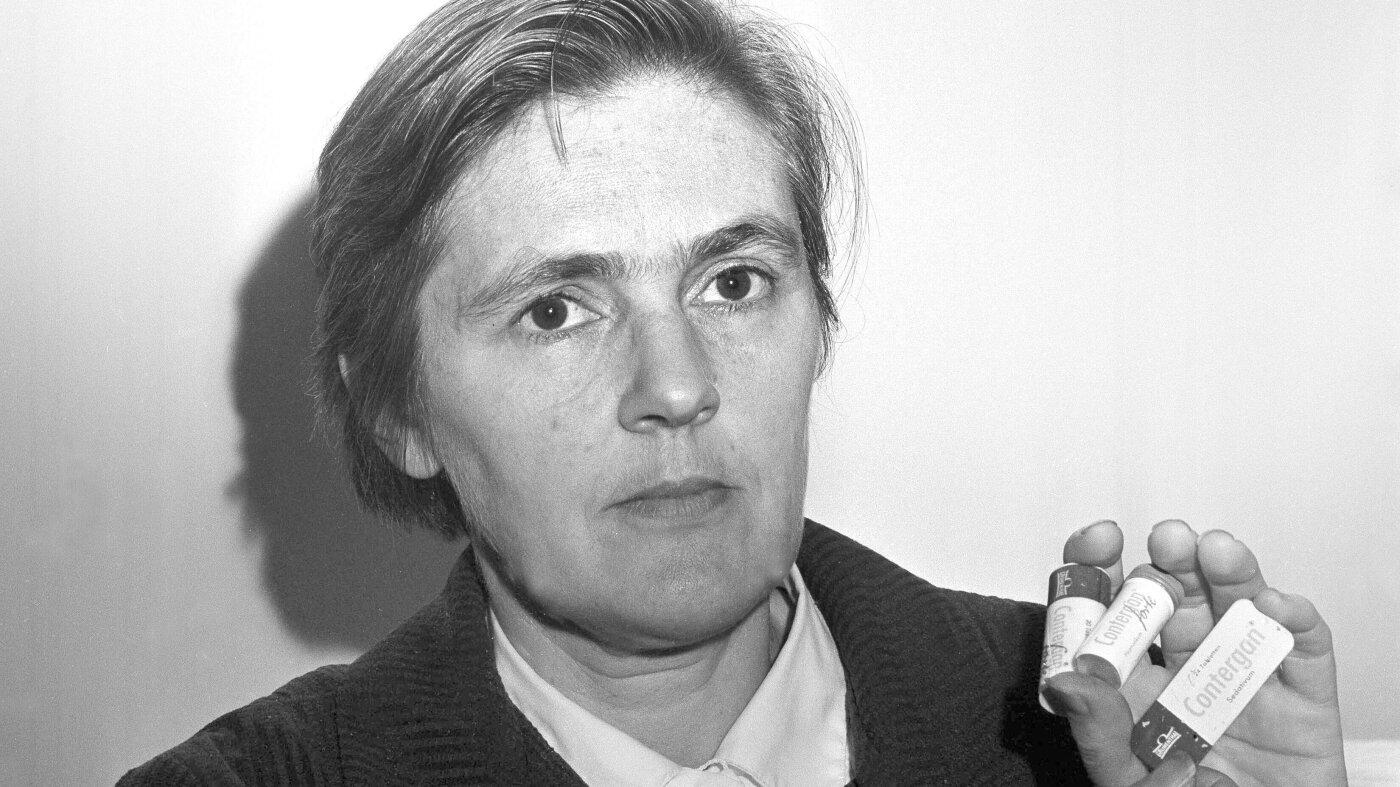
The article reports on U.S. survivors of thalidomide exposure, despite the FDA's non-approval of the drug. In the early 1960s, pharmaceutical company William S. Merrell distributed thousands of unlabeled doses of thalidomide to doctors for unregulated trials, affecting pregnant women who were unaware they were taking a dangerous drug. Survivors like Gwen Riechmann now seek formal acknowledgment from the federal government about their existence and the circumstances that led to their birth defects caused by thalidomide use during pregnancy. The article highlights the lack of documentation and tracking by Merrell, which has obscured the true extent of thalidomide's impact in the U.S., contrasting with the common belief that it was solely an issue outside the country.
Written locally by qwen2.5:14b on 2026-09-26,
using this article's own text rather than the other coverage of the
same event (that is the story summary below).
Story summary
In 1960, William S. Merrell, a Cincinnati pharmaceutical company, applied for FDA approval of thalidomide, a German-made sedative. Despite expectations that the drug would quickly be approved and available by Christmas, Dr. Frances Oldham Kelsey at the FDA blocked its approval due to concerns over safety, particularly regarding potential side effects on unborn children. This decision prevented the widespread distribution of thalidomide in the U.S., averting the severe birth defects seen elsewhere, such as deformed limbs in affected infants.
However, before the drug was officially rejected, some doctors were already administering it to patients, including pregnant women. As a result, there are survivors in the United States who have deformities linked to thalidomide exposure during pregnancy. These survivors now seek acknowledgment from the federal government regarding their existence and circumstances.
Written for “Thalidomide Survivors US” on 2026-10-05,
grounded in this article and the 0 other(s) covering the same event.
The U.S. has more thalidomide survivors than the government admits
When Cincinnati-based pharmaceutical company William S. Merrell applied for Food and Drug Administration approval for a German-made sedative in late 1960, it expected the application to sail through the process and be on store shelves in time for Christmas.
The drug, thalidomide, was not approved that year or the next.
asserted
drug → have → Christmas
A persistent medical reviewer at the FDA kept the drug from being approved for general use.
asserted
reviewer → keep → use
Dr. Frances Oldham Kelsey's actions fundamentally changed the agency's testing and approval process, leading to the robust regulations that exist today.
asserted
that → change → regulations
President John F. Kennedy publicly praised Kelsey for sparing "us this terrible human tragedy which has been visited on families in Germany."
Except that wasn't entirely true.
asserted
that → praise → Germany
Doctors were already giving thalidomide to thousands of U.S. patients, including pregnant women.
asserted
Doctors → give → women
Some children whose mothers were given the drug during pregnancy were born with severely deformed limbs.
asserted
mothers → give → limbs
Those children are now adults, and they want the federal government to formally acknowledge their existence.
asserted
government → want → existence
"We go to doctors today who say it didn't happen here in the United States.
asserted
it → go → States
Oh yeah, it did," said Gwen Riechmann, who was born with phocomelia, the signature shortened limb deformity caused by thalidomide.
asserted
who → do → thalidomide
Phocomelia is rare, but slightly more common outside the United States in countries such as Britain and Germany, where thalidomide was more widely sold.
asserted
thalidomide → sell → Britain
When Riechmann's mother was pregnant with her in the early 1960s, the doctor gave her a new sedative to help with her nausea.
asserted
doctor → give → nausea
Merrell handed out thousands of unlabeled doses, telling doctors it was perfectly safe for treating a range of issues from insomnia to morning sickness, according to Jennifer Vanderbes, whose book Wonder Drug details the history of thalidomide.
uncertain
book → hand → thalidomide
She said the company didn't require the doctors to track the medication or report back on side effects.
asserted
company → say → effects
"This was such a sloppy investigation," said John Swann, retired FDA senior historian.
asserted
Swann → say → ?
As the FDA drilled into Merrell's records, Swann said, the amount of thalidomide that couldn't be accounted for was striking.
asserted
that → drill → thalidomide
"When you have a problematical product, you trace back to where it's been distributed," Swann said.
asserted
Swann → have → product
When the FDA did that, it found, "and certainly the company had admitted, that there was just a great deal that was unaccounted for.
asserted
that → do → that
"It's probably the most iconic toxic drug of all time because of its signature injuries," Vanderbes said.
asserted
Vanderbes → say → injuries
"It transformed the FDA because it made it clear that more significant and serious drug testing had to take place before drugs were released on the market.
asserted
drugs → transform → market
The doctors didn't tell the women they were taking thalidomide or document it in their medical records, Vanderbes said.
asserted
Vanderbes → tell → records
The women "had no slips of paper that showed their prescription.
asserted
that → have → prescription
They had no bottles with a label."
asserted
They → have → label
What many did have were children born with truncated limbs.
asserted
have → bear → limbs
But even after these babies were born, and even after the scientific community understood the dangers of thalidomide, doctors did not reveal that they had given their patients the drug, Vanderbes said.
asserted
Vanderbes → bear → drug
Some women were specifically told they had not taken it.
asserted
they → tell → it
Years later, many of the women's children were also told they couldn't be thalidomide survivors because their doctors believed the United States had escaped the thalidomide scandal.
asserted
States → tell → scandal
Vanderbes estimates there could be around a hundred U.S. survivors.
uncertain
Vanderbes → estimate → ?
Swann, the former FDA historian, said it's hard to know an exact number of American-born babies whose mothers took the drug, but it was certainly more than the 17 formally acknowledged by the FDA.
asserted
it → say → FDA
In 2018, Riechmann co-founded the advocacy group USA Thalidomide Survivors.
asserted
Riechmann → co → group
The group of roughly 100 people, which includes allies as well as survivors, is pushing Congress to pass a bill that would officially acknowledge American thalidomide survivors and give each $150,000, with the possibility of additional money in the future.
asserted
that → include → future
"The U.S. is the only country that has not provided any kind of support or even recognition that they have thalidomide survivors," she said.
asserted
she → provide → survivors
"We are looking for, first, recognition that, yes, we do exist.
asserted
we → look → recognition
Survivors are aging, and their health is deteriorating, Riechmann said, but they can't give up — even if they also can't wait long.
asserted
they → age → ?
 The Aporia